Search
Invitrogen
CD301b (MGL2) Monoclonal Antibody (11A10-B7), APC, eBioscience™
{{$productOrderCtrl.translations['antibody.pdp.commerceCard.promotion.promotions']}}
{{$productOrderCtrl.translations['antibody.pdp.commerceCard.promotion.promocode']}}: {{promo.promoCode}} {{promo.promoTitle}} {{promo.promoDescription}}. {{$productOrderCtrl.translations['antibody.pdp.commerceCard.promotion.learnmore']}}
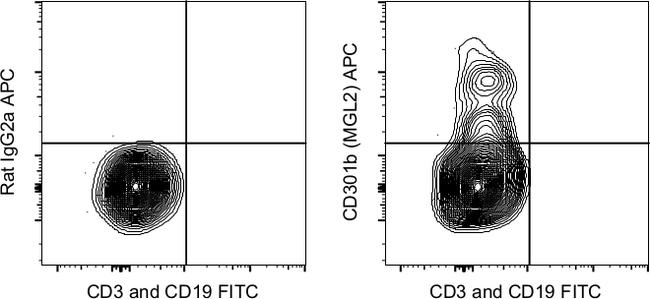
FIGURE: 1 / 1
CD301b (MGL2) Antibody (17-3011-82) in Flow
C57BL/6 mouse skin draining lymph node cells were stained with CD3 Monoclonal Antibody, FITC (Product # 11-0032-82), CD19 Monoclonal Antibody, FITC (Product # 11-0193-82), MHC Class II (I-A/I-E) Monoclonal Antibody, eFluor 450 (Product # 48-5321-82), CD11c Monoclonal Antibody, PE (Product # 12-0114-82) and 0.125 µg of Rat IgG2a kappa Isotype Control, APC (Product # 17-4321-81) (left) or 0.125 µg of CD301b (MGL2) Monoclonal Antibody, APC (right). Viable cells, as determined by 7-AAD (Product # 00-6993-50), that were CD19-, CD3-, MHC II... View More
Please note: We are reviewing Western blot images included in the antibody testing data in our catalog, including those provided by third parties. Unless expressly labeled or annotated as “raw-unedited”, Western blot images included in the antibody testing data in our catalog may have been edited, optimized or otherwise adjusted for presentation.

Product Details
17-3011-82
Product Specifications
Species Reactivity
Mouse
Host/Isotype
Rat
/ IgG2a, lambda
Recommended Isotype Control
Class
Monoclonal
Type
Antibody
Clone
11A10-B7
Conjugate
APC
APC
APC
Excitation/Emission Max
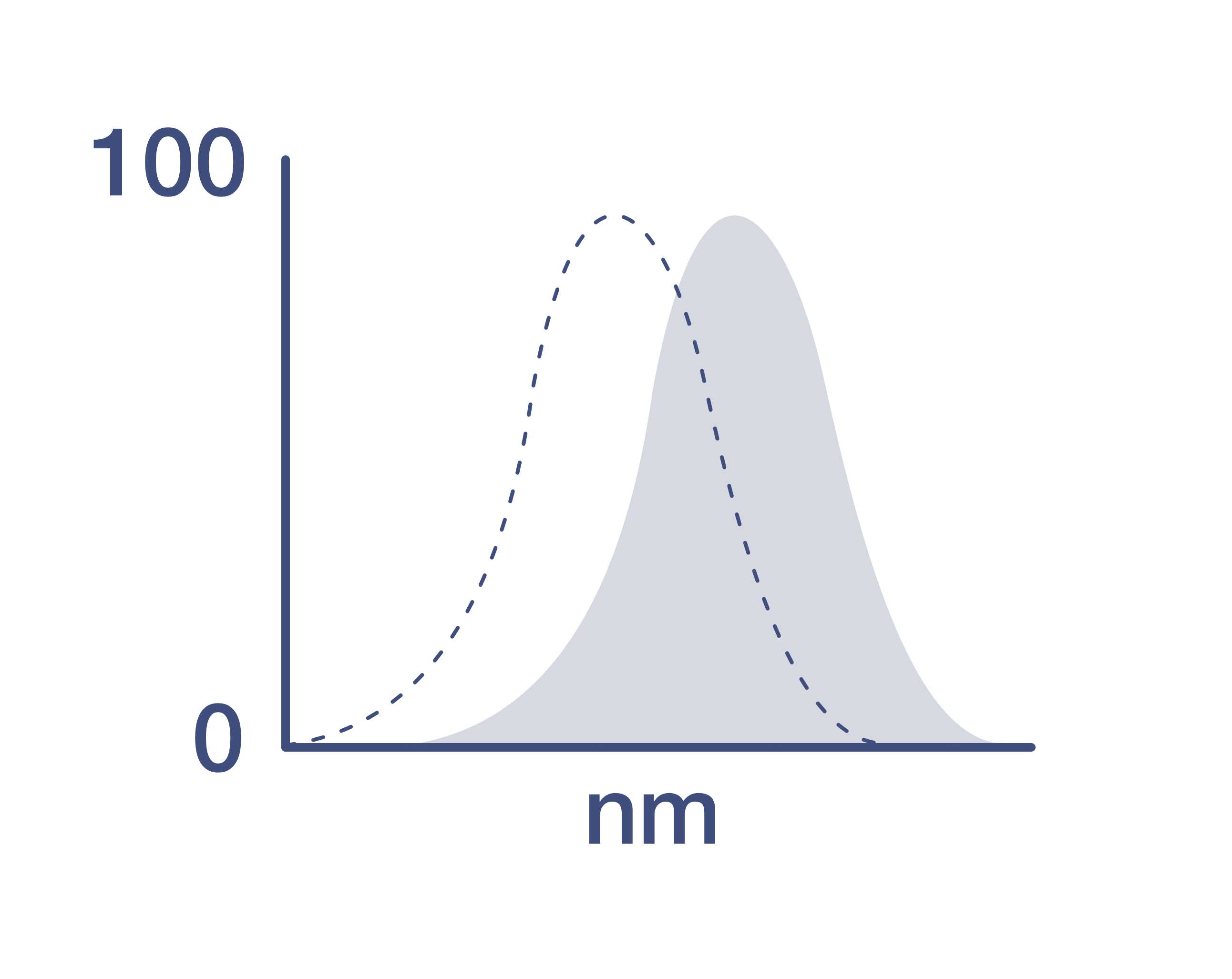
651/660 nm
View spectra
Form
liquid
Concentration
0.2 mg/mL
Amount
100 µg
Purification
Affinity chromatography
Storage buffer
PBS, pH 7.2
Contains
0.09% sodium azide
Storage conditions
4°C, store in dark, DO NOT FREEZE!
Shipping conditions
Ambient (domestic); Wet ice (international)
Product Specific Information
Description
The monoclonal antibody 11A10-B7 recognizes mouse CD301b. CD301b is also known as macrophage galactose-type C-type lectin 2 (MGL2). CD301b expression is restricted to dermal dendritic cells, connection tissue, and bone marrow derived dendritic cells. Macrophages also express CD301b at low levels. CD301b contains a single carbohydrate recognition domain that recognizes protein antigens that have a galactose and N-acetylgalactosamine (Gal/GalNAc). Gal/GalNAc protein antigens are efficiently internalized through CD301b and presented to antigen specific CD4+ cells via MHC Class II. CD301b+ dendritic cells are believed to play an important role in TH2 priming.
Applications Tested
This 11A10-B7 antibody has been tested by immunohistochemistry of frozen mouse tissue and can be used at less than or equal to 0.25 µg/mL. It is recommended that the antibody be carefully titrated for optimal performance in the assay of interest.
Staining Protocol: All protocols work well for this monoclonal antibody. Use of Protocol A: Two-step protocol: intracellular (cytoplasmic) proteins allows for the greatest flexibility for detection of surface and intracellular (cytoplasmic) proteins. Use of Protocol B: One-step protocol: intracellular (nuclear) proteins is recommended for staining of transcription factors in conjunction with surface and phosphorylated intracellular (cytoplasmic) proteins. Protocol C: Two-step protocol: Fixation/Methanol allows for the greatest discrimination of phospho-specific signaling between unstimulated and stimulated samples, but with limitations on the ability to stain specific surface proteins (refer to "Clone Performance Following Fixation/Permeabilization" located in the BestProtocols Section under the Resources tab online). All Protocols can be found in the Flow Cytometry Protocols: "Staining Intracellular Antigens for Flow Cytometry Protocol" located in the BestProtocols®Section under the Resources tab online.
Excitation: 633-647 nm; Emission: 660 nm; Laser: Red Laser.
Target Information
CD301b is also known as macrophage galactose-type C-type lectin 2 (MGL2). CD301b expression is restricted to dermal dendritic cells, connection tissue, and bone marrow derived dendritic cells. Macrophages also express CD301b at low levels. CD301b contains a single carbohydrate recognition domain that recognizes protein antigens that have a galactose and N-acetylgalactosamine (Gal/GalNAc). Gal/GalNAc protein antigens are efficiently internalized through CD301b and presented to antigen specific CD4+ cells via MHC Class II. CD301b+ dendritic cells are believed to play an important role in TH2 priming.
For Research Use Only. Not for use in diagnostic procedures. Not for resale without express authorization.
How to use the Panel Builder
Watch the video to learn how to use the Invitrogen Flow Cytometry Panel Builder to build your next flow cytometry panel in 5 easy steps.
References (0)
Have you cited this product in a publication?
Let us know so we can reference it here.
Bioinformatics
Protein Aliases: CD301; macrophage galactose-type C-type lectin 2; mMGL2i; lectin; unnamed protein product
Gene Aliases: CD301b
Entrez Gene ID: (Mouse) 216864
Disclaimer

Clicking the images or links will redirect you to a website hosted by BenchSci that provides third-party scientific content. Neither the content nor the BenchSci technology and processes for selection have been evaluated by us; we are providing them as-is and without warranty of any kind, including for use or application of the Thermo Fisher Scientific products presented.

Performance Guarantee
If an Invitrogen™ antibody doesn't perform as described on our website or datasheet,we'll replace the product at no cost to you, or provide you with a credit for a future purchase.*
Learn more
We're here to help
Get expert recommendations for common problems or connect directly with an on staff expert for technical assistance related to applications, equipment and general product use.
Contact tech support