Search
Invitrogen
beta Catenin Monoclonal Antibody (15B8), Alexa Fluor™ Plus 647
{{$productOrderCtrl.translations['antibody.pdp.commerceCard.promotion.promotions']}}
{{$productOrderCtrl.translations['antibody.pdp.commerceCard.promotion.promocode']}}: {{promo.promoCode}} {{promo.promoTitle}} {{promo.promoDescription}}. {{$productOrderCtrl.translations['antibody.pdp.commerceCard.promotion.learnmore']}}
{{$ctrl.translations['antibody.pdp.skuNotes.additionalInformation']}}:
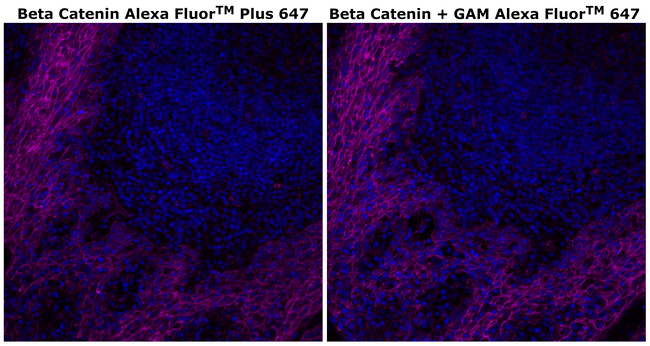
图: 1 / 4
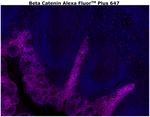
beta Catenin Antibody (756-2567-94) in IHC (P)
Immunohistochemical analysis of Beta Catenin was performed on FFPE human tonsil tissue. To expose the target protein, HIER was performed on de-paraffinized sections using BOND Epitope Retrieval Solution 2 (pH 9) for 10-mins, followed by a 5-min cool down, a 1-min wash with ddH2O, and then transferred to 1X PBS. Tissues were permeabilized with 0.1% Triton X-100 in 1X PBS for 30-mins, washed thrice with 1X PB... View More
Please note: We are reviewing Western blot images included in the antibody testing data in our catalog, including those provided by third parties. Unless expressly labeled or annotated as “raw-unedited”, Western blot images included in the antibody testing data in our catalog may have been edited, optimized or otherwise adjusted for presentation.


产品信息
756-2567-94
产品规格
种属反应
Human
宿主/亚型
Mouse
/ IgG1, kappa
分类
Monoclonal
类型
Antibody
克隆号
15B8
偶联物
Alexa Fluor™ Plus 647
Alexa Fluor™ Plus 647
Alexa Fluor™ Plus 647
激发/发射光谱
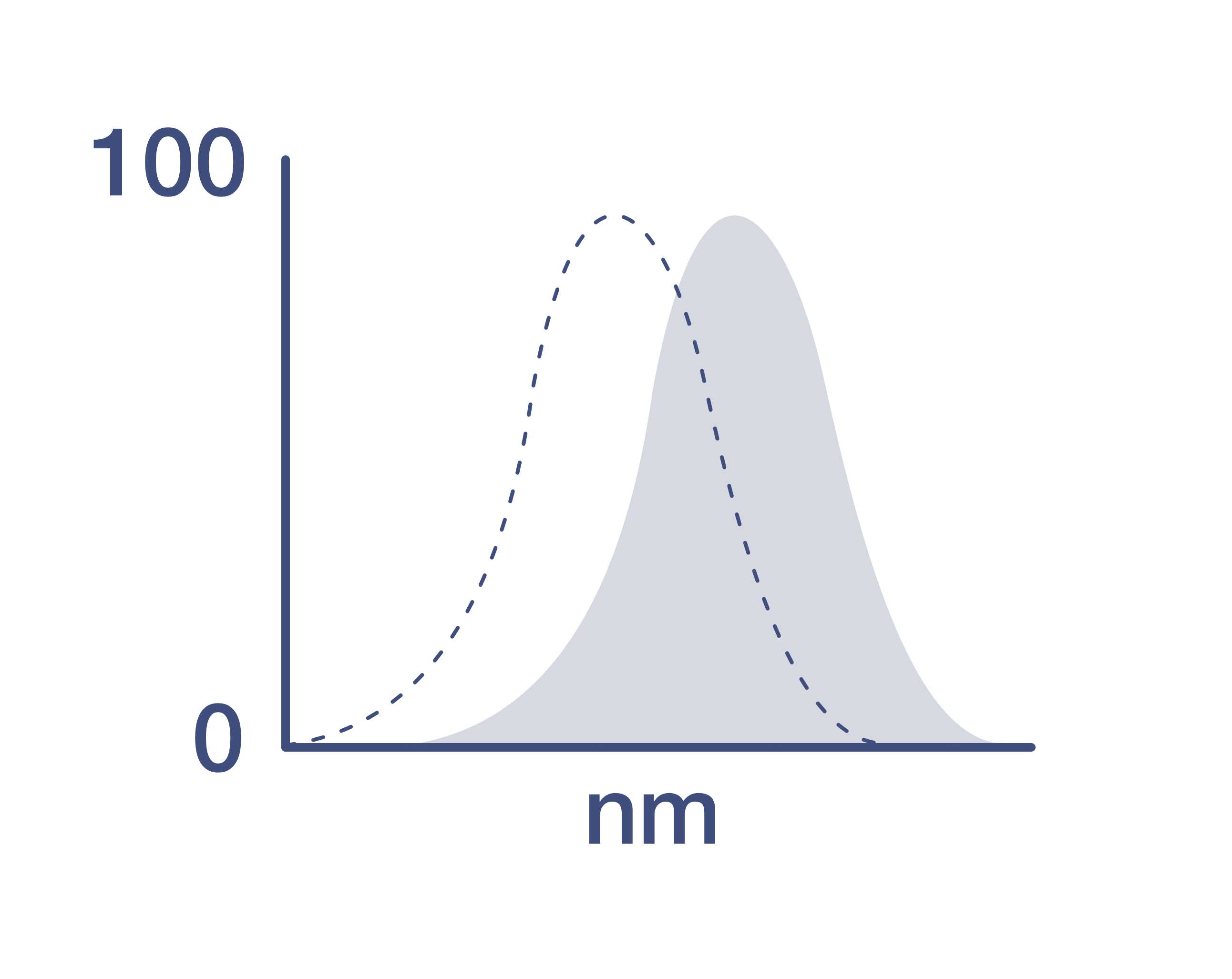
658/675 nm
查看光谱
形式
Liquid
浓度
0.2 mg/mL
规格
100 µg
纯化类型
Affinity chromatography
保存液
PBS, pH 7.2, with 0.5% BSA, 10% proprietary stabilizer
内含物
0.05% sodium azide
保存条件
4°C, store in dark
运输条件
Wet ice
产品详细信息
Description: The 15B8 monoclonal antibody reacts with human and mouse beta-catenin, one member of a family of catenins, which are intracellular proteins that interact with cadherins to mediate cellular adhesion. More specifically, beta-catenin binds to the cytoplasmic tail of E-cadherin. In addition, this molecule is a component of the canonical Wnt signaling pathway. In the absence of Wnt binding its receptor, beta-catenin is phosphorylated and resides in the cytoplasm where it is eventually targeted for degradation by ubiquitination. Upon Wnt binding, beta-catenin becomes dephosphorylated, translocates to the nucleus, and modulates gene expression in partnership with the transcription factors T cell factor (TCF) and lymphocyte enhancer binding factor (LEF). Expression of beta-catenin is found in a wide variety of non-immune and immune tissues, including thymocytes and T and B lymphocytes. The Wnt and beta-catenin signaling pathway has been demonstrated to play a crucial role in the development of T, B, and hematopoietic stem cells.
Applications Reported: This 15B8 antibody has been reported for use in intracellular staining followed by flow cytometric analysis, immunoprecipitation, western blotting, and immunohistochemical staining of formalin-fixed paraffin embedded tissue sections. (Fluorochrome conjugated 15B8 is recommended for use in intracellular flow cytometry).
Applications Tested: This 15BB antibody has been tested by immunohistochemistry of formalin-fixed paraffin embedded tissue using high pH antigen retrieval and can be used at 2 µg/mL. It is recommended that the antibody be carefully titrated for optimal performance in the assay of interest.
Using conjugate solutions: Centrifuge the protein conjugate solution briefly in a microcentrifuge before use; add only the supernatant to the experiment. This step will help eliminate any protein aggregates that may have formed during storage, thereby reducing nonspecific background staining.
靶标信息
Beta-catenin, an adherens junction (AJ) protein, was originally identified as a component of cell-cell adhesion structures. AJs are necessary for the creation and maintenance of epithelial cell layers by regulating cell growth and adhesion between cells. Beta-catenin interacts with the cytoplasmic domain of E-cadherin and links E-cadherin to alpha-catenin, which in turn mediates anchorage of the E-cadherin complex to the cortical actin cytoskeleton. Studies show that Beta-catenin also binds to another cytoskeletal complex containing the adenomatous polyposis coli protein and microtubules, and interacts with several signaling pathways that include tyrosine kinases, phosphatases and Wnt/Wingless. The interplay between beta-catenin, cytoskeletal complexes and signaling pathways may regulate morphogenesis. Beta-catenin is expressed in several hair follicle cell types, basal and peripheral matrix cells, and cells of the outer and inner root sheats. A pathological role of beta-catenin has been identified in pilomatrixoma (PTR), medulloblastoma (MDB), colorectal cancer (CRC), ovarian cancer, and tumor development. In the nucleus, beta-catenin serves to co activate a family of Lef/Tcf transcription factors that stimulate transcription of target genes including those encoding cyclin D and c-myc that promote cell proliferation. The influence on cell proliferation is the molecular basis for the role of beta-catenin in tumorgenesis, specifically, solid tumors of the breast, colon, liver, lung, gastric, prostate, and skin.
仅用于科研。不用于诊断过程。未经明确授权不得转售。
篇参考文献 (0)
您是否在文献中引用过该产品?请点击下方按钮邮件告知我们。
生物信息学
蛋白别名: Bcatenin; beta 1 88kDa; Betacatenin; C20orf33; Cadherin associated protein; catenin; catenin (cadherin-associated protein), beta 1, 88kDa; Catenin b 1; Catenin b1; Catenin beta1; Catenin β 1; Catenin β1; CTNB1; dJ633O20.1; DKFZp686D02253; FLJ25606; FLJ37923; NAP; NYD-SP19; OTTHUMP00000209289; P14L; PP8304; RP5-1118M15.1; unnamed protein product; β catenin; βcatenin
基因别名: armadillo; CTNNB; EVR7; MRD19; NEDSDV
UniProt ID: (Human) P35222
Entrez Gene ID: (Human) 1499
transcription cofactor binding
transcription corepressor binding
chromatin binding
transcription coactivator activity
receptor binding
protein binding
ligand-dependent nuclear receptor binding
enzyme binding
kinase binding
protein kinase binding
phosphatase binding
protein phosphatase binding
estrogen receptor binding
ubiquitin protein ligase binding
ion channel binding
alpha-catenin binding
cadherin binding
SMAD binding
RNA polymerase II sequence-specific DNA binding transcription factor binding
I-SMAD binding
disordered domain specific binding
DNA-binding transcription factor binding
histone methyltransferase binding
protein polyubiquitination
osteoblast differentiation
epithelial to mesenchymal transition
positive regulation of neuroblast proliferation
outflow tract morphogenesis
cell adhesion
epidermal growth factor receptor signaling pathway
positive regulation of cell proliferation
negative regulation of cell proliferation
response to xenobiotic stimulus
negative regulation of gene expression
regulation of epithelial to mesenchymal transition
positive regulation of epithelial to mesenchymal transition
positive regulation of heparan sulfate proteoglycan biosynthetic process
negative regulation of angiogenesis
stem cell population maintenance
hypothalamus development
neuron differentiation
midbrain development
hindbrain development
regulation of centriole-centriole cohesion
regulation of protein ubiquitination
positive regulation of telomere maintenance via telomerase
response to estradiol
positive regulation of transcription elongation from RNA polymerase II promoter
negative regulation of protein sumoylation
positive regulation of homotypic cell-cell adhesion
adherens junction assembly
protein localization to cell surface
hair cell differentiation
detection of muscle stretch
embryonic skeletal limb joint morphogenesis
astrocyte-dopaminergic neuron signaling
positive regulation of apoptotic process
negative regulation of apoptotic process
proteasome-mediated ubiquitin-dependent protein catabolic process
positive regulation of neuron apoptotic process
cell-cell adhesion mediated by cadherin
positive regulation of cell differentiation
regulation of angiogenesis
positive regulation of angiogenesis
negative regulation of transcription, DNA-templated
positive regulation of transcription, DNA-templated
positive regulation of transcription from RNA polymerase II promoter
negative regulation of mitotic cell cycle, embryonic
regulation of fibroblast proliferation
embryonic organ development
positive regulation of skeletal muscle tissue development
regulation of smooth muscle cell proliferation
regulation of neurogenesis
negative regulation of neurogenesis
detection of mechanical stimulus
regulation of timing of anagen
regulation of synapse assembly
canonical Wnt signaling pathway
mesenchymal to epithelial transition
long term synaptic depression
endothelial tube morphogenesis
sympathetic ganglion development
cranial ganglion development
regulation of centromeric sister chromatid cohesion
cellular response to growth factor stimulus
cellular response to indole-3-methanol
regulation of nephron tubule epithelial cell differentiation
mesenchymal stem cell differentiation
negative regulation of canonical Wnt signaling pathway
regulation of calcium ion import
synaptic vesicle clustering
cell-cell adhesion
positive regulation of odontoblast differentiation
negative regulation of oxidative stress-induced neuron intrinsic apoptotic signaling pathway
cranial skeletal system development
midbrain dopaminergic neuron differentiation
positive regulation of blood vessel branching
neuron projection extension
embryonic brain development
dorsal root ganglion development
regulation of protein localization to cell surface
positive regulation of neural precursor cell proliferation
Disclaimer

Clicking the images or links will redirect you to a website hosted by BenchSci that provides third-party scientific content. Neither the content nor the BenchSci technology and processes for selection have been evaluated by us; we are providing them as-is and without warranty of any kind, including for use or application of the Thermo Fisher Scientific products presented.

