Search
Invitrogen
CD29 (Integrin beta 1) Monoclonal Antibody (TS2/16), eBioscience™
{{$productOrderCtrl.translations['antibody.pdp.commerceCard.promotion.promotions']}}
{{$productOrderCtrl.translations['antibody.pdp.commerceCard.promotion.promocode']}}: {{promo.promoCode}} {{promo.promoTitle}} {{promo.promoDescription}}. {{$productOrderCtrl.translations['antibody.pdp.commerceCard.promotion.learnmore']}}
{{$ctrl.translations['antibody.pdp.skuNotes.additionalInformation']}}:
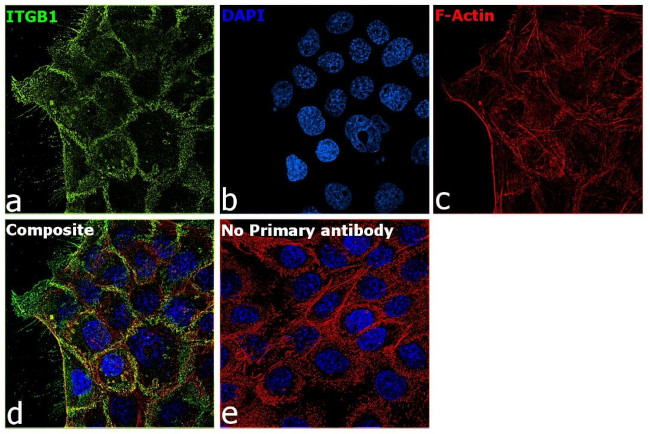
图: 1 / 24
CD29 (Integrin beta 1) Antibody (14-0299-82) in ICC/IF
Immunofluorescence analysis of CD29 (Integrin beta 1) was performed using 70% confluent log phase A-431 cells. The cells were fixed with 4% paraformaldehyde for 10 minutes, permeabilized with 0.1% Triton™ X-100 for 15 minutes, and blocked with 2% BSA for 45 minutes at room temperature. The cells were labeled with CD29 (Integrin beta 1) Monoclonal Antibody (TS2/16), eBioscience™ (Product # 14-0299-37) at 1:1... View More
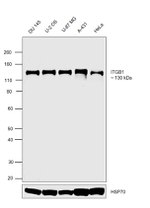
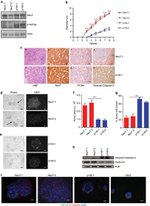

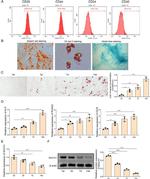
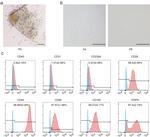
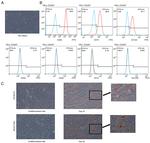
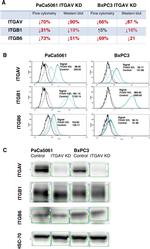
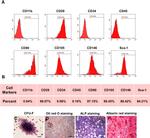
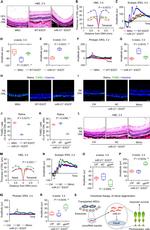
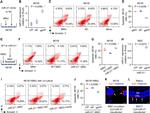
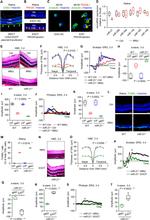
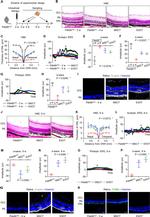
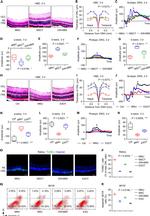
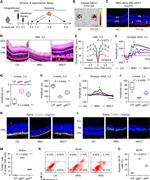
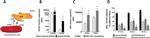
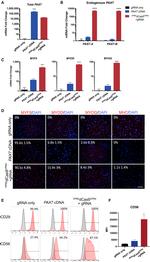
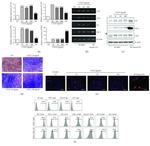
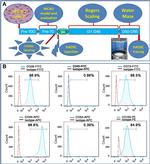
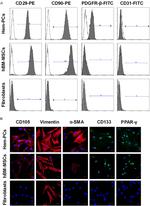
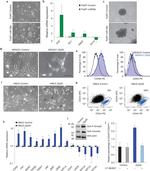
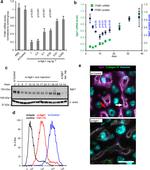
Please note: We are reviewing Western blot images included in the antibody testing data in our catalog, including those provided by third parties. Unless expressly labeled or annotated as “raw-unedited”, Western blot images included in the antibody testing data in our catalog may have been edited, optimized or otherwise adjusted for presentation.








产品信息
14-0299-82
应用
建议稀释比
已发表文章
产品规格
种属反应
Human
已发表种属
Bovine,
Dog,
Human,
Mouse
宿主/亚型
Mouse
/ IgG1, kappa
分类
Monoclonal
类型
Antibody
克隆号
TS2/16
偶联物
Unconjugated
Unconjugated
Unconjugated
形式
Liquid
浓度
0.5 mg/mL
规格
100 µg
纯化类型
Affinity chromatography
保存液
PBS, pH 7.2
内含物
0.09% sodium azide
保存条件
4°C
运输条件
Ambient (domestic); Wet ice (international)
RRID
产品详细信息
Description: The TS2/16 monoclonal antibody reacts with human CD29, also known as integrin beta 1, an approximately 130 kDa single-pass transmembrane glycoprotein. CD29 complexes with one of nine integrin alpha subunits to form the very late antigen (VLA) subfamily of adhesion molecules. Integrin heterodimers containing CD29 are involved in cell-cell and cell-matrix adhesion. CD29 is expressed broadly on lymphocytes and monocytes, with lower levels of expression on granulocytes. The TS2/16 antibody has been found to possess activating activity for beta 1 integrins.
Applications Reported: This TS2/16 antibody has been reported for use in flow cytometric analysis, immunoprecipitation, and immunohistochemical staining.
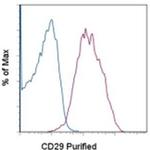
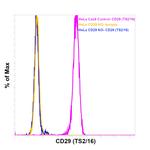
Applications Tested: This TS2/16 antibody has been tested by flow cytometric analysis of normal human peripheral blood cells. This can be used at less than or equal to 0.25 µg per test. A test is defined as the amount (µg) of antibody that will stain a cell sample in a final volume of 100 µL. Cell number should be determined empirically but can range from 10^5 to 10^8 cells/test. It is recommended that the antibody be carefully titrated for optimal performance in the assay of interest.
Purity: Greater than 90%, as determined by SDS-PAGE.
Aggregation: Less than 10%, as determined by HPLC.
Filtration: 0.2 µm post-manufacturing filtered.
靶标信息
CD29, also known as ITGB1 or Integrin Subunit Beta 1, is a 110 kDa cell surface glycoprotein widely expressed by various cells, including all leukocytes. It forms non-covalently linked heterodimers with at least six different alpha integrins (CD49a-f), creating VLA-1 through VLA-6 complexes, as well as with CD51. These alpha-beta integrin heterodimers mediate a range of cellular responses, including adhesion, trafficking, proliferation, and differentiation. CD29-containing integrins bind to extracellular matrix proteins such as collagen, laminin, fibronectin, and vitronectin. Some integrins also interact with cellular receptors like VCAM-1 and MadCAM-1. CD29 plays a crucial role in immune cell trafficking from blood to tissue, particularly during leukocyte emigration and extravascular migration. It is involved in regulating tissue damage and disease symptoms related to inflammatory bowel disease. In the presence of anti-tumor drugs, decreased expression of ITGB1 correlates with multidrug resistance in tumor cells. ITGB1-dependent mechanisms enhance cytokine secretion in human airway smooth muscle in response to IL-1beta, facilitated by fibronectin and type I collagen. More than eight beta subunits with numerous splice variant isoforms have been identified in mammals, including two major forms: beta1A and beta1D. Beta1A is present in all tissues except cardiac and skeletal muscle, which express the beta1D variant.
仅用于科研。不用于诊断过程。未经明确授权不得转售。
生物信息学
蛋白别名: glycoprotein IIa; integrin beta 1; integrin beta-1 subunit (cytoplasmic domain); Integrin beta1; integrin VLA-4 beta subunit; integrin, beta 1 (fibronectin receptor, beta polypeptide, antigen CD29 includes MDF2, MSK12); ITBG1D; unnamed protein product; very late activation protein, beta polypeptide
基因别名: CD29; FNRB; GPIIA; MDF2; MSK12; VLA-BETA; VLAB
UniProt ID: (Human) P05556
Entrez Gene ID: (Human) 3688
magnesium ion binding
fibronectin binding
protease binding
actin binding
obsolete cell adhesion receptor activity
integrin binding
calcium ion binding
protein binding
coreceptor activity
protein kinase binding
C-X3-C chemokine binding
signaling receptor activity
laminin binding
macromolecular complex binding
cadherin binding
protein heterodimerization activity
cell adhesion molecule binding
collagen binding involved in cell-matrix adhesion
integrin binding involved in cell-matrix adhesion
protein tyrosine kinase binding
establishment of mitotic spindle orientation
angiogenesis
phagocytosis
cellular defense response
cell adhesion
homophilic cell adhesion via plasma membrane adhesion molecules
leukocyte cell-cell adhesion
cell-matrix adhesion
calcium-independent cell-matrix adhesion
transforming growth factor beta receptor signaling pathway
integrin-mediated signaling pathway
myoblast fusion
regulation of collagen catabolic process
positive regulation of fibroblast migration
response to muscle activity
cell migration
CD40 signaling pathway
cell projection organization
lamellipodium assembly
B cell differentiation
extracellular matrix organization
positive regulation of cell migration
cell-substrate adhesion
receptor internalization
cell adhesion mediated by integrin
cell-cell adhesion mediated by integrin
heterotypic cell-cell adhesion
wound healing, spreading of epidermal cells
maintenance of blood-brain barrier
positive regulation of apoptotic process
stress fiber assembly
positive regulation of GTPase activity
myoblast differentiation
positive regulation of fibroblast growth factor receptor signaling pathway
positive regulation of angiogenesis
negative regulation of vasoconstriction
mesodermal cell differentiation
regulation of developmental process
modulation of synaptic transmission
leukocyte tethering or rolling
positive regulation of protein kinase B signaling
positive regulation of glutamate uptake involved in transmission of nerve impulse
cellular response to low-density lipoprotein particle stimulus
basement membrane organization
positive regulation of wound healing
cell-cell adhesion
regulation of spontaneous synaptic transmission
reactive gliosis
positive regulation of vascular endothelial growth factor signaling pathway
positive regulation of protein localization to plasma membrane
regulation of synapse pruning
negative regulation of anoikis
Disclaimer

Clicking the images or links will redirect you to a website hosted by BenchSci that provides third-party scientific content. Neither the content nor the BenchSci technology and processes for selection have been evaluated by us; we are providing them as-is and without warranty of any kind, including for use or application of the Thermo Fisher Scientific products presented.

