Search
Disclaimer

Clicking the images or links will redirect you to a website hosted by BenchSci that provides third-party scientific content. Neither the content nor the BenchSci technology and processes for selection have been evaluated by us; we are providing them as-is and without warranty of any kind, including for use or application of the Thermo Fisher Scientific products presented.
Invitrogen
CD90 Polyclonal Antibody
{{$productOrderCtrl.translations['antibody.pdp.commerceCard.promotion.promotions']}}
{{$productOrderCtrl.translations['antibody.pdp.commerceCard.promotion.viewpromo']}}
{{$productOrderCtrl.translations['antibody.pdp.commerceCard.promotion.promocode']}}: {{promo.promoCode}} {{promo.promoTitle}} {{promo.promoDescription}}. {{$productOrderCtrl.translations['antibody.pdp.commerceCard.promotion.learnmore']}}

产品信息
PA5-95007
产品规格
种属反应
Human,
Mouse,
Rat
宿主/亚型
Rabbit
/ IgG
分类
Polyclonal
类型
Antibody
抗原
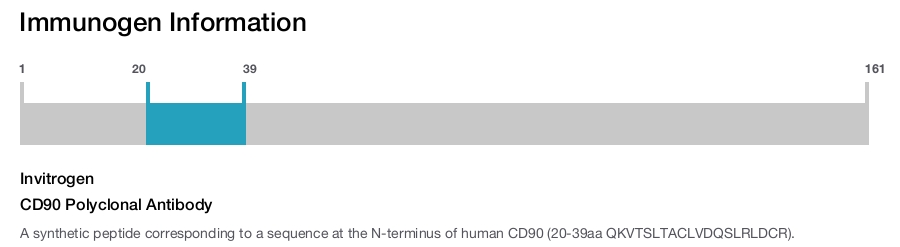
A synthetic peptide corresponding to a sequence at the N-terminus of human CD90 (20-39aa QKVTSLTACLVDQSLRLDCR).
偶联物
形式
Lyophilized
浓度
500 µg/mL
纯化类型
Affinity chromatography
保存液
PBS with 5mg BSA
内含物
0.05mg sodium azide, 0.05mg thimerosal
保存条件
-20°C
运输条件
Ambient (domestic); Wet ice (international)
RRID
产品详细信息
Reconstitute with 0.2 mL of distilled water to yield a concentration of 500 µg/mL.
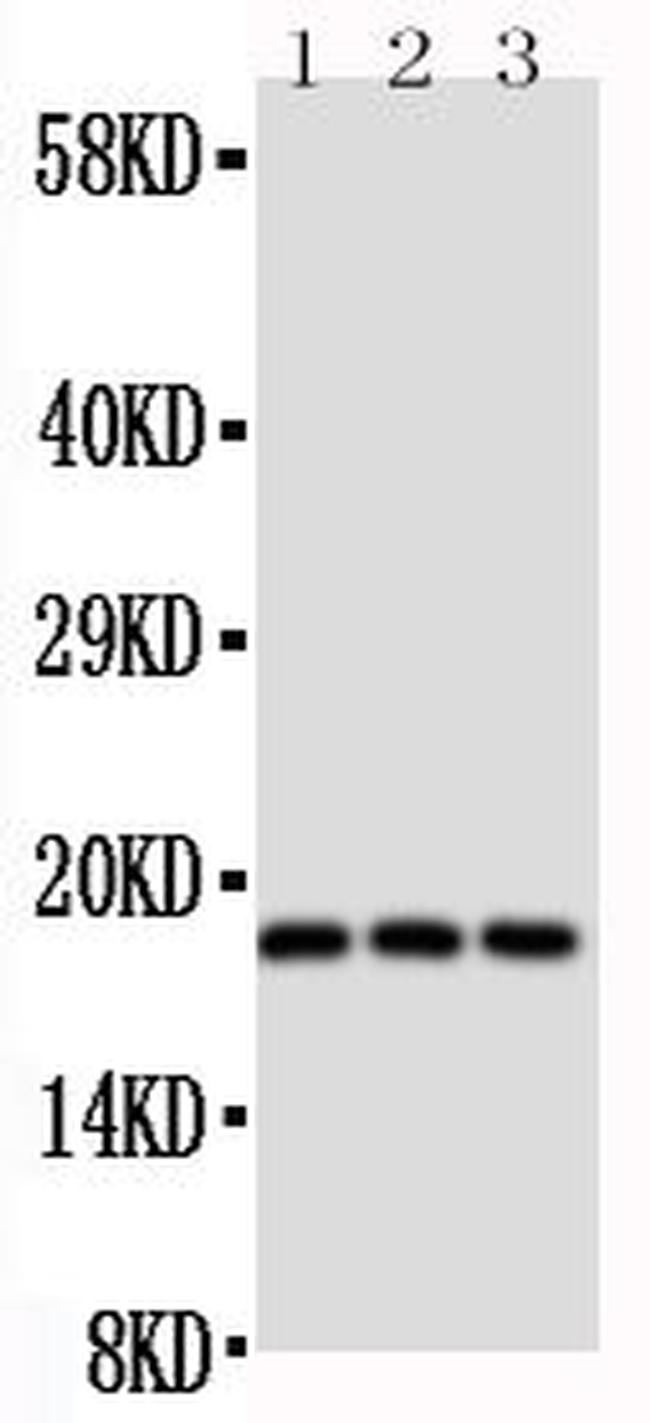
Positive Control - WB: Rat Brain Tissue, Rat Liver Tissue, Rat Thymus Tissue.|Store at -20°C for one year from date of receipt. After reconstitution, at 4°C for one month. It can also be aliquotted and stored frozen at -20°C for six months. Avoid repeated freeze-thaw cycles.
靶标信息
CD90 (Thy 1) antigen is a GPI linked glycoprotein member of the Immunoglobulin super family. CD90 is expressed in murine T cells, thymocytes, neural cells, Kupffer's cells and fibroblasts. CD90 may play a role in cell-cell or cell-ligand interactions during synaptogenesis and other events in the brain. CD90 can be used as a marker for a variety of stem cells and for the axonal processes of mature neurons. Structural study of CD90 led to the foundation of the Immunoglobulin superfamily, of which it is the smallest member, and led to the first biochemical description and characterization of a vertebrate GPI anchor. Diseases associated with CD90 dysfunction include nasopharyngeal carcinoma and thymoma.
⚠WARNING: This product can expose you to chemicals including mercury, which is known to the State of California to cause birth defects or other reproductive harm. For more information go to www.P65Warnings.ca.gov.
仅用于科研。不用于诊断过程。未经明确授权不得转售。
篇参考文献 (0)
您是否在文献中引用过该产品?请点击下方按钮邮件告知我们。
生物信息学
蛋白别名: CD90; CDw90; FLJ33325; Thy 1.2; Thy-1 antigen; thy-1 glycoprotein; Thy-1 membrane glycoprotein; Thy-1 protein; Thy-1 T-cell antigen; thymus cell antigen 1, theta; Thymus cell surface antigen
基因别名: CD7; CD90; CDw90; T25; Thy-1; Thy-1.2; THY1; Thy1.1; Thy1.2
UniProt ID: (Human) P04216, (Mouse) P01831, (Rat) P01830
Entrez Gene ID: (Human) 7070, (Mouse) 21838, (Rat) 24832
angiogenesis
negative regulation of protein kinase activity
cytoskeleton organization
single organismal cell-cell adhesion
negative regulation of cell migration
positive regulation of GTPase activity
retinal cone cell development
protein autophosphorylation
focal adhesion assembly
negative regulation of axonogenesis
T cell receptor signaling pathway
negative regulation of T cell receptor signaling pathway
positive regulation of T cell activation
positive regulation of release of sequestered calcium ion into cytosol
negative regulation of apoptotic process
mast cell activation
negative regulation of fibroblast proliferation
positive regulation of peptidyl-tyrosine phosphorylation

