Search
Invitrogen
Caveolin 1 Polyclonal Antibody
{{$productOrderCtrl.translations['antibody.pdp.commerceCard.promotion.promotions']}}
{{$productOrderCtrl.translations['antibody.pdp.commerceCard.promotion.promocode']}}: {{promo.promoCode}} {{promo.promoTitle}} {{promo.promoDescription}}. {{$productOrderCtrl.translations['antibody.pdp.commerceCard.promotion.learnmore']}}
{{$ctrl.translations['antibody.pdp.skuNotes.additionalInformation']}}:
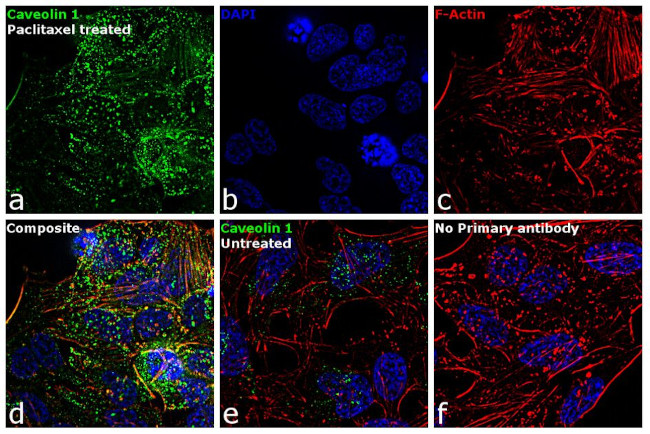
图: 1 / 17
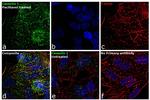
Caveolin 1 Antibody (PA5-17447) in ICC/IF
Immunofluorescence analysis of Caveolin 1 was performed using 70% confluent log phase HeLa cells treated with 2 nM of Paclitaxel for 24 hr. The cells were fixed with 4% paraformaldehyde for 10 minutes, permeabilized with 0.1% Triton™ X-100 for 15 minutes, and blocked with 1% BSA for 1 hour at room temperature. The cells were labeled with Caveolin 1 Rabbit Polyclonal Antibody(Product # PA5-17447) at 1:100 di... View More

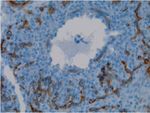
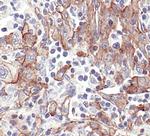
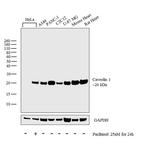
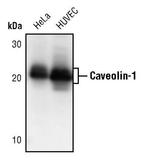
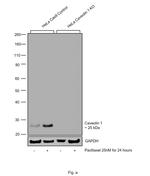
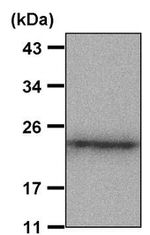
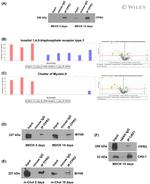
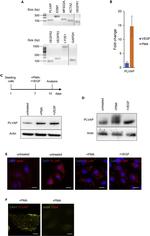
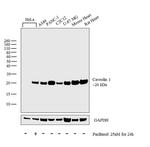
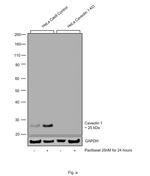
Please note: We are reviewing Western blot images included in the antibody testing data in our catalog, including those provided by third parties. Unless expressly labeled or annotated as “raw-unedited”, Western blot images included in the antibody testing data in our catalog may have been edited, optimized or otherwise adjusted for presentation.


产品信息
PA5-17447
应用
建议稀释比
已发表文章
产品规格
种属反应
Bovine,
Chicken,
Hamster,
Human,
Mouse,
Pig,
Rat,
Zebrafish
已发表种属
Chicken,
Dog,
Human,
Mouse
宿主/亚型
Rabbit
/ IgG
分类
Polyclonal
类型
Antibody
抗原
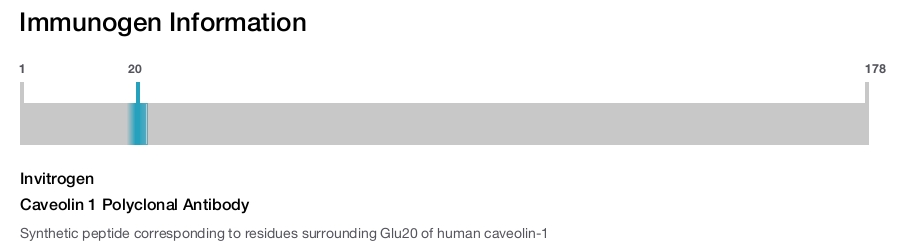
Synthetic peptide corresponding to residues surrounding Glu20 of human caveolin-1
偶联物
Unconjugated
Unconjugated
Unconjugated
形式
Liquid
浓度
33 µg/mL
规格
3.3 µg
纯化类型
Antigen affinity chromatography, Protein A
保存液
0.01M HEPES, pH 7.5, with 0.15M NaCl, 100µg/mL BSA, 50% glycerol
内含物
no preservative
保存条件
-20°C
运输条件
Ambient (domestic); Wet ice (international)
RRID
产品详细信息
It is not recommended to aliquot this antibody.
This antibody is not cross-reactive with caveolin-2 or -3.
靶标信息
Caveolin-1 or CAV1 is a scaffolding proteins within caveolar membranes. It interacts directly with G-protein alpha subunits and can functionally regulate their activity. Caveolin-1 is also involved in the co-stimulatory signal essential for T-cell receptor (TCR) mediated T-cell activation. It can bind with DPP4 and induces T-cell proliferation and NF-kappa-B activation in a T-cell receptor/CD3-dependent manner. Mutations affecting the CAV1 gene can result in congenital generalized lipodystrophy 3, pulmonary hypertension primary 3, or partial lipodystrophy/congenital cataracts, and neurodegeneration syndrome.
仅用于科研。不用于诊断过程。未经明确授权不得转售。
生物信息学
蛋白别名: CAV1; caveolae; caveolin 1, caveolae protein; caveolin 1, caveolae protein, 22kDa; caveolin caveolae protein 22 kDa; caveolin, caveolae protein 1; caveolin, caveolae protein, 22 kDa; caveolin-like; cell growth-inhibiting protein 32; GIG32; HGNC:1527; OTTHUMP00000196475; unnamed protein product; variant a; variant b
基因别名: BSCL3; Cav; Cav-1; Caveolin-1; CGL3; LCCNS; MSTP085; PPH3; VIP21; wu:fc07c04
UniProt ID: (Pig) Q6RVA9, (Chicken) P35431, (Bovine) P79132, (Human) Q03135, (Mouse) P49817
protein kinase binding
ion channel binding
binding, bridging
receptor binding
peptidase activator activity
protein binding, bridging
identical protein binding
macromolecular complex binding
protein heterodimerization activity
Rac GTPase binding
nitric-oxide synthase binding
ATPase binding
inward rectifier potassium channel inhibitor activity
patched binding
protein binding
oxysterol binding
cholesterol binding
enzyme binding
protein tyrosine kinase inhibitor activity
small GTPase binding
nitric-oxide synthase inhibitor activity
protein sequestering activity
SNARE binding
kinase binding
receptor serine/threonine kinase binding
beta-catenin binding
scaffold/adaptor protein
biological_process
negative regulation of transforming growth factor beta receptor signaling pathway
T cell costimulation
receptor internalization
negative regulation of endothelial cell proliferation
cell differentiation
regulation of cytosolic calcium ion concentration
negative regulation of protein tyrosine kinase activity
caveola assembly
negative regulation of transcription from RNA polymerase II promoter
inactivation of MAPK activity
angiogenesis
vasculogenesis
response to hypoxia
negative regulation of cytokine-mediated signaling pathway
response to ischemia
regulation of the force of heart contraction by chemical signal
triglyceride metabolic process
calcium ion transport
regulation of smooth muscle contraction
skeletal muscle tissue development
lactation
protein localization
response to bacterium
positive regulation of calcium ion transport into cytosol
posttranscriptional regulation of gene expression
positive regulation of gene expression
positive regulation of cholesterol efflux
positive regulation of peptidase activity
receptor-mediated endocytosis of virus by host cell
regulation of fatty acid metabolic process
lipid storage
regulation of blood coagulation
positive regulation of cell migration
negative regulation of epithelial cell differentiation
negative regulation of protein ubiquitination
positive regulation of protein ubiquitination
negative regulation of protein binding
positive regulation of protein binding
response to progesterone
negative regulation of peptidyl-serine phosphorylation
positive regulation of peptidyl-serine phosphorylation
nitric oxide homeostasis
positive regulation of toll-like receptor 3 signaling pathway
insulin receptor internalization
vasoconstriction
negative regulation of tyrosine phosphorylation of STAT protein
cholesterol homeostasis
response to estrogen
negative regulation of nitric oxide biosynthetic process
positive regulation of vasoconstriction
negative regulation of pinocytosis
negative regulation of nitric-oxide synthase activity
positive regulation of NF-kappaB transcription factor activity
response to calcium ion
membrane depolarization
mammary gland involution
positive regulation of cell adhesion molecule production
negative regulation of necroptotic process
cellular response to exogenous dsRNA
cellular response to hyperoxia
cellular response to transforming growth factor beta stimulus
basement membrane organization
caveolin-mediated endocytosis
regulation of heart rate by cardiac conduction
angiotensin-activated signaling pathway involved in heart process
negative regulation of canonical Wnt signaling pathway
positive regulation of canonical Wnt signaling pathway
apoptotic signaling pathway
regulation of membrane repolarization during action potential
regulation of ventricular cardiac muscle cell action potential
positive regulation of cold-induced thermogenesis
regulation of ruffle assembly
negative regulation of peptidyl-tyrosine autophosphorylation
regulation of cell communication by electrical coupling involved in cardiac conduction
positive regulation of ER-associated ubiquitin-dependent protein catabolic process
positive regulation of gap junction assembly
negative regulation of inward rectifier potassium channel activity
receptor internalization involved in canonical Wnt signaling pathway
regulation of entry of bacterium into host cell
negative regulation of anoikis
positive regulation of extrinsic apoptotic signaling pathway
positive regulation of intrinsic apoptotic signaling pathway
cellular calcium ion homeostasis
cellular response to starvation
vesicle organization
cholesterol transport
negative regulation of BMP signaling pathway
mammary gland development
maintenance of protein location in cell
angiotensin-activated signaling pathway
positive regulation of I-kappaB kinase/NF-kappaB signaling
negative regulation of MAPK cascade
protein localization to plasma membrane raft
nitric oxide metabolic process
negative regulation of JAK-STAT cascade
calcium ion homeostasis
canonical Wnt signaling pathway
cellular response to misfolded protein
cellular response to peptide hormone stimulus
regulation of cardiac muscle cell action potential involved in regulation of contraction
negative regulation of potassium ion transmembrane transport
protein localization to basolateral plasma membrane
positive regulation of ERAD pathway
positive regulation of endothelial cell proliferation
regulation of the force of heart contraction
response to nutrient
negative regulation of cell proliferation
response to xenobiotic stimulus
response to mechanical stimulus
positive regulation of signal transduction
negative regulation of signal transduction
response to gamma radiation
negative regulation of muscle cell apoptotic process
negative regulation of smooth muscle cell migration
protein transport
organ regeneration
positive regulation of microtubule polymerization
cholesterol efflux
positive regulation of catalytic activity
negative regulation of MAP kinase activity
negative regulation of neuron differentiation
positive regulation of endocytosis
microtubule polymerization
negative regulation of smooth muscle cell proliferation
response to glucocorticoid
regulation of peptidase activity
negative regulation of ERK1 and ERK2 cascade
cellular response to mechanical stimulus
cellular response to hypoxia
cellular senescence
regulation of potassium ion export across plasma membrane
negative regulation of vascular smooth muscle cell proliferation
negative regulation of calcium ion import across plasma membrane
endocytosis
toll-like receptor 4 signaling pathway
regulation of toll-like receptor 4 signaling pathway
somitogenesis
heart development
dorsal/ventral pattern formation
intestinal cholesterol absorption
neuromast development
regulation of defense response to virus
notochord cell vacuolation
cardiac muscle cell proliferation
regulation of type I interferon-mediated signaling pathway
cardiac muscle tissue regeneration
Disclaimer

Clicking the images or links will redirect you to a website hosted by BenchSci that provides third-party scientific content. Neither the content nor the BenchSci technology and processes for selection have been evaluated by us; we are providing them as-is and without warranty of any kind, including for use or application of the Thermo Fisher Scientific products presented.

