Search
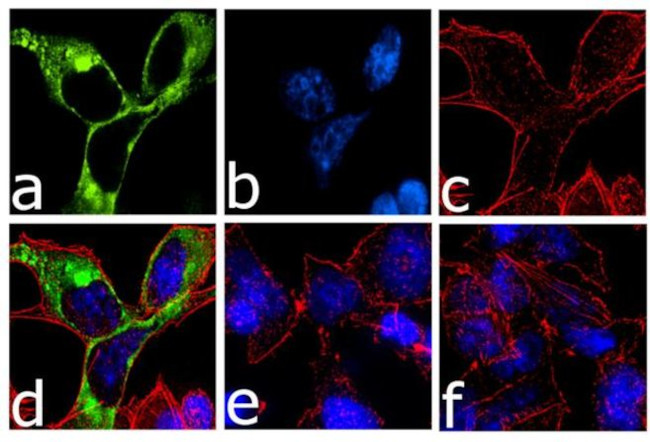
图: 1 / 7
DYKDDDDK Tag Antibody (740001) in ICC/IF
For immunofluorescence analysis DYKDDDDK - BNIP3 transfected HEK293 cells were fixed and permeabilized for detection of DYKDDDDK-Tag protein using Anti-DYKDDDDK Recombinant Rabbit Superclonal™ Antibody (Product # 740001, 1 µg/mL) and labeled with Goat anti-Rabbit IgG (Heavy Chain) Superclonal™ Secondary Antibody, Alexa Fluor® 488 conjugate (Product # A27034, 1:2000). Panel a) shows representative cells that... View More
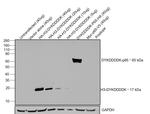
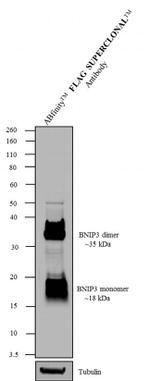
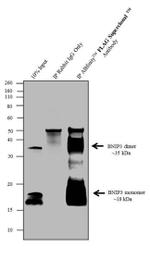
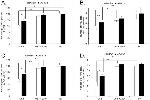
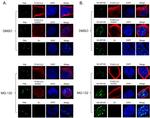
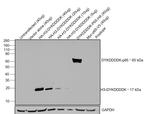
Please note: We are reviewing Western blot images included in the antibody testing data in our catalog, including those provided by third parties. Unless expressly labeled or annotated as “raw-unedited”, Western blot images included in the antibody testing data in our catalog may have been edited, optimized or otherwise adjusted for presentation.


产品信息
740001
应用
建议稀释比
已发表文章
产品规格
种属反应
Tag
已发表种属
C. elegans,
Human,
Mouse,
Tag
宿主/亚型
Rabbit
/ IgG
Expression System
Expi293
分类
Recombinant Superclonal
类型
Antibody
克隆号
20H18L16, 20H1L23, 8H2L5, 8H8L17
抗原
Synthetic peptide (DYKDDDDK)
偶联物
Unconjugated
Unconjugated
Unconjugated
形式
Liquid
浓度
0.5 mg/mL
规格
100 µg
纯化类型
Protein A
保存液
PBS, pH 7.2-7.4
内含物
0.09% sodium azide
保存条件
Store at 4°C short term. For long term storage, store at -20°C, avoiding freeze/thaw cycles.
运输条件
Wet ice
RRID
产品详细信息
This antibody consists of four clones viz. 20H18L16 and 20H1L23 from the N terminal and 8H2L5 and 8H8L17 from the C terminal.
Recombinant rabbit Superclonal™ antibodies are unique offerings from Thermo Fisher Scientific. They are comprised of a mixture of recombinant antibodies co-expressed from a library of heavy and light chains, providing the best of both worlds the sensitivity of polyclonal antibodies with the specificity of monoclonal antibodies - all delivered with the consistency only found in a recombinant antibody. While functionally the same as a polyclonal antibody recognizing multiple epitope sites on the target and producing higher detection sensitivity for low abundance targets the exact population of the heavy and light chains in a recombinant rabbit Superclonal™ antibody can be produced in every lot, circumventing the biological variability typically associated with polyclonal antibody production. Note: Formerly called 'Recombinant polyclonal antibody', this product is now rebranded as 'Recombinant Superclonal™ antibody'. The physical product and the performance remain unchanged.
靶标信息
DYKDDDDK tag, also known as FLAG tag, is a short peptide sequence that is commonly used as a protein tag to facilitate protein purification, detection, and localization. The tag consists of eight amino acids: Asp-Tyr-Lys-Asp-Asp-Asp-Asp-Lys. It is often fused to the N- or C-terminus of a protein of interest, allowing for easy identification and isolation of the protein using anti-FLAG antibodies. The DYKDDDDK tag is widely used in molecular biology and biochemistry research, and has been employed in various applications, such as protein-protein interaction studies, protein expression analysis, and protein localization studies. The FLAG tag structure has been optimized for compatibility with the proteins it is attached to, in that it is more hydrophilic than other common epitope tags and therefore less likely to denature or inactivate proteins to which it is appended. FLAG is a registered trademark of Merck KGaA, Darmstadt, Germany.
仅用于科研。不用于诊断过程。未经明确授权不得转售。
生物信息学
蛋白别名: DDDDK; DDDDK epitope tag; ECS epitope tag; ECS tag; FLAG; FLAG Tag
Disclaimer

Clicking the images or links will redirect you to a website hosted by BenchSci that provides third-party scientific content. Neither the content nor the BenchSci technology and processes for selection have been evaluated by us; we are providing them as-is and without warranty of any kind, including for use or application of the Thermo Fisher Scientific products presented.

