Search
Invitrogen
PIAS3 Polyclonal Antibody
{{$productOrderCtrl.translations['antibody.pdp.commerceCard.promotion.promotions']}}
{{$productOrderCtrl.translations['antibody.pdp.commerceCard.promotion.promocode']}}: {{promo.promoCode}} {{promo.promoTitle}} {{promo.promoDescription}}. {{$productOrderCtrl.translations['antibody.pdp.commerceCard.promotion.learnmore']}}
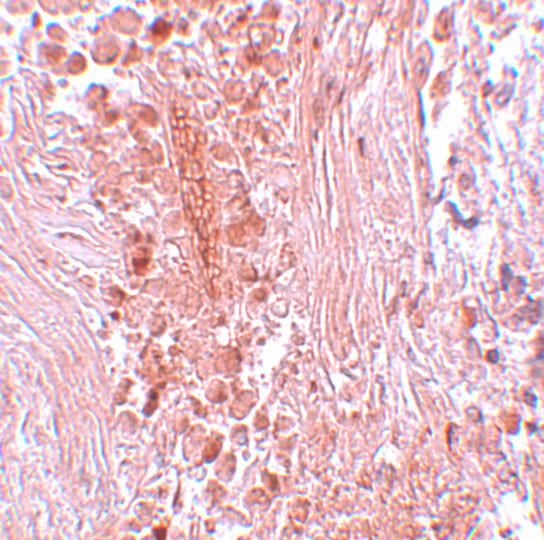
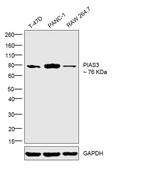
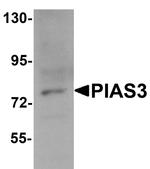
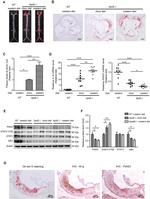
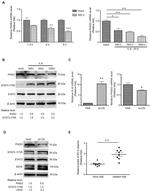
Please note: We are reviewing Western blot images included in the antibody testing data in our catalog, including those provided by third parties. Unless expressly labeled or annotated as “raw-unedited”, Western blot images included in the antibody testing data in our catalog may have been edited, optimized or otherwise adjusted for presentation.


Product Details
PA5-20953
Applications
Tested Dilution
Publications
Product Specifications
Species Reactivity
Human,
Mouse,
Rat
Published species
Human,
Mouse
Host/Isotype
Rabbit
/ IgG
Class
Polyclonal
Type
Antibody
Immunogen
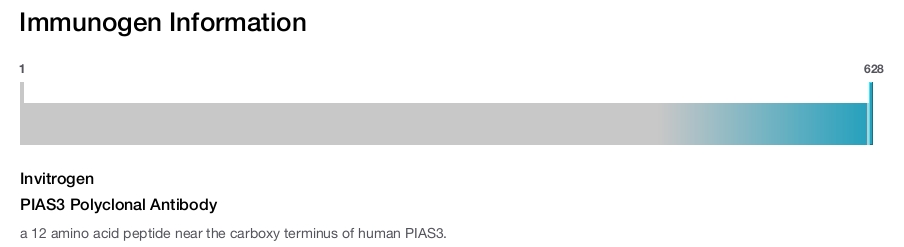
a 12 amino acid peptide near the carboxy terminus of human PIAS3.
Conjugate
Unconjugated
Unconjugated
Unconjugated
Form
Liquid
Concentration
1 mg/mL
Amount
100 µg
Purification
Antigen affinity chromatography
Storage buffer
PBS
Contains
0.02% sodium azide
Storage conditions
Maintain refrigerated at 2-8°C for up to 3 months. For long term storage store at -20°C
Shipping conditions
Ambient (domestic); Wet ice (international)
RRID
Product Specific Information
A suggested positive control is K562 cell lysate.
PA5-20953 can be used with blocking peptide PEP-1067.
Target Information
The PIAS (protein inhibitor of activated STAT) proteins play a crucial role as transcriptional coregulators in various cellular pathways, including the STAT, p53 and the steroid hormone signaling pathway. The PIAS protein family includes at least five evolutionarily conserved genes, including PIAS3. The major function of the PIAS proteins is the control of gene transcription and can also act as small ubiquitin-like-modifier (SUMO) E3 ligases. PIAS3 binds specifically to STAT3 following the stimulation of STAT3. Increased expression of PIAS3 has been observed in several human cancers, including lung, breast, and brain tumors, but not in anaplastic lymphoma kinase-positive T/null-cell lymphomas, indicating that PIAS3 plays multiple roles in different tissue and cell types.
For Research Use Only. Not for use in diagnostic procedures. Not for resale without express authorization.
Bioinformatics
Protein Aliases: E3 SUMO-protein transferase PIAS3; KChAP; PIAS3; potassium channel regulatory protein KChAP; potassium channel-associated protein; protein inhibitor of activated STAT protein 3; unnamed protein product; zinc finger, MIZ-type containing 5
Gene Aliases: Pias3l; ZMIZ5
UniProt ID: (Human) Q9Y6X2, (Rat) O70260, (Mouse) O54714
Entrez Gene ID: (Human) 10401, (Rat) 83614, (Mouse) 229615
negative regulation of transcription from RNA polymerase II promoter
response to hormone
positive regulation of gene expression
negative regulation of gene expression
regulation of tumor necrosis factor-mediated signaling pathway
protein sumoylation
negative regulation of protein sumoylation
positive regulation of protein sumoylation
negative regulation of osteoclast differentiation
positive regulation of membrane potential
negative regulation of transcription, DNA-templated
negative regulation of JAK-STAT cascade
Disclaimer

Clicking the images or links will redirect you to a website hosted by BenchSci that provides third-party scientific content. Neither the content nor the BenchSci technology and processes for selection have been evaluated by us; we are providing them as-is and without warranty of any kind, including for use or application of the Thermo Fisher Scientific products presented.

Performance Guarantee
If an Invitrogen™ antibody doesn't perform as described on our website or datasheet,we'll replace the product at no cost to you, or provide you with a credit for a future purchase.*
Learn more
We're here to help
Get expert recommendations for common problems or connect directly with an on staff expert for technical assistance related to applications, equipment and general product use.
Contact tech support