Search
Abnova
PSG3 Polyclonal Antibody, MaxPab™
{{$productOrderCtrl.translations['antibody.pdp.commerceCard.promotion.promotions']}}
{{$productOrderCtrl.translations['antibody.pdp.commerceCard.promotion.promocode']}}: {{promo.promoCode}} {{promo.promoTitle}} {{promo.promoDescription}}. {{$productOrderCtrl.translations['antibody.pdp.commerceCard.promotion.learnmore']}}
{{$ctrl.translations['antibody.pdp.skuNotes.additionalInformation']}}:
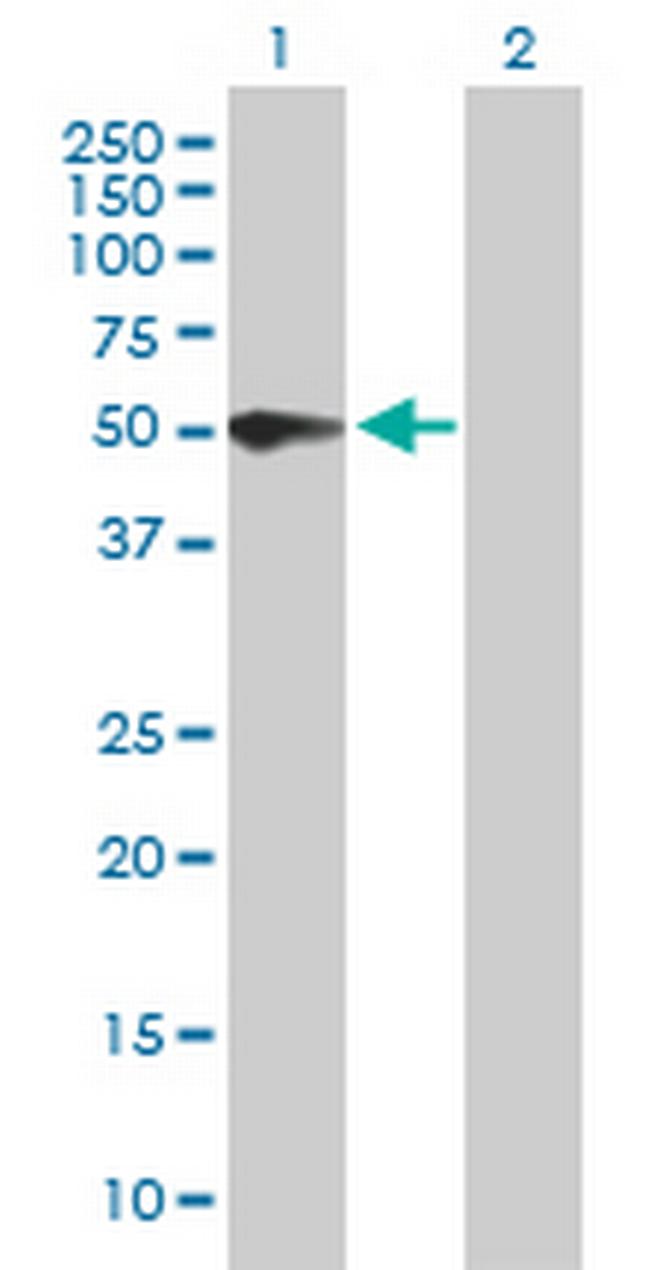
Please note: We are reviewing Western blot images included in the antibody testing data in our catalog, including those provided by third parties. Unless expressly labeled or annotated as “raw-unedited”, Western blot images included in the antibody testing data in our catalog may have been edited, optimized or otherwise adjusted for presentation.

Product Details
H00005671-B01P
Product Specifications
Species Reactivity
Human
Host/Isotype
Mouse
/ IgG
Class
Polyclonal
Type
Antibody
Immunogen
PSG3 (AAH05924.2, 1 a.a. approximately 428 a.a) full-length human protein.
Conjugate
Unconjugated
Unconjugated
Unconjugated
Form
Liquid
Concentration
1 mg/mL
Amount
50 µg
Purification
Protein A
Storage buffer
PBS, pH 7.4
Contains
no preservative
Storage conditions
-20°C, Avoid Freeze/Thaw Cycles
Shipping conditions
Ambient (domestic); Wet ice (international)
Product Specific Information
Product may be used with Western Blot (Transfected lysate).
The Isotype of this product is composed of an IgG Mixture.
Immunogen sequence: MGPLSAPPCT QRITWKGLLL TALLLNFWNL PTTAQVTIEA EPTKVSKGKD VLLLVHNLPQ NLAGYIWYKG QMKDLYHYIT SYVVDGQIII YGPAYSGRET VYSNASLLIQ NVTREDAGSY TLHIVKRGDG TRGETGHFTF TLYLETPKPS ISSSNLYPRE DMEAVSLTCD PETPDASYLW WMNGQSLPMT HSLQLSKNKR TLFLFGVTKY TAGPYECEIR NPVSASRSDP VTLNLLPKLP KPYITINNLN PRENKDVLAF TCEPKSENYT YIWWLNGQSL PVSPRVKRPI ENRILILPSV TRNETGPYQC EIQDRYGGIR SYPVTLNVLY GPDLPRIYPS FTYYHSGENL YLSCFADSNP PAEYSWTING KFQLSGQKLF IPQITTKHSG LYACSVRNSA TGMESSKSMT VEVSAPSGTG HLPGLNPL
Target Information
The pregnancy-specific glycoproteins (PSGs) are a group of closely related secreted glycoproteins that are highly expressed in fetal placental syncytiotrophoblast cells. Members of the PSG protein family share a characteristic N-terminal domain that is homologous to the immunoglobulin variable region. PSGs become detectable in serum during the first two to three weeks of pregnancy and increase as the pregnancy progresses, eventually representing the most abundant fetal protein in the maternal blood at term. PSGs function to stimulate secretion of TH2-type cytokines from monocytes, and they may also modulate the maternal immune system during pregnancy, thereby protecting the semi-allotypic fetus from rejection. Eleven human PSG proteins (PSG1-PSG11) have been described.
For Research Use Only. Not for use in diagnostic procedures. Not for resale without express authorization.
References (0)
Have you cited this product in a publication?
Let us know so we can reference it here.
Bioinformatics
Protein Aliases: carcinoembryonic antigen SG5; pregnancy-specific beta-1 glycoprotein precursor; pregnancy-specific glycoprotein 3; PS-beta-G-3; PSBG-3; sg5
UniProt ID: (Human) Q16557
Entrez Gene ID: (Human) 5671
Disclaimer

Clicking the images or links will redirect you to a website hosted by BenchSci that provides third-party scientific content. Neither the content nor the BenchSci technology and processes for selection have been evaluated by us; we are providing them as-is and without warranty of any kind, including for use or application of the Thermo Fisher Scientific products presented.

Performance Guarantee
If an Invitrogen™ antibody doesn't perform as described on our website or datasheet,we'll replace the product at no cost to you, or provide you with a credit for a future purchase.*
Learn more
We're here to help
Get expert recommendations for common problems or connect directly with an on staff expert for technical assistance related to applications, equipment and general product use.
Contact tech support