Search
Invitrogen
PTPRK Polyclonal Antibody
{{$productOrderCtrl.translations['antibody.pdp.commerceCard.promotion.promotions']}}
{{$productOrderCtrl.translations['antibody.pdp.commerceCard.promotion.promocode']}}: {{promo.promoCode}} {{promo.promoTitle}} {{promo.promoDescription}}. {{$productOrderCtrl.translations['antibody.pdp.commerceCard.promotion.learnmore']}}
{{$ctrl.translations['antibody.pdp.skuNotes.additionalInformation']}}:
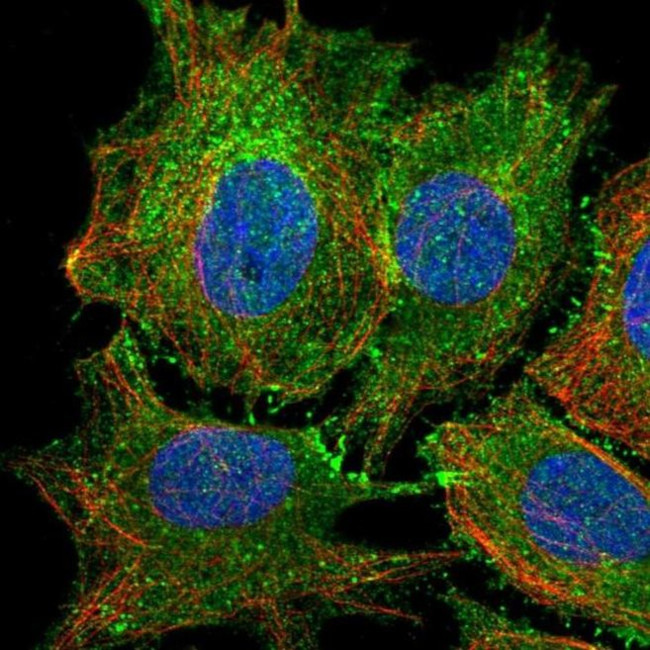
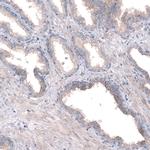

Please note: We are reviewing Western blot images included in the antibody testing data in our catalog, including those provided by third parties. Unless expressly labeled or annotated as “raw-unedited”, Western blot images included in the antibody testing data in our catalog may have been edited, optimized or otherwise adjusted for presentation.


Product Details
PA5-63026
Applications
Tested Dilution
Publications
Product Specifications
Species Reactivity
Human
Host/Isotype
Rabbit
/ IgG
Class
Polyclonal
Type
Antibody
Immunogen
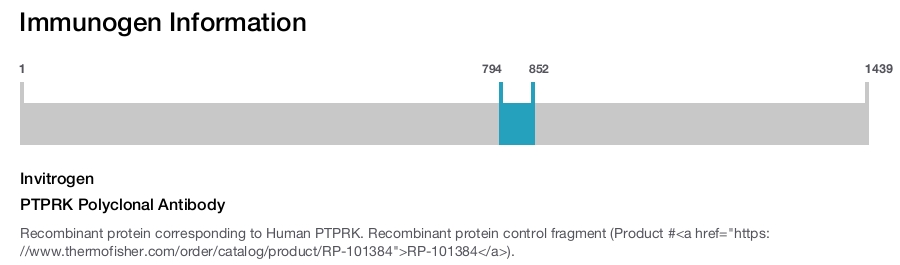
Recombinant protein corresponding to Human PTPRK. Recombinant protein control fragment (Product #RP-101384).
Conjugate
Unconjugated
Unconjugated
Unconjugated
Form
Liquid
Concentration
0.1 mg/mL
Amount
10 µg
Purification
Antigen affinity chromatography
Storage buffer
PBS, pH 7.2, with 40% glycerol
Contains
0.02% sodium azide
Storage conditions
Store at 4°C short term. For long term storage, store at -20°C, avoiding freeze/thaw cycles.
Shipping conditions
Ambient (domestic); Wet ice (international)
RRID
Product Specific Information
Immunogen sequence: MTHMVNAMDR SYADQSTLHA EDPLSITFMD QHNFSPRYEN HSATAESSRL LDVPRYLCE
Highest antigen sequence identity to the following orthologs: Mouse - 98%, Rat - 98%.
Target Information
Protein tyrosine phosphatases, or PTPs, are type I transmembrane proteins, membrane associated proteins or proteins localized in nuclei. Examples of transmembrane PTPs are LAR, PTP alpha, PTP beta, PTP gamma, PTP delta, PTP epsilon, PTP zeta, PTPk and PTP-mu. Transmembrane PTPs play diverse roles during development and in adult tissues. Immunodepletion studies have suggested LAR to be a regulator of Insulin receptor phosphorylation. PTP alpha activity is increased twofold in response to phorbol ester stimulation, resulting in serine phosphorylation either directly or indirectly by members of the PKC family. Overexpression of v-H-ras and Neu, but not Myc or Int2, in mammary tumors has been shown to induce PTP epsilon expression. An alternative splicing event leads to a nervous tissue-specific chondroitin sulfate proteoglycan called phosphacan, which represents the amino terminal portion of PTP zeta. PTPk and PTP-mu share a conserved amino terminal 160 amino acid MAM domain which facilitates homophilic binding. PTP-mu localizes to points of cell contact and may be involved in regulating the assembly and disassembly of cadherin/catenin complexes in vivo.
For Research Use Only. Not for use in diagnostic procedures. Not for resale without express authorization.
References (0)
Have you cited this product in a publication?
Let us know so we can reference it here.
Bioinformatics
Protein Aliases: dJ480J14.2.1 (protein tyrosine phosphatase, receptor type, K (R-PTP-KAPPA, protein tyrosine phosphatase kappa , protein tyrosine phosphatase kappa; protein-tyrosine phosphatase kappa; protein-tyrosine phosphatase, receptor type, kappa; R-PTP-k; R-PTPk; unnamed protein product
Gene Aliases: R-PTP-kappa
UniProt ID: (Human) Q15262
Entrez Gene ID: (Human) 5796
protein dephosphorylation
cell adhesion
signal transduction
transforming growth factor beta receptor signaling pathway
negative regulation of cell proliferation
negative regulation of keratinocyte proliferation
cell migration
negative regulation of cell migration
neuron projection development
protein localization to cell surface
cellular response to reactive oxygen species
cellular response to UV
negative regulation of cell cycle
negative regulation of transcription, DNA-templated
focal adhesion assembly
Disclaimer

Clicking the images or links will redirect you to a website hosted by BenchSci that provides third-party scientific content. Neither the content nor the BenchSci technology and processes for selection have been evaluated by us; we are providing them as-is and without warranty of any kind, including for use or application of the Thermo Fisher Scientific products presented.

Performance Guarantee
If an Invitrogen™ antibody doesn't perform as described on our website or datasheet,we'll replace the product at no cost to you, or provide you with a credit for a future purchase.*
Learn more
We're here to help
Get expert recommendations for common problems or connect directly with an on staff expert for technical assistance related to applications, equipment and general product use.
Contact tech support