Search
Invitrogen
Phospho-JNK1/JNK2 (Thr183, Tyr185) Recombinant Rabbit Monoclonal Antibody (D12H7L17)
{{$productOrderCtrl.translations['antibody.pdp.commerceCard.promotion.promotions']}}
{{$productOrderCtrl.translations['antibody.pdp.commerceCard.promotion.promocode']}}: {{promo.promoCode}} {{promo.promoTitle}} {{promo.promoDescription}}. {{$productOrderCtrl.translations['antibody.pdp.commerceCard.promotion.learnmore']}}
{{$ctrl.translations['antibody.pdp.skuNotes.additionalInformation']}}:

图: 1 / 14
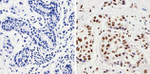
Phospho-JNK1/JNK2 (Thr183, Tyr185) Antibody (700031) in ICC/IF
Immunofluorescent analysis of Phospho-JNK1/JNK2 pThr183+pTyr185 in HeLa cells using a Phospho-JNK1/JNK2 pThr183+pTyr185 recombinant rabbit monoclonal antibody (Product # 700031) at a dilution of 5 µg/mL in the absence of peptide (left) or in the presence of the immunogenic peptide (right), followed by detection using an Alexa Fluor 488-conjugated goat anti-rabbit secondary antibody at a dilution of 1:1000.


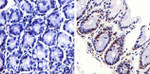
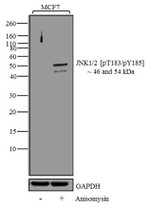

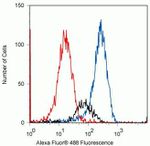
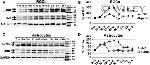
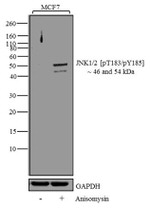
Please note: We are reviewing Western blot images included in the antibody testing data in our catalog, including those provided by third parties. Unless expressly labeled or annotated as “raw-unedited”, Western blot images included in the antibody testing data in our catalog may have been edited, optimized or otherwise adjusted for presentation.


产品信息
700031
应用
建议稀释比
已发表文章
产品规格
种属反应
Human,
Mouse
已发表种属
Human,
Insect,
Mouse
宿主/亚型
Rabbit
/ IgG
Expression System
Expi293
分类
Recombinant Monoclonal
类型
Antibody
克隆号
D12H7L17
抗原
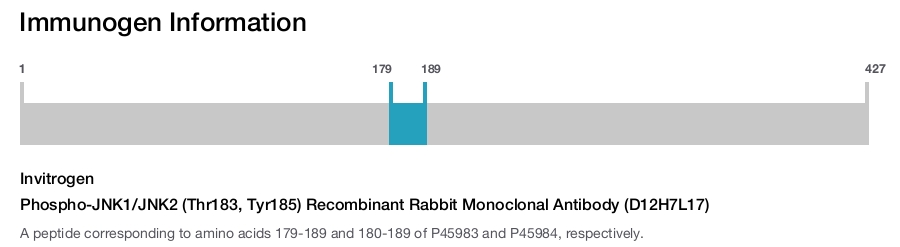
A peptide corresponding to amino acids 179-189 and 180-189 of P45983 and P45984, respectively.
偶联物
Unconjugated
Unconjugated
Unconjugated
形式
Liquid
浓度
0.5 mg/mL
规格
100 µg
纯化类型
Protein A
保存液
PBS, pH 7.2-7.4
内含物
0.09% sodium azide
保存条件
Store at 4°C short term. For long term storage, store at -20°C, avoiding freeze/thaw cycles.
运输条件
Wet ice
RRID
产品详细信息
This antibody is predicted to react with mouse, rat, primate, canine, bovine, porcine, chicken, equine, zebrafish and Xenopus based on sequence homology.
Intact IgG appears on a non-reducing gel as ~150 kDa band and upon reduction generating a ~25 kDa light chain band and a ~50 kDa heavy chain.
Recombinant rabbit monoclonal antibodies are produced using in vitro expression systems. The expression systems are developed by cloning in the specific antibody DNA sequences from immunoreactive rabbits. Then, individual clones are screened to select the best candidates for production. The advantages of using recombinant rabbit monoclonal antibodies include: better specificity and sensitivity, lot-to-lot consistency, animal origin-free formulations, and broader immunoreactivity to diverse targets due to larger rabbit immune repertoire.
靶标信息
C-Jun N-terminal Kinase (JNK) is also known as Mitogen-activated protein kinase (MAPK8). It belongs to the MAPK superfamily of stress-activated protein kinases. MAPKs are Serine-threonine protein kinases that are activated in response to a variety of extracellular stimuli, and mediate signal transduction from the cell surface to the nucleus. JNK is involved in a wide variety of cellular processes such as proliferation, differentiation, transcription regulation and development. JNK pathways are activated by stress and inflammatory signals. JNK is expressed as ten different isoforms due to differential mRNA splicing. The predominant forms are JNK1 and JNK2.
仅用于科研。不用于诊断过程。未经明确授权不得转售。
生物信息学
蛋白别名: C-jun kinase; c-Jun kinase 2; c-Jun N-terminal kinase 1; c-Jun N-terminal kinase 2; JNK 55; JNK/SAPK alpha; JNK1 beta1 protein kinase; Jun kinase; JUN N-terminal kinase; MAP kinase 8; MAP kinase 9; MAPK; MAPK 8; MAPK 9; MAPK8; MAPK9; OTTHUMP00000019552; Phospho-JNK; PRKM; protein kinase JNK1; protein kinase mitogen-activated 8; protein kinase, mitogen-activated 9; SAPK 1; stress-activated protein kinase 1; stress-activated protein kinase 1a; stress-activated protein kinase 1c; stress-activated protein kinase JNK1; stress-activated protein kinase JNK2; unnamed protein product
基因别名: JNK; JNK-46; JNK-55; JNK1; JNK1A2; JNK2; JNK21B1/2; JNK2A; JNK2ALPHA; JNK2B; JNK2BETA; p54a; p54aSAPK; PRKM8; PRKM9; SAPK; SAPK1; SAPK1a; SAPK1c
UniProt ID: (Human) P45983, (Human) P45984, (Mouse) Q91Y86, (Mouse) Q9WTU6
Entrez Gene ID: (Human) 5599, (Human) 5601, (Mouse) 26419, (Mouse) 26420
protein kinase activity
protein serine/threonine kinase activity
JUN kinase activity
MAP kinase activity
protein binding
ATP binding
enzyme binding
protein phosphatase binding
histone deacetylase regulator activity
histone deacetylase binding
protein serine kinase activity
protein serine/threonine kinase binding
protein serine/threonine/tyrosine kinase activity
kinase activity
kinesin binding
mitogen-activated protein kinase kinase kinase binding
MAPK cascade
protein phosphorylation
response to oxidative stress
JNK cascade
JUN phosphorylation
response to UV
response to mechanical stimulus
positive regulation of gene expression
regulation of macroautophagy
peptidyl-serine phosphorylation
peptidyl-threonine phosphorylation
positive regulation of cyclase activity
positive regulation of cell killing
negative regulation of protein binding
regulation of protein localization
cellular response to amino acid starvation
cellular response to oxidative stress
cellular response to reactive oxygen species
Fc-epsilon receptor signaling pathway
regulation of circadian rhythm
positive regulation of apoptotic process
negative regulation of apoptotic process
positive regulation of protein metabolic process
stress-activated MAPK cascade
cellular response to lipopolysaccharide
cellular response to mechanical stimulus
cellular senescence
energy homeostasis
positive regulation of NLRP3 inflammasome complex assembly
positive regulation of establishment of protein localization to mitochondrion
release of cytochrome c from mitochondria
positive regulation of protein phosphorylation
positive regulation of macrophage derived foam cell differentiation
neuron projection development
positive regulation of prostaglandin biosynthetic process
regulation of protein ubiquitination
positive regulation of protein ubiquitination
positive regulation of prostaglandin secretion
positive regulation of proteasomal ubiquitin-dependent protein catabolic process
positive regulation of chemokine production
cellular response to UV
regulation of mRNA stability
positive regulation of cell differentiation
positive regulation of transcription, DNA-templated
regulation of JNK cascade
response to cadmium ion
modulation of synaptic transmission
mRNA destabilization
protein localization to tricellular tight junction
positive regulation of podosome assembly
inflammatory response to wounding
extrinsic apoptotic signaling pathway
positive regulation of cytokine production involved in inflammatory response
positive regulation of apoptotic signaling pathway
ossification
neuron migration
positive regulation of neuroblast proliferation
double-strand break repair
regulation of transcription, DNA-templated
integrin-mediated signaling pathway
neuromuscular junction development
regulation of gene expression
positive regulation of cardiac muscle cell apoptotic process
positive regulation of cell migration
positive regulation of microtubule polymerization
positive regulation of glial cell apoptotic process
ERBB signaling pathway
response to hydrogen peroxide
positive regulation of neuron apoptotic process
NLRP3 inflammasome complex assembly
regulation of neuron differentiation
positive regulation of DNA replication
regulation of centrosome cycle
determination of dorsal identity
dendrite morphogenesis
SMAD protein signal transduction
protein poly-ADP-ribosylation
cellular response to hydrogen peroxide
cellular response to nitric oxide
cellular response to oxygen-glucose deprivation
type B pancreatic cell apoptotic process
neuronal stem cell population maintenance
programmed necrotic cell death
regulation of dense core granule transport
protein localization to site of double-strand break
positive regulation of determination of dorsal identity
positive regulation of neuron migration
Disclaimer

Clicking the images or links will redirect you to a website hosted by BenchSci that provides third-party scientific content. Neither the content nor the BenchSci technology and processes for selection have been evaluated by us; we are providing them as-is and without warranty of any kind, including for use or application of the Thermo Fisher Scientific products presented.

