Search
Invitrogen
RhoA/RhoB/RhoC Recombinant Rabbit Monoclonal Antibody (K01_4N20)
{{$productOrderCtrl.translations['antibody.pdp.commerceCard.promotion.promotions']}}
{{$productOrderCtrl.translations['antibody.pdp.commerceCard.promotion.promocode']}}: {{promo.promoCode}} {{promo.promoTitle}} {{promo.promoDescription}}. {{$productOrderCtrl.translations['antibody.pdp.commerceCard.promotion.learnmore']}}
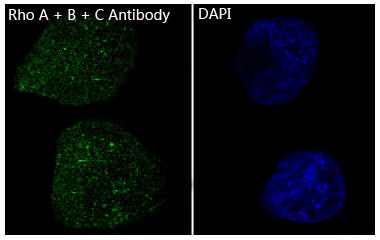
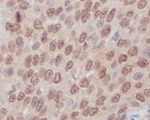
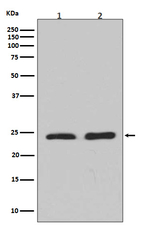
Please note: We are reviewing Western blot images included in the antibody testing data in our catalog, including those provided by third parties. Unless expressly labeled or annotated as “raw-unedited”, Western blot images included in the antibody testing data in our catalog may have been edited, optimized or otherwise adjusted for presentation.


产品信息
MA567444
应用
建议稀释比
已发表文章
产品规格
种属反应
Human,
Mouse,
Rat
宿主/亚型
Rabbit
/ IgG
Expression System
HEK293F
分类
Recombinant Monoclonal
类型
Antibody
克隆号
K01_4N20
抗原
A synthesized peptide derived from human Rho A + B + C.
偶联物
Unconjugated
Unconjugated
Unconjugated
形式
Liquid
浓度
1 mg/mL
规格
100 µg
纯化类型
Protein A/G
保存液
PBS, pH 7.4, with 0.05% BSA, 150mM NaCl, 50% glycerol
内含物
0.02% sodium azide
保存条件
Store at 4°C short term. For long term storage, store at -20°C, avoiding freeze/thaw cycles.
运输条件
Ambient (domestic); Wet ice (international)
靶标信息
RhoA is described as a small GTPase protein that regulates the actin cytoskeleton in the formation of stress fibers. RhoA is also included in the related proteins of the Ras superfamily, which involves proteins in the regulation and timing of cell division.
仅用于科研。不用于诊断过程。未经明确授权不得转售。
篇参考文献 (0)
您是否在文献中引用过该产品?请点击下方按钮邮件告知我们。
生物信息学
蛋白别名: Aplysia ras-related homolog 12; Aplysia RAS-related homolog 6; aplysia ras-related homolog 9 (RhoC); aplysia ras-related homolog A; aplysia ras-related homolog B; ARHB; ARHC; epididymis secretory sperm binding protein; h6; oncogene RHO H12; oncogene RHO H6; oncogene RHO H9; plysia ras-related homolog A2; ras homolog 9 (RhoC); ras homolog B; ras homolog gene family, member A; ras homolog gene family, member AB; ras homolog gene family, member B; ras homolog gene family, member C; RAS-related homolog 9; Rho; rho cDNA clone 6; rho cDNA clone 9; rho protein; RhoA; Rhob; rhoC GTPase; SIG-61; silica-induced gene 61 protein; small GTP binding protein; small GTP binding protein RhoA; small GTP binding protein RhoC; unnamed protein product
基因别名: ARH12; ARH6; ARH9; ARHA; Arha1; Arha2; ARHB; ARHC; EDFAOB; H9; MST081; MSTP081; RHO12; RHOH12; RHOH6; RHOH9
UniProt ID: (Human) P61586, (Human) P62745, (Human) P08134, (Rat) P61589, (Mouse) Q9QUI0, (Rat) P62747, (Mouse) P62746, (Mouse) Q62159
Entrez Gene ID: (Human) 387, (Human) 388, (Human) 389, (Rat) 117273, (Mouse) 11848, (Rat) 64373, (Mouse) 11852, (Rat) 295342, (Mouse) 11853
mitotic cytokinesis
actin filament organization
cell adhesion
signal transduction
small GTPase mediated signal transduction
endosome to lysosome transport
positive regulation of endothelial cell migration
regulation of cell migration
negative regulation of cell migration
positive regulation of apoptotic process
positive regulation of angiogenesis
negative regulation of cell cycle
endothelial tube morphogenesis
cellular response to hydrogen peroxide
cellular response to ionizing radiation
regulation of modification of postsynaptic structure
negative regulation of establishment of endothelial barrier
alpha-beta T cell lineage commitment
aortic valve formation
Rho protein signal transduction
negative regulation of cell-substrate adhesion
cell migration
substantia nigra development
actin cytoskeleton organization
positive regulation of cell migration
cytoplasmic microtubule organization
positive regulation of cytokinesis
regulation of actin cytoskeleton organization
regulation of osteoblast proliferation
cell junction assembly
substrate adhesion-dependent cell spreading
Roundabout signaling pathway
cleavage furrow formation
apolipoprotein A-I-mediated signaling pathway
odontogenesis
positive regulation of I-kappaB kinase/NF-kappaB signaling
stress fiber assembly
apical junction assembly
beta selection
endothelial cell migration
ossification involved in bone maturation
wound healing, spreading of cells
establishment of epithelial cell apical/basal polarity
positive regulation of neuron differentiation
negative regulation of cell size
positive regulation of alpha-beta T cell differentiation
negative chemotaxis
positive regulation of stress fiber assembly
regulation of focal adhesion assembly
Wnt signaling pathway, planar cell polarity pathway
positive regulation of lipase activity
bone trabecula morphogenesis
regulation of microtubule cytoskeleton organization
cellular response to lipopolysaccharide
cellular response to cytokine stimulus
semaphorin-plexin signaling pathway
positive regulation of protein serine/threonine kinase activity
negative regulation of cell migration involved in sprouting angiogenesis
mitotic spindle assembly
negative regulation of oxidative phosphorylation
endothelial tube lumen extension
positive regulation of NIK/NF-kappaB signaling
skeletal muscle satellite cell migration
negative regulation of reactive oxygen species biosynthetic process
mitotic cleavage furrow formation
positive regulation of leukocyte adhesion to vascular endothelial cell
regulation of modification of postsynaptic actin cytoskeleton
cellular response to chemokine
positive regulation of T cell migration
intracellular protein transport
positive regulation of protein complex assembly
meiotic spindle organization
cell morphogenesis
response to hypoxia
kidney development
angiotensin mediated vasoconstriction involved in regulation of systemic arterial blood pressure
regulation of systemic arterial blood pressure by endothelin
regulation of transcription from RNA polymerase II promoter
cytoskeleton organization
microtubule depolymerization
cell-matrix adhesion
skeletal muscle tissue development
regulation of actin polymerization or depolymerization
response to xenobiotic stimulus
response to mechanical stimulus
response to glucose
regulation of neuron projection development
negative regulation of neuron projection development
cerebral cortex cell migration
forebrain radial glial cell differentiation
cell differentiation
positive regulation of cell growth
androgen receptor signaling pathway
positive regulation of actin filament polymerization
establishment or maintenance of actin cytoskeleton polarity
stress-activated protein kinase signaling cascade
negative regulation of intracellular steroid hormone receptor signaling pathway
embryonic cleavage
polar body extrusion after meiotic divisions
negative regulation of I-kappaB kinase/NF-kappaB signaling
response to amino acid
negative regulation of neuron apoptotic process
positive regulation of neuron apoptotic process
response to ethanol
negative regulation of neuron differentiation
positive regulation of translation
positive regulation of cell adhesion
positive regulation of vasoconstriction
positive regulation of smooth muscle contraction
GTP metabolic process
neuron projection morphogenesis
regulation of dendrite development
response to glucocorticoid
spindle localization
regulation of calcium ion transport
negative regulation of synapse assembly
cellular response to progesterone stimulus
positive regulation of podosome assembly
positive regulation of vascular smooth muscle contraction
negative regulation of vascular smooth muscle cell proliferation
negative regulation of vascular associated smooth muscle cell migration
regulation of neural precursor cell proliferation
apoptotic process
integrin-mediated signaling pathway
Disclaimer

Clicking the images or links will redirect you to a website hosted by BenchSci that provides third-party scientific content. Neither the content nor the BenchSci technology and processes for selection have been evaluated by us; we are providing them as-is and without warranty of any kind, including for use or application of the Thermo Fisher Scientific products presented.

