Networked Environment Series
In Part 1, we explored why reviewing lab data so often feels like detective work — with information scattered across files, instruments, and logbooks. We also introduced how a connected, relational data backbone brings everything together into one searchable, traceable system. If you missed it, Part 1 sets the foundation for what comes next.
—
By now, the architecture should be clear.
What remains is the payoff — insight, compliance, and confidence.
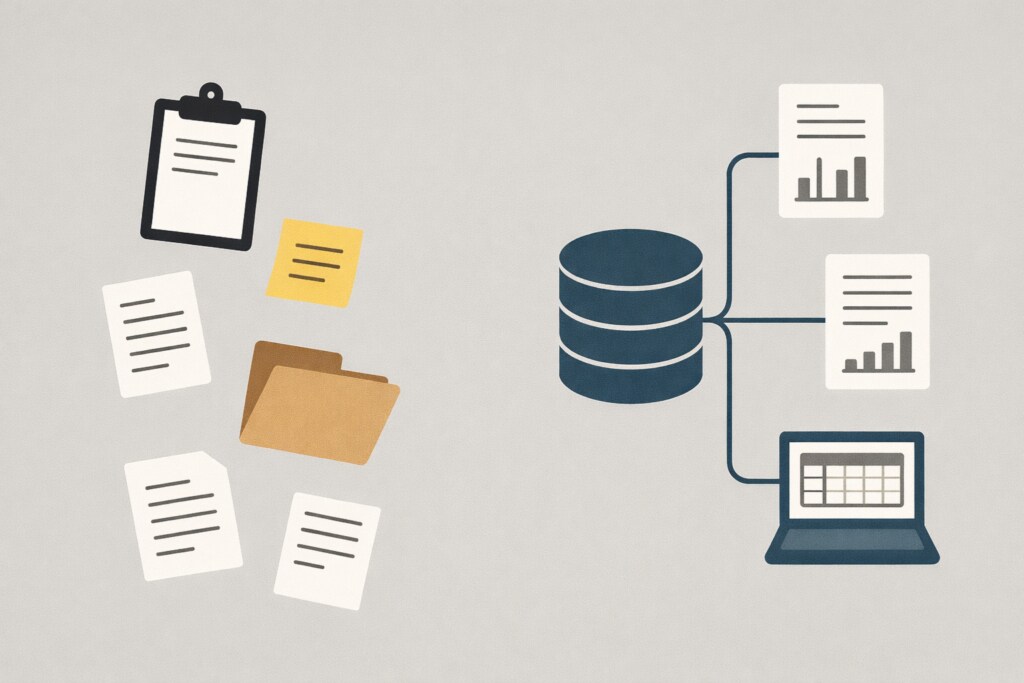
Top 3 things to consider when turning data into insight
1. Connectivity drives clarity
When everything is centralized, traceability is automatic — not something you rebuild after the fact. Each result already knows:
• who ran it
• which instrument generated it
• what method version was used
• when approvals happened
It functions like a built-in chain of custody that updates itself.
For compliance? It’s invaluable.
Audit trails are complete, accessible, and consistent — reducing preparation time and boosting confidence during inspections.
2. Reporting that speaks everyone’s language
Once data is searchable and queryable, reporting becomes the natural next step.
Quality and Lab Managers can turn those queries into familiar spreadsheet-style visualizations that highlight:
• trends
• deviations
• performance indicators
• method behavior across instruments or sites
These reports refresh automatically from the database. It means you have real-time QC charts that update themselves.
3. Future-ready compliance
A modern connected system doesn’t just store data — it protects it with:
• controlled user access
• electronic signatures
• robust audit trails
• relational links that preserve context
…it becomes straightforward to demonstrate ALCOA+ principles.
You can show exactly how a result was generated — even years later. In decentralized systems, you spend hours reconstructing the story. With relational systems, the story is already written.
Why this matters in networked environments
As labs grow, workstation-centric setups fall behind. Enterprise labs need:
• secure multi-site collaboration
• central configuration and permission control
• consistent data integrity
• reliable trend monitoring across instruments and locations
This is where relational architecture shines — and where Chromeleon software stands apart from solutions still dependent on workstation-level storage. It’s the difference between managing data and understanding it, between collecting information and extracting insight.
Conclusion: from data collection to data confidence
In modern labs, data shouldn’t just tell you what happened — it should reveal how and why.
When everything flows into a secure relational database, and intuitive reporting tools sit on top of it, the picture becomes clear, trustworthy, and immediately useful.
Whether you’re the analyst resolving a question, the Quality Manager reviewing trends, or the IT team safeguarding the environment — a unified data backbone gives everyone the same thing: Confidence in the insight you’re acting on
If you’re ready to rethink how your lab handles data, this is the right time to explore what’s possible.
Download our White Paper Future-Proofing Your Lab: Key Considerations for Upgrading or Switching Chromatography Data System and learn more about the key considerations when thinking of upgrading or switching your existing Chromatography Data System.
Visit us on LinkedIn: #CDS #compliance #control

From Scattered Files to Clear Insights (Part 1): When Lab Data Review Feels Like Detective Work
Networked Environment Series, For Part 2, click here Most la...
Read More
How to Cut HPLC Sample Preparation Time for Derivatizing Amino Acids
Derivatizing amino acids doesn’t have to take hours to do....
Read More
Elevate Your HPLC Performance with a Modern CDS
You may have the best HPLC system on the market, but to maxi...
Read More
Episode 2: The Benefits of CAD Compared to Other Universal Detectors: ELSD and MALS
Welcome back to our series on Charged Aerosol Detection (CAD...
Read More