In forensic toxicology, understanding what is in a sample and how much of it is there, quickly, accurately, and confidently, can make all the difference. Whether it is an overdose investigation, a sudden death case, or surveillance for emerging public health risks, laboratories are under pressure to deliver high-quality results with tighter turnaround times and broader analytical scope.
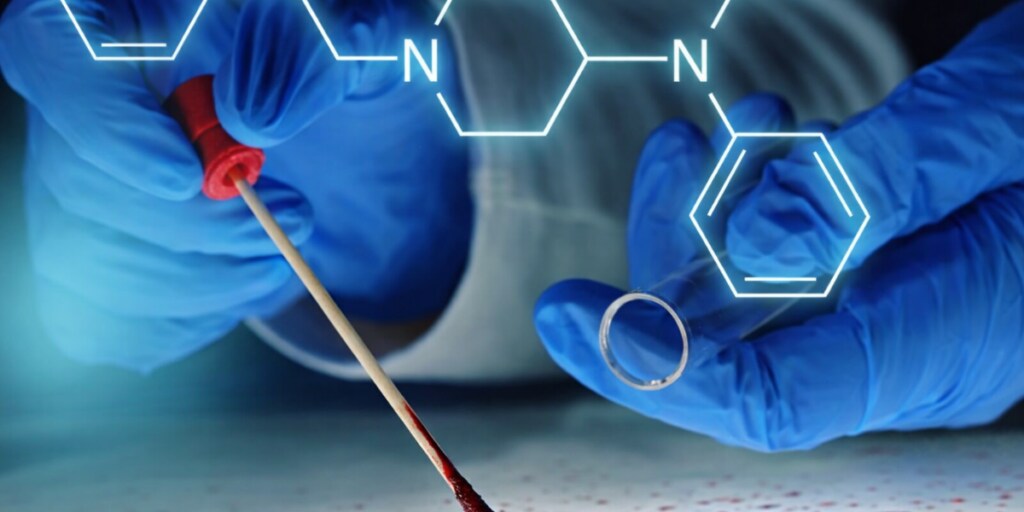
That is where high-resolution, accurate-mass (HRAM) Orbitrap mass spectrometry really shines, especially when paired with streamlined workflows and intelligent data analysis.
What’s new?
A recent Technical Note (TN-002551) details a rapid LC-HRAM-Orbitrap method developed collaboratively with the B.C. Provincial Toxicology Centre for postmortem blood analysis. This workflow was designed to deliver routine screening and quantitation while also enabling retrospective data mining to identify unknown or emerging compounds in circulation.
Here is what makes this approach compelling:
- High sensitivity and resolution: The Thermo Scientific Q Exactive HF hybrid quadrupole-Orbitrap system enables faster scan speeds and precise mass measurement, which boosts confidence in detecting drugs, even at low levels, in complex postmortem matrices.
- Robust routine productivity: Running routine screens in approximately 12.5 minutes significantly speeds workflow throughput, which is critical as labs face growing caseloads.
- Retrospective analysis: One of the biggest advantages of HRAM data is the ability to re-interrogate stored data files for novel psychoactive substances after the initial screen is complete. This capability eliminates the need to re-run samples, saving time and preserving limited sample material.
A standout example from the technical note was the identification of bromazolam, a designer benzodiazepine that was not part of the original routine panel. Through retrospective analysis, its prevalence in postmortem cases was revealed and quantified, demonstrating the real-world value of full-scan HRAM data.
Supporting broad drug panels
As highlighted in a previous THC tips and tricks blog post, cannabinoids and their metabolites can be challenging when analyzed alongside other drugs of abuse. HRAM MS improves selectivity and confidence when multiple drug classes are analyzed together, making it easier to integrate THC and related compounds into comprehensive toxicology workflows.
Why this matters for forensic toxicology today
The opioid crisis, the continued emergence of novel psychoactive substances, and evolving public health threats demand analytical tools that are both robust and adaptable. HRAM Orbitrap LC-MS not only improves detection and quantitation across a wide range of drugs of abuse, but also enables:
- Retrospective discovery of unknown compounds
- Faster delivery of actionable results to coroners and public health agencies
- Improved surveillance of emerging drug trends
As toxicology laboratories look to future-proof their operations, combining powerful instrumentation, intelligent software, and optimized workflows will be key. Methods like those described in TN-002551 demonstrate how HRAM Orbitrap mass spectrometry continues to elevate forensic toxicology workflows.
Resources
- Featured technical note:
Rapid, high-resolution postmortem toxicology analysis using Orbitrap mass spectrometry - Previous blogs in this series:
- Sample Preparation Strategies for Toxicology Workflows
- Beyond Blood: HRAM-Powered Postmortem Toxicology at Sheffield Teaching Hospitals
- Advancing Drug Analysis with VeriSpray PaperSpray Mass Spectrometry
- Boosting Productivity in Toxicology Labs
- Behind the Bench: Tips to Simultaneously Analyze THC, Its Metabolites, and Other Drugs of Abuse
- Forensic toxicology webpage
- Affordability resources
Visit us on LinkedIn: #PostmortemAnalysis #HRAMOrbitrapMS #ForensicToxicology #NPS
Boosting Productivity in Toxicology Labs
In today’s forensic and clinical toxicology labs, producti...
Read More
Maximize Performance with Specialized LC-MS Workflows — and Save Up to 40%!
When it comes to clinical research, precision, reliability, ...
Read More
Upcoming LC-MS Events to Watch this Fall
Mass spectrometry professionals in clinical research, forens...
Read More
Beyond Blood: Sheffield Teaching Hospitals NHS Foundation Trust Develops HRAM-Powered Method for Post-Mortem Toxicology Analysis
In a recent study published in the Journal of Analytical Tox...
Read More