The human immune system is a complex network that protects us from various pathogens, including viruses. While many viral infections are managed effectively by the immune system, some can cause significant damage, influenced by the virus’s properties and host factors. Understanding how the immune system responds to these infections is crucial for developing therapeutic interventions. This blog post delves into how mass spectrometry aids in understanding the immune response to viral infections and its implications for therapeutic development.
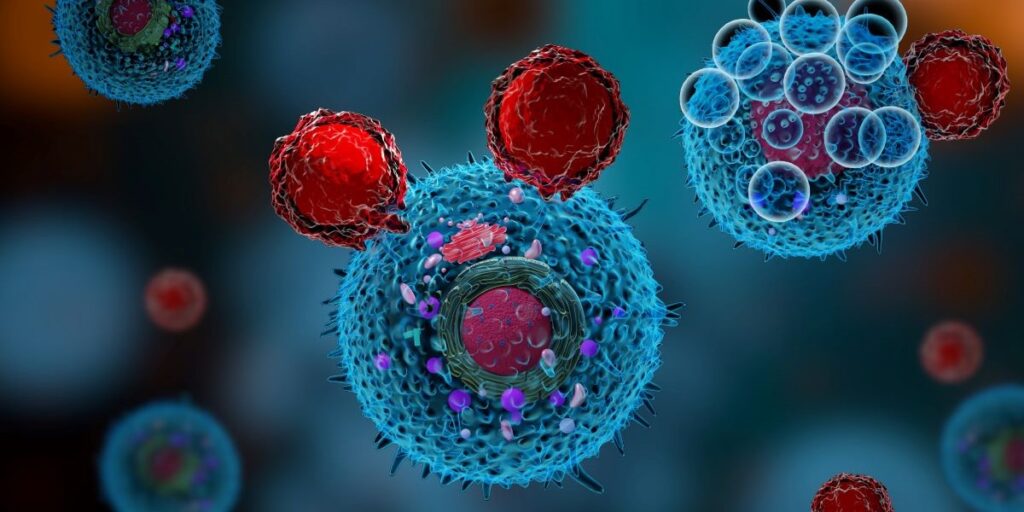
The immune response: innate and adaptive
The immune response is divided into two main parts: the innate and adaptive immune responses.
- Innate immune response: This is the body’s first line of defence and includes physical barriers, chemical defences, and various immune cells that respond non-specifically to pathogens.
- Adaptive immune response: This response is specific to the pathogen and involves the activation of B cells and T cells. B cells produce antibodies, while T cells, particularly CD8 T cells, recognize and destroy infected cells.
Role of HLA in immune response
Human Leukocyte Antigen (HLA) molecules play a critical role in the immune response by presenting protein fragments (peptides) from pathogens on the cell surface. This presentation allows T cells to recognize and respond to infections. There are two classes of HLA molecules:
- HLA Class I: Present on all nucleated cells and present peptides to CD8 T cells.
- HLA Class II: Present on professional antigen-presenting cells and present peptides to CD4 T cells.
Mass spectrometry in immunology
Mass spectrometry (MS) is a powerful tool in studying the immune response. It enables the direct identification and quantification of peptides presented by HLA molecules on the cell surface. This high-throughput technology provides insights into the repertoire of peptides (immunopeptidome) presented during infections, which is crucial for understanding immune evasion mechanisms and developing vaccines.
Case study: SARS-CoV-2
Dr. Susan Klaeger and her team have utilized mass spectrometry to study the immune response to SARS-CoV-2, the virus responsible for COVID-19. Their research focuses on identifying the peptides presented by HLA molecules on infected cells and understanding their role in eliciting an immune response. Some key findings include:
- Identification of peptides from non-canonical open reading frames, which are not currently targeted in vaccine design.
- Observation of dynamic changes in peptide abundance on the cell surface over time, indicating potential immune evasion strategies by the virus.
- Use of advanced mass spectrometry techniques, such as the Thermo Scientific Orbitrap Exploris 480 with FAIMS, to enhance peptide identification and reduce interference.
For interview details, read the full case study
Challenges and future directions
Studying antigen presentation is challenging due to the diversity of HLA molecules and the complexity of peptide-HLA interactions. Additionally, working with live viruses requires high safety level settings (BSL-3), making experiments logistically challenging. Despite these challenges, the insights gained from mass spectrometry can facilitate the development of new therapeutic targets and vaccines.
Conclusion
Mass spectrometry has revolutionized our understanding of the immune response to viral infections. By profiling the immunopeptidome, researchers can uncover mechanisms of immune evasion and identify potential targets for vaccines and therapies. As we continue to refine these techniques and expand our knowledge, we move closer to effectively combating viral infections and improving public health outcomes.
Learn more about Immunopeptidomics
Visit us on LinkedIn: #Immunology #MassSpectrometry #ViralInfections #VaccineDevelopment

Sharper, Faster, Smarter: HRAM Orbitrap Mass Spectrometry Meets Postmortem Toxicology
In forensic toxicology, understanding what is in a sample an...
Read More
Scaling Up Biopharmaceutical Characterization with the Orbitrap Ascend BioPharma Tribrid Mass Spectrometer
Biopharmaceutical pipelines are expanding rapidly, with incr...
Read More
Freedom to Fragment: Introduction
The importance of fragmentation in mass spectrometry 1. What...
Read More
Mucinomics: The Next Frontier of Mass Spectrometry
Mucinomics, the study of mucin domain glycoproteins, is emer...
Read More