 Many forms of biobanking and sample storage rely on cold preservation to maintain stocks and ensure sample integrity for onward analysis. It is therefore important to understand how to manage these processes to minimize pre-analytical variability, which can invalidate data collection. In an informative SlideShare first presented at ISBER 2015, Dr. Alex Esmon takes viewers through the complete cold chain management process, highlighting areas that need special care.
Focusing on three key areas of the cold chain—cold storage conditions, inventory management and sample transport—Dr. Esmon emphasizes the importance of knowing your samples and their needs, stressing the various problems that can occur with fluctuations in temperature during handling.
For example, refrigerated samples must not be frozen, even briefly; so, what is the best way to manage conditions during transport, processing or transfer? Is dry ice better than ice, or would a slurry of water and ice be the best? Hint: it’s the slurry.
And what about frozen samples? Again, Dr. Esmon guides viewers through the handling of samples kept at -20°C, in addition to the special requirements of those held in ultra-cold conditions at -80°C. Any kind of thermal stress affects sample integrity, affecting pre-analytical variability and collection of meaningful data.
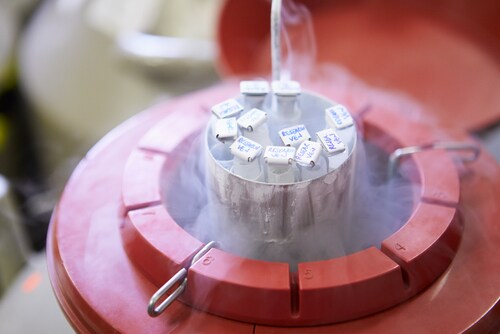
For samples held in cryogenic storage below -130°C, the slides provide a brief recap of the “glassy state” that specimens enter at this temperature. Under this threshold, all cellular and metabolic activity is suspended; it is important not to think that frozen means frozen in the normal sense, and to pay attention to keeping these samples in the right state so that cellular damage does not occur. For example, allowing cryogenically stored samples to reach temperatures above -130°C lets them move across the glass transition phase. During this transition, ice nuclei crystals develop instantaneously. Although nothing much might change in terms of their appearance, samples are irreversibly damaged.
Following this recap of the different temperature requirements for sample maintenance, Dr. Esmon guides viewers through two common scenarios found in biobank management. With reference to the procedures described for maintaining sample integrity, slides show workflows for sample transfer, transport and inventory, stressing the importance of preparing the workflow and equipment required ahead of time.
In summary, Dr. Esmon focuses on the following as important areas of concern for cold chain management in biobanking practice:
- Pay attention to the freeze/thaw requirements for each sample.
- Optimize equipment function by reducing door- or flask-opening times, pre-chilling storage vessels, and using alarms appropriately.
- Proactively plan management workflows that protect sample integrity, assembling necessary equipment ahead of time.
- Guard against contamination.
With useful checklists for each procedure, abundant tips and links to further information to guide biobankers, this SlideShare presentation is a valuable resource to visit and well worth bookmarking for the future.
Find Managing the Cold Chain to Minimize Pre-analytical Variability on SlideShare http://www.slideshare.net/ServingScience/managing-the-cold-chain-to-minimize-preanalytical-variability
Thermo Scientific Cryopreservation Guide
A Guide for Proper Cryogenic Preservation
Thermo Scientific Cold Storage products page
Read more on our blog
- Biobanking Begins at Biopsy – Consistent Protocols for Consistent Results
- The Physics of Ice: It All Begins with Nucleation
- Maintaining Biobank Sample Integrity During Transfers
- Answer These Questions To Help Minimize Temperature Threats When Transporting Biobank Samples
ENERGY STAR® for lab-grade blood bank refrigerators – the facts
In 1992, the U.S. Environmental Protection Agency (EPA) deve...
Read More
Toward Better Cryopreservation: Xeno-Free, Reduced Toxicity Protocol
Biobanks play a critical role as functional components of re...
Read More
Making the switch: How storing your samples at-70°C can help save energy
Storing your biological samples in an ultra-low temperature ...
Read More
What is SNAP and how is it important for your laboratory?
In an effort to reduce the environmental burden and contribu...
Read More
Leave a Reply