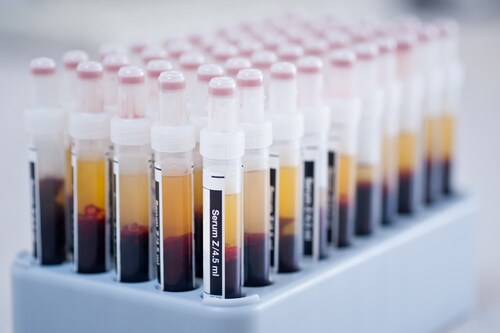
 The scientific value of biospecimens is a product of sample quality, the degree to which a stored specimen mirrors its biological state at the time of sampling. Major threats to sample quality include degradation and sublimation during storage as well as improper pre-analytical handling. Specimens destined for long-term storage require particular care, including meticulous documentation. Unfortunately, clear longitudinal data on serum analyte stability is often lacking or even contradictory within the literature. This means that studies involving archival serum samples could be flawed by the assumption that changes that occurred during storage were insignificant.
Using serum samples stored at -25ºC for up to 29 years at the Janus Serum Bank, which provides epidemiological study specimens for the Norwegian Cancer Registry, Gislefoss et at.1 evaluated the long-term stability of selected samples of the following:
-
Lipids: total cholesterol, HDL cholesterol (HDLC) and LDL cholesterol (LDLC)
-
Proteins: apolipoprotein A1 (apo-A1) and apolipoprotein B (apo-B)
-
Hormones: follicle-stimulating hormone (FSH), luteinizing hormone (LH), prolactin (PRL), thyroid-stimulating hormone (TSH) and free thyroxine (FT4)
The team found significant differences in serum levels for lipids and lipoproteins, with the exception of total cholesterol.
Median Serum Levels (25 and 75 percentiles)
|
0 years storage |
4 years storage |
17 years storage |
29 years storage |
Change |
|
|
Cholesterol (mmol/L) |
5.3 (4.6–6.1) |
5.2 (4.6–5.8) |
5.5 (4.9–6.5) |
5.6 (4.9–6.4) |
not significant |
|
HDLC (mmol/L) |
1.14 (0.90–1.31) |
0.74 (0.60–0.89) |
0.41 (0.31–0.52) |
0.35 (0.27–0.43) |
-69.2% |
|
LDLC (mmol/L) |
3.10 (2.4–3.8) |
2.9 (2.4–3.7) |
3.7 (3.0–4.7) |
4.0 (3.3–4.7) |
+31.3% |
|
Apo-A1 (g/L) |
1.55 (1.39–1.72) |
1.66 (1.55–1.83) |
1.62 (1.47–1.83) |
1.71 (1.55–1.90) |
+12% |
|
Apo-B (g/L) |
0.80 (0.65–0.94) |
0.82 (0.69–0.99) |
0.99 (0.83–1.26) |
0.97 (0.82–1.17) |
+22.3% |
The majority of the investigated hormones (FSH, LH, TSH and FT4) were relatively stable even after long-term storage. The exception (PRL) demonstrated degradation after only four years.
Median Serum Levels (25 and 75 percentiles)
|
0 years storage |
4 years storage |
17 years storage |
29 years storage |
Change |
|
|
FSH (IU/L) |
4.1 (3.2–5.8) |
4.2 (3.0–6.2) |
4.2 (3.3–5.7) |
4.2 (3.1–5.8) |
not significant |
|
LH (IU/L) |
4.4 (3.6–5.8 |
4.2 (3.3–5.0) |
4.3 (3.1–5.6) |
4.7 (3.3–6.0) |
not significant |
|
TSH (mU/L) |
1.6 (1.2–2.1) |
1.6 (1.2–2.2) |
1.4 (1.0–1.9) |
1.5 (1.0–1.9) |
not significant |
|
FT4 (pmol/L) |
15.2 (14.2–16.6) |
16.7 (15.4–17.8) |
16.9 (15.4–18.0) |
16.2 (14.7–17.4) |
not significant |
|
PRL (μIU/L) |
163 (125–219) |
143 (111–188) |
118 (93–162) |
109 (90–140) |
-33.5% |
Gislefoss et al. observed that the serum level changes reported in this study likely derived from a combination of long-term storage effects and external factors, including diet and smoking status. Since the biospecimens used here were largely archival, population-based lifestyle changes—such as lower-fat diets and decreased smoking—could be responsible for some degree of drift, particularly in lipid and lipoprotein measures. Nevertheless, these findings could assist biobankers and researchers in estimating stability data in order to improve the accuracy of studies involving archival biospecimens.
Reference
1. Gislefoss, R. E. et al. (2014) “Stability of selected serum hormones and lipids after long-term storage in the Janus Serum Bank,” Clinical Biochemistry.

The Effect of Preanalytical Variables on Plasma Samples Stored in Biobanks
Differences detected in respective biobank collections are m...
Read More
Keeping It Cool: Protecting Cryopreserved Samples from Degradation
Cryopreservation requires a slow cooling process t...
Read More
Exploring Covariates: The Impact of Storage Time, Donor Age and Collection Season on Plasma Proteins
The critical role biobanks play as providers of both biologi...
Read More
Biobanking the Future: Male Fertility Preservation for Endangered Species Conservation
The common goal of preventing endangered species from reachi...
Read More
Leave a Reply