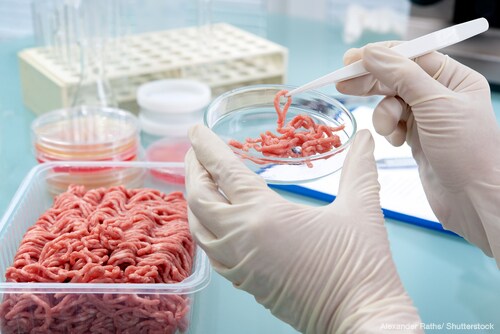
 Surveillance networks often take a bad rap in Hollywood, plunging our future selves into robot wars (Terminator) or tricky predictive policing (Minority Report). However, when the surveillance is all about food safety, we should embrace the oversight since systems like FoodNet help keep us healthy1.
The Foodborne Diseases Active Surveillance Network, or FoodNet for short, has been running since 1995. Created as an active, population-based surveillance network in response to Centers for Disease Control (CDC) concerns over food safety, FoodNet operates from ten sites within the United States to monitor laboratory-confirmed foodborne infections. These ten sites cover approximately 15% of the US population.
A recent paper by Henao et al. (2015) effectively summarizes its first two decades of operation and explains reporting procedures created in response to foodborne disease outbreaks.
FoodNet oversight encompasses nine bacterial and parasitic foodborne pathogens (shown in Table 1).
Table 1: Foodborne pathogens monitored by FoodNet
| Campylobacter | Listeria | Salmonella |
| Shiga toxin-producing Escherichia coli O157 (STEC)
and non-ST E. coli |
Shigella | Vibrio |
| Yersinia | Cryptosporidium | Cyclospora |
In addition to laboratory confirmation of microbial presence, FoodNet also monitors incidence of hemolytic urinary syndrome as a clinical indicator of STEC. One obvious exclusion from the list is Norovirus – FoodNet does not monitor outbreaks due to this foodborne pathogen since routine and definitive laboratory diagnosis is not yet established.
The network conducts active surveillance, collecting reports on behavioral, medical and food data associated with foodborne disease. FoodNet gathers these data from medical records of treatment, hospitalization, and outcome in individual patients, in addition to reports on travel history submitted alongside diagnostic samples. Being able to pull together all of this data means that FoodNet can act quickly and issue appropriate advisories to public health and the food industry.
Over the years, FoodNet has gathered much data on foodborne disease incidence associated with the nine pathogens under surveillance. Each year the network releases a report, benchmarking the findings against the preceding three years for accuracy. These reports are valuable material to public health organizations and the food industry. They act as indicators for success in improving food safety standards as well as highlighting areas of concern. They form the basis for developing national guidelines, goals and control measures.
FoodNet also closely monitors laboratory diagnostic methodology, following trends and research in effective pathogen detection within food matrices and clinical diagnostic samples. For example, with the rise in molecular techniques that detect all the major STEC and non-ST E. coli strains, FoodNet is assessing inclusion of data from tests other than the traditional bacterial culture and isolation methodology. One advantage of using data from these molecular assays is that results are available much faster; Applied Biosystems RapidFinder STEC Detection System (Thermo Fisher Scientific) results are available in as little as 12 hours, compared to six days of traditional culture and isolation. Speed is as valuable to food safety surveillance as it is to food industry producers.
Another area in which FoodNet is involved is antibiotic resistance; the network links to antimicrobial resistance databases in order to assess and advise on food industry practices that might require restriction of certain antibiotics. The surveillance network also communicates regularly with similar agencies around the world.
In addition to staying abreast of molecular techniques used to determine food safety, FoodNet is also working on incorporating data from electronic health records and social media in its outbreak surveillance. Through continued close engagement with laboratory advancements, and changes in health reporting and data gathering, FoodNet will continue to evolve in assisting CDC efforts to maintain food safety for the US population.
Learn more about foodborne pathogen testing in our Food and Beverage community.
Reference
1. Henao, O. et al. (2015) “Foodborne Diseases Active Surveillance Network—2 Decades of Achievements, 1996–2015“, Emerging Infectious Diseases • www.cdc.gov/eid • Vol. 21, No. 9, September 2015

SARS-CoV-2 (COVID-19 virus) on food packaging and in the environment
To date the SARS-CoV-2 (COVID-19 virus) has killed around th...
Read More
Driving Efficiencies in Milk Testing with PCR-Based Alternative Methods
Milk is a staple of the western and, increasingly, the globa...
Read More
Detection of Cronobacter from Non-Probiotic Powdered Infant Formula and Milk Powder
Food industry members are often ideally placed on the front ...
Read More
Simplifying the Health and Safety Requirements of Daily Culture Media Preparation
Preparing culture media for the microbiological examination ...
Read More

Leave a Reply