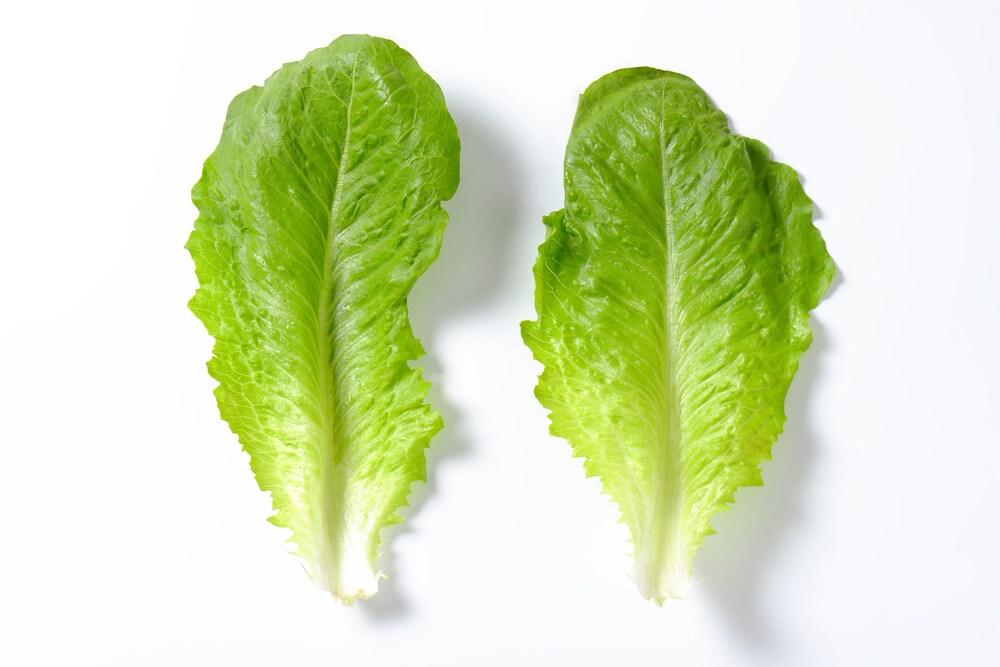
 Unlike bacterial pathogens, food-borne viruses are highly stable in the environment with some viruses capable of withstanding extreme pH levels, low temperatures, or desiccation. In foods, the human norovirus (NoV) is to blame for over 40% of food-borne illness occurring from fresh produce including salad greens, green onions, and berries.1 While fresh produce is commonly washed in washing tanks before it hits stores, the treatments used to eliminate pathogens are ineffective at removing viruses.
Interested in furthering their understanding of viral contamination in fresh produce, DiCaprio et al. investigated how effective chlorine is at removing NoV as well as NoV surrogates: murine norovirus, (MNV-1) and Tulane virus, (TV). To do this, the researchers visualized and compared the localization of human NoV, MNV-1 and TV in Romaine lettuce and green onions.2
After obtaining samples of NoV, MNV-1 and TV, the team purified human NoV virus-like particles (VLPs) in a baculovirus expression system. They amplified the VP1 gene from the human NoV GII.4 strain using high fidelity PCR. For cloning, they used an Invitrogen™ pFastBac-Dual expression vector (Thermo Fisher Scientific) at the Sma I and Xho I sites. Next, they transformed the expression vector pFastBac-Dual-VP1 into DH10Bac. They generated the baculovirus expressing VP1 protein by transfection of bacmids into Spodoptera frugiperda (Sf9) cells) using Invitrogen™ Cell-fectin reagent (Thermo Fisher Scientific)
Similarly, the team also purified MNV-1 and TV and biotinylated MNV-1, TV, and human NoV VLPs using the Pierce EZ-Link Sulfo-NHS-LC-Biotinylation Kit (Thermo Fisher Scientific). Next, they detected the biotinylated viruses using Q-dot and confocol microscopy to visualize the viral attachment on fresh produce.
The team grew Romaine lettuce and purchased green onions from a local market and used these samples to quantify the viral attachment, and to determine how effective washing was against the viral load. For quantifying attachment, they subjected the roots and shoots to either MNV-1 or TV at a titer of 107 PFU. To test the effectiveness of washing, they treated vegetables with 1×10⁷ RNA copy/g of human NoV strain 5 M or 1 × 10⁷ RNA copy/g of TV.
To test washing, they rinsed treated samples five times with either 2 ml of sterile PBS or 200 ppm chlorine. They used real-time RT-PCR to quantify viral genomic RNA copies of NoV. They extracted RNA, and synthesized cDNA using the Invitrogen™ SuperScriptase III kit (Thermo Fisher Scientific) to synthesize first strand cDNA. They used custom Taqman™ primers and probes along with the TaqMan™ Fast Universal Master Mix (Thermo Fisher Scientific) to quantify the VP1 gene. Similarly, they also used RT-PCR to compare the attachment rate between human NoV and TV.
As a result, the team saw all three viruses bound efficiently to fresh produce, with viral recovery from the control samples within 1 log PFU or RNA copy of the inoculum applied. The team saw that simple washing removed less that 0.5 log of MNV-1, while simple washing TV, achieved approximately 1 log virus reduction for TV. The researchers posit this could be due to differing attachment affinities for MNV-1 and TV. With NoV, the researchers noted its attachment to to both Romaine lettuce leaves and roots, and green onion shoots and roots. Washing with PBS or 200 ppm chlorine did not remove the virus. Also after visualizing attachment, the authors found all surrogates as well as NoV aggregated in and around the stomata.
The authors hope this information can help give insight into viral contamination. They recommend future work should investigate using surfactants to enhance viral removal.
Learn more about Norovirus in this free to view webinar: Noroviruses—the perfect foodborne pathogen
References
1. Heaton, J.C. (2008) “Microbial contamination of fruit and vegetables and the behaviour of enteropathogens in the phyllosphere: a review.” Journal of Applied Microbiology 104, (pp. 613–626)
2. DiCaprio, E. et al. (2015) “Attachment and localization of human norovirus and animal caliciviruses in fresh produce.” International Journal of Food Microbiology. 15;211: (pp. 101-8) doi: 10.1016/j.ijfoodmicro.2015.07.013. Epub 2015 Jul 14.

SARS-CoV-2 (COVID-19 virus) on food packaging and in the environment
To date the SARS-CoV-2 (COVID-19 virus) has killed around th...
Read More
Driving Efficiencies in Milk Testing with PCR-Based Alternative Methods
Milk is a staple of the western and, increasingly, the globa...
Read More
Detection of Cronobacter from Non-Probiotic Powdered Infant Formula and Milk Powder
Food industry members are often ideally placed on the front ...
Read More
Simplifying the Health and Safety Requirements of Daily Culture Media Preparation
Preparing culture media for the microbiological examination ...
Read More

Leave a Reply