The cheese and dairy industry is experiencing significant growth, particularly in the natural cheese segment. According to a recent article by Dairy Foods1, the natural cheese category has seen a 4.3% year-over-year growth, reaching $21.1 billion in sales. This growth underscores the increasing consumer demand for high-quality, natural dairy products. However, with this growth comes the critical need for stringent product inspection to help ensure quality and safety.
What is Natural Cheese?
According to the U.S. Food and Drug Administration (FDA) and the Code of Federal Regulations (CFR) (21 CFR Part 133), natural cheese is:
“A dairy product made by coagulating milk, cream, or a mixture of the two with the aid of bacterial cultures and enzymes, and then separating the solid curds from the liquid whey.”
This distinguishes it from processed cheese, which is made by blending natural cheeses with emulsifiers and other ingredients, then heating the mixture to produce a uniform texture.
There are typically seven steps3 in the production process of natural cheese, including:
- Milk preparation: Milk may be pasteurized or raw, depending on regulation and cheese type.
- Inoculation: Starter bacterial cultures are added to develop flavor and acidify the milk.
- Coagulation: Enzymes like rennet are added to form curds.
- Cutting and cooking curds: The curds are cut and gently heated to expel whey.
- Draining whey: The liquid whey is removed, leaving curds.
- Salting and molding: Curds are salted, pressed, and shaped into forms.
- Aging (optional): Some natural cheeses (e.g., cheddar, gouda, parmesan) are aged to develop texture and flavor.
There is potential for physical contaminants to be introduced into any of these processes.
Ensuring Quality and Safety of Cheese and Dairy Products
Product inspection is vital in the cheese and dairy industry for several reasons:
- Compliance with Regulations: The dairy industry is heavily regulated to help ensure that products are safe for consumption. Regular inspections help companies comply with these regulations, avoiding legal issues and potential recalls.
- Maintaining Product Quality: Inspections help ensure that the products meet the high-quality standards expected by consumers. This includes checking for consistency in texture, flavor, and appearance.
- Preventing Contamination: Dairy products are susceptible to contamination by physical contaminants, as well as pathogens such as Listeria and Salmonella. Regular inspections help identify and mitigate contamination risks, helping to ensure the products are safe to consume.
- Enhancing Consumer Trust: Consistent quality and safety checks build consumer trust. When consumers are confident in the safety and quality of their dairy products, they are more likely to remain loyal to the brand.
Regulatory Guidance
The Hazard Analysis and Risk‑Based Preventive Controls for Human Food (HARPC) rule (under Food Safety Modernization Act)2 requires food facilities (including dairy product manufacturers) to evaluate physical hazards as part of their hazard analysis, and to implement preventive controls when those hazards are “known or reasonably foreseeable”. U.S. Food and Drug Administration+1
- For example, in the FDA guidance appendix, there is a section on “Process-related and Facility-related Physical Hazards”. U.S. Food and Drug Administration
- This means firms must inspect/monitor for physical hazards (e.g., metal fragments, glass shards, hard plastics, stones) and design controls (e.g., screening, metal detection, conveyor inspection) rather than relying solely on end-product inspection.
The regulatory framework also notes that contents should be inspected to help ensure accurate labeling:
- The net quantity of contents must be correct (21 CFR § 101.7) which means if the package label states “16 oz (1 lb)” then the actual content must conform to that within any permitted variation.
- The label must not be false or misleading (21 CFR § 101.18; 21 U.S.C. § 343) which covers misrepresentation of identity, quantity, contents, etc.
Technological Advancements in Inspection
There are advanced food inspection systems that cover all steps in the food manufacturing process, from raw material inspection to final product packaging. The technologies include:
- Multiscan Metal Detection: Metal detectors used in the food processing industry can find small particles of ferrous, non-ferrous, and stainless steel by passing the food product through a detector containing coils wound on a non-metallic frame and connected to a high-frequency radio transmitter. When a particle of metal passes through the coils, the high frequency field is disturbed under one coil, changing the voltage by a few microvolts. Multiscan technology scans multiple frequencies simultaneously, increasing the probability of detecting metal contaminants. This technology is analogous to having up to five metal detectors sequentially in a production line.
- X-Ray Inspection: X-ray systems can detect both metallic and non-metallic contaminants, helping to ensure comprehensive inspection. Scanning systems using X-ray technology pass high energy, short wavelength light waves through the entire process stream. As an X-ray penetrates the materials, it loses energy depending on the density of the materials it passes through. Detectors capture the changes in the X-ray’s energy and convert these signals into a grayscale image showing variations in material density. Analysis of this image can detect contaminants, inconsistencies within the product itself, packaging problems, and more.
- Checkweighing and Inline Scales: These systems help ensure that the weight of the products meets the specified standards, maintaining consistency and quality. A checkweigher weighs and counts products in motion and rejects products that do not meet pre-determined specifications. As a package moves onto the checkweigher infeed, it is weighed using a weigh cell in the weigh table. The package then moves onto the outfeed of the checkweigher to be accepted or rejected according to the checkweigher settings. If a problem is indicated, a product is rejected and removed from the conveyor via an air blast, bopper, or pusher. The rejected products can also be diverted or dropped into a separate area for further inspection.
These advanced technologies help dairy manufacturers ensure that their products are free from physical contaminants and meet the highest quality standards.
Conclusion
As the cheese and dairy industry continues to grow, the importance of product inspection cannot be overstated. It helps ensure compliance with regulations, maintains product quality, prevents contamination, and enhances consumer trust.
For more insights into the current state of the dairy industry, you can read the full article on Dairy Foods here.
Reference and Resources
1 Dairy Foods article – https://www.dairyfoods.com/articles/98647-state-of-the-dairy-industry-heavenly-growth-for-natural-cheese
2 FDA – https://www.fda.gov/media/99581/download
3 FDA reference: 21 CFR Part 133
- Food Inspection Systems – https://www.thermofisher.com/us/en/home/industrial/food-beverage/food-weighing-inspection.html
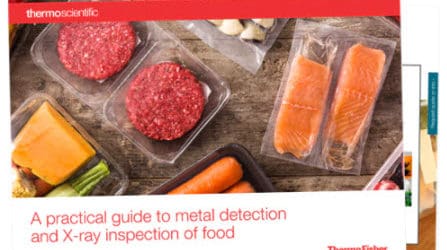
- eBook: A Practical Guide to Metal Detection and X-ray Inspection of Food – thermofisher.com/us/en/home/global/forms/industrial/metal-detector-ebook-registration-form.html
- eBook: A Practical Guide to Checkweighing and Checkweighers – httthermofisher.com/us/en/home/global/forms/industrial/checkweigher-ebook-registration-form.htmlps://www.thermofisher.com/us/en/home/industrial/food-beverage/food-weighing-inspection/resources.html

A Thanksgiving Feast of Food Safety and Innovation Articles
As the holiday season unfolds, our dinner tables overflow wi... Marlene Gasdia-Cochrane, Editor
Read More
Keeping Candy Safe
For those who celebrate Halloween, thoughts often turn to fu... Margot Hannable
Read More
How to Beat The Challenge of Baked Bread’s Physical Properties During Inspection
When we look at the use of metal detectors for bak... Kimberly Durkot
Read More
Surge in Food Recalls Highlights the Importance of Advanced Inspection Technologies
This Spring has not been a good month for packaged foods. US...
Read More