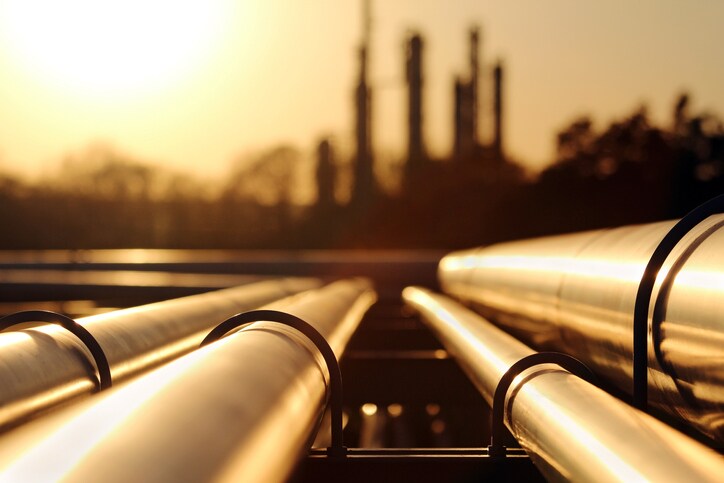
 The oil and gas industry has been in the news lately, but not for good reasons. In May 2021, US News reported that a cyber extortion attempt forced the shutdown of a vital U.S. pipeline, which carries gasoline and other fuel from Texas to the Northeast — delivering roughly 45% of fuel consumed on the East Coast. A follow-up article reported that due to the ransomware attack, short-term fuel shortages resulted for large swaths of that area.
These technology issues are one way the oil and gas industry has suffered but there have also been several reports of pipeline explosions this year. In Oklahoma, luckily no injuries occurred when a natural gas pipeline exploded in northwestern Oklahoma. According to an Associated Press report, the fire in the 6- to 8-inch pipeline was brought under control, but the cause has not been determined.
A New Mexico news outlet reported in February that first responders worked to contain a fire after a pipeline exploded. The blast happened along a 20-inch transfer line but it was also unclear as to what caused the explosion.
The FracTracker Alliance analyzed reports of pipeline Incidents in 2020 from the U.S. Department Of Transportation Pipeline and Hazardous Materials Safety Administration. It found that 6% of incidents were caused by material failure of pipe or weld and 15% due to corrosion failure. Considering the nation’s more than 2.6 million miles of pipelines deliver trillions of cubic feet of natural gas and hundreds of billions of ton/miles of liquid petroleum products each year, it would be difficult to predict where the failures will occur.
There are, however, ways that the oil and gas industry can reduce some of the risks.
Pipeline age and material are significant risk indicators. Pipelines constructed of cast and wrought iron, as well as bare steel, are among the oldest energy pipelines constructed in the United States and pose the highest-risk due to the degrading nature of iron alloys, the age of the pipelines, and pipe joints design.
Ensuring that piping and equipment is fabricated with the correct metal alloys is one way to help prevent pipe corrosion that can lead to mechanical failures. In-situ alloy steel material verification using portable x-ray fluorescence analyzers (XRF) or laser induced breakdown spectrometry analyzers (LIBS) is an accurate, inexpensive, and nondestructive positive material identification (PMI) test method. Portable XRF or LIBS analyzers verify that correctly purchased materials are received; confirms QA/QC for in-process fabrication; meets end user material requirements of outgoing products, and helps ensure that installed components and welds match the engineering design and application for which they are intended.
Aging infrastructure more often provides the challenge of “in-situ” or retro-PMI testing to confirm existing assets are fit for service. Read Conducting Retroactive PMI Using the Thermo Scientific Niton XL5 XRF Analyzer and Analysis of Carbon Equivalents in Steel Components to learn more about how these analyzer meets all of the demanding aspects of retro-PMI testing.
Resources:
- Application Note: Conducting Retroactive PMI
- Application Note: Analysis of Carbon Equivalent in Steel Components
Post Author: Marlene Gasdia-Cochrane.

The Critical Role of Process Mass Spectrometry in e-Fuels Production
Climate-friendly energy The thermometer is rising, all over ... Daniel Merriman
Read More
How to Safely Use a Process Raman Analyzer in a Hazardous Location
When your process takes place in a hazardous environment, pr... Janam Pandya
Read More
How to Use In-line Raman for Real-Time Natural Gas Compositional Analysis
Why Raman spectroscopy for natural gas analysis? Raman spe...
Read More
Where Do Flowmeter Measurements Factor Into Downstream Oil and Gas?
In the downstream sector of the oil and gas industry—where... Ethan Borchelt
Read More

Leave a Reply