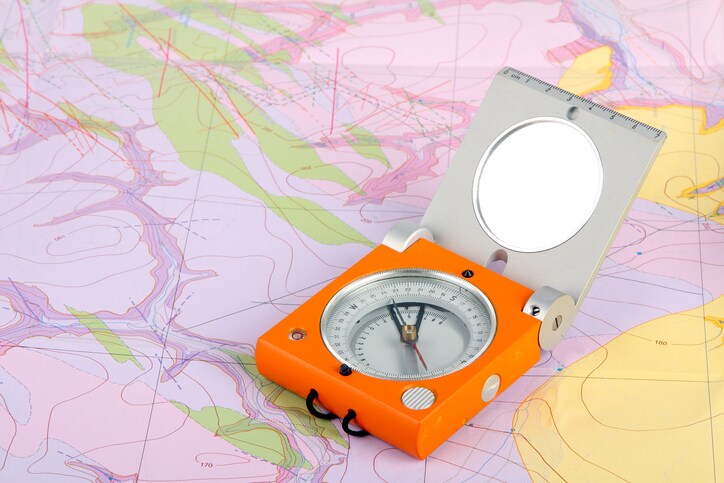
 The United States Geological Survey (USGS) has announced a collaboration with Australia and Canada to discover and mine more critical minerals. According to the USGS web site, the U.S. is heavily dependent on foreign sources for many of the mineral commodities necessary for America’s economy and security. Of the 35 mineral commodities deemed critical by the Department of the Interior, the U.S. was 100 percent reliant on foreign sources for 13 in 2019.
To address this dependency, the USGS has partnered with Geoscience Australia and the Geological Survey of Canada to form the Critical Minerals Mapping Initiative, as explained in the announcement:
“The goal of the Critical Minerals Mapping Initiative will be to build a diversified supply of critical minerals in Australia, Canada, and the United States. The Initiative will accomplish this by developing a better understanding of known critical mineral resources, determining geologic controls on critical mineral distribution for deposits currently producing byproducts, identifying new sources of supply through critical mineral potential mapping, and promoting critical mineral discovery in all three countries.
“An intent of the Critical Minerals Mapping Initiative is to learn more through each country’s past and on-going efforts, and, together, forge new knowledge that can be applied to the three national geological surveys continuing mineral resource research. For instance, the Geological Survey of Canada and Geoscience Australia have extensive experience with nationwide subsurface mineral potential mapping, which the USGS hopes to learn from as it carries out its own effort through the Earth Mapping Resource Initiative, or Earth MRI.”
The USGS fact sheet explains what critical minerals are and why they are important:
“Critical minerals are natural resources essential to the economic and national security of nations, and have the potential to become scarce because of geological, political, or technical factors. They are mineral commodities that have important uses and few effective substitutes. A mineral commodity that may have been considered critical 25 years ago may not be critical now, and one considered critical now may be less so in the future. Likewise, something not considered critical today may become critical in the future.”
Critical minerals include Rare Earth Elements (REEs), defined as the 15 lanthanides plus scandium (Sc) and yttrium (Y). REEs are critical components in consumer electronics such as televisions, tablet computers, cameras, and mobile phones, and rechargeable hybrid car batteries. They also include Platinum-group Elements (PGEs), which consist of platinum, palladium (Pd), rhodium (Rh), iridium (Ir), osmium (Os), and ruthenium (Ru). They are essential components in industrial machinery, catalytic converters, and fuel cells.
Recommended reading:
- Where are Rare Earth Elements Found?
- Rare Earth Recovery
- Rare Earths Update
- A New Way to Find Platinum Group Metals
- What Are the Platinum Group Metals and Why Do They Matter?
For more mining industry news, visit the Cement, Coal & Minerals online learning center and check out the application notes, infographics, product spec sheets, videos, case studies, and eBooks dealing with all aspects of the mining industry, from exploration through processing, mineral analysis, and bulk weighing, monitoring, and sampling systems, and more.

A Halloween Treat – Free Periodic Table
No tricks here. Download this handy periodic table and X-ray... Marlene Gasdia-Cochrane, Editor
Read More
Efficient Mining of Tantalum, Niobium, and Tin Using Handheld XRF Analyzers
Most mining operators are familiar with the importance of ta... Pete Anzalone
Read More
Why Mining Organizations are Increasing Investment in Tailings Management
Mining as an industrial activity is set to continue expandin...
Read More
What are the Largest Diamonds and How Are they Found?
In previous articles, we wrote about the January 1905 discov... Marlene Gasdia-Cochrane, Editor
Read More

Leave a Reply