Search
Invitrogen
CCL5 (RANTES) Polyclonal Antibody
{{$productOrderCtrl.translations['antibody.pdp.commerceCard.promotion.promotions']}}
{{$productOrderCtrl.translations['antibody.pdp.commerceCard.promotion.promocode']}}: {{promo.promoCode}} {{promo.promoTitle}} {{promo.promoDescription}}. {{$productOrderCtrl.translations['antibody.pdp.commerceCard.promotion.learnmore']}}
{{$ctrl.translations['antibody.pdp.skuNotes.additionalInformation']}}:
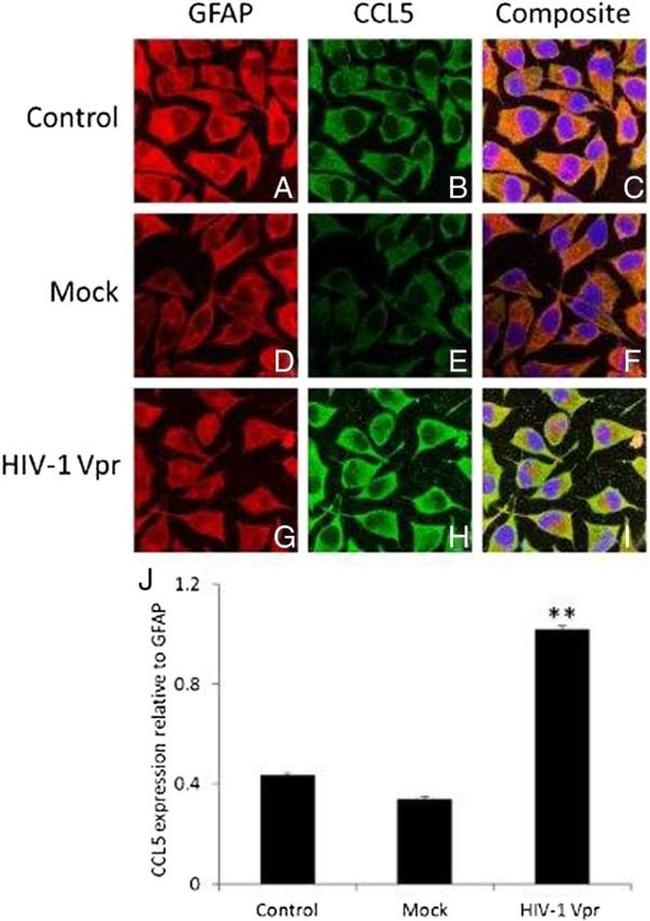
图: 1 / 10
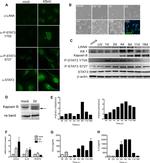
CCL5 (RANTES) Antibody (P230E) in ICC/IF
Journal of neuroinflammation 2013 -
Figure 2 Immunocytochemistry for HIV-1 Vpr-mediated induction of CCL5 in astrocytes. SVGA astrocytes were cultured on cover slips and were either mock transfected (D-F) or were transfected with a plasmid encoding Vpr (G-I) . Non-transfected cells were used as control (A-C) . The cells were stained for nucleus ( blue ); CCL5 ( green ) and GFAP ( red ), and the images were captured using a Leica TCS SP5 II on... View More
Please note: We are reviewing Western blot images included in the antibody testing data in our catalog, including those provided by third parties. Unless expressly labeled or annotated as “raw-unedited”, Western blot images included in the antibody testing data in our catalog may have been edited, optimized or otherwise adjusted for presentation.


产品信息
P230E
应用
建议稀释比
已发表文章
产品规格
种属反应
Human
已发表种属
Cynomolgus monkey,
Human,
Mouse
宿主/亚型
Rabbit
/ IgG
分类
Polyclonal
类型
Antibody
抗原
Recombinant human RANTES
偶联物
Unconjugated
Unconjugated
Unconjugated
形式
Liquid
浓度
1.0 mg/mL
规格
500 µg
纯化类型
Protein G
保存液
PBS
内含物
no preservative
保存条件
-20°C
运输条件
Ambient (domestic); Wet ice (international)
RRID
产品详细信息
P230E targets RANTES in ELISA, and WB applications and shows reactivity with Human samples.
The P230E immunogen is recombinant human RANTES.
P230E detects RANTES which has a predicted molecular weight of approximately 8 kDa.
The P230E Rantes polyclonal antibody has successfully been paired as the coating antibody in a sandwich ELISA with detection antibody M230B (biotinylated conjugate of clone VL-1) Typical dilutions for sandwich ELISA include 1 µg/mL for coating and 0.125 - 0.25 µg/mL for detection.
Antibody P230E and biotinylated antibody M230B (clone VL-1) have successfully been used in combination with recombinant Rantes protein SRNTS in ELISA applications.
靶标信息
CCL5 (RANTES) is a chemokine gene located on the q-arm of chromosome 17. Chemokines are a superfamily of secreted proteins involved in immunoregulatory and inflammatory processes. The superfamily is divided into four subfamilies based on the arrangement of the N-terminal cysteine residues of the mature peptide. CCL5, a member of the CC subfamily, functions as a chemoattractant for blood monocytes, memory T helper cells, and eosinophils. It causes the release of histamine from basophils and activates eosinophils. This cytokine is one of the major HIV-suppressive factors produced by CD8+ cells. It functions as one of the natural ligands for the chemokine receptor chemokine (C-C motif) receptor 5 (CCR5), and it suppresses in vitro replication of the R5 strains of HIV-1, which use CCR5 as a coreceptor. Alternative splicing results in multiple transcript variants that encode different isoforms. Diseases associated with CCL5 include Human Immunodeficiency Virus Type 1 and Periapical Granuloma.
仅用于科研。不用于诊断过程。未经明确授权不得转售。
生物信息学
蛋白别名: beta-chemokine RANTES; chemokine (C-C motif) ligand 5; eosinophil chemotactic cytokine; MGC17164; OTTHUMP00000197106; regulated upon activation, normally T-expressed, and presumably secreted; SIS δ; SISδ; small inducible cytokine subfamily A (Cys-Cys), member 5; T cell-specific protein precursor; T-cell specific protein p288; unnamed protein product
基因别名: D17S136E; eoCP; RANTES; SCYA5; SIS-delta; SISd; TCP228
UniProt ID: (Human) P13501
Entrez Gene ID: (Human) 6352
phosphatidylinositol phospholipase C activity
protein kinase activity
protein binding
chemokine activity
phospholipase activator activity
receptor signaling protein tyrosine kinase activator activity
CCR1 chemokine receptor binding
CCR4 chemokine receptor binding
CCR5 chemokine receptor binding
chemoattractant activity
chemokine receptor binding
identical protein binding
protein homodimerization activity
chemokine receptor antagonist activity
CCR chemokine receptor binding
dendritic cell chemotaxis
monocyte chemotaxis
regulation of chronic inflammatory response
calcium ion transport
cellular calcium ion homeostasis
exocytosis
chemotaxis
inflammatory response
immune response
leukocyte cell-cell adhesion
G-protein coupled receptor signaling pathway
cell-cell signaling
response to virus
response to toxic substance
positive regulation of macrophage chemotaxis
positive regulation of T cell chemotaxis
positive regulation of smooth muscle cell migration
positive regulation of cell migration
phospholipase D-activating G-protein coupled receptor signaling pathway
positive regulation of TOR signaling
positive regulation of cell-cell adhesion mediated by integrin
positive regulation of homotypic cell-cell adhesion
chemokine (C-C motif) ligand 5 signaling pathway
positive regulation of T cell proliferation
neutrophil activation
negative regulation by host of viral transcription
cellular response to fibroblast growth factor stimulus
positive regulation of viral genome replication
negative regulation of viral genome replication
positive regulation of innate immune response
negative regulation of G-protein coupled receptor protein signaling pathway
positive regulation of G-protein coupled receptor protein signaling pathway
positive regulation of cell adhesion
positive regulation of translational initiation
eosinophil chemotaxis
macrophage chemotaxis
positive regulation of smooth muscle cell proliferation
regulation of insulin secretion
regulation of T cell activation
positive chemotaxis
positive regulation of protein kinase B signaling
positive regulation of calcium ion transport
antimicrobial humoral immune response mediated by antimicrobial peptide
chemokine-mediated signaling pathway
negative regulation of chemokine-mediated signaling pathway
negative regulation of T cell apoptotic process
positive regulation of T cell apoptotic process
cellular response to interferon-gamma
cellular response to interleukin-1
cellular response to tumor necrosis factor
positive regulation of monocyte chemotaxis
receptor signaling pathway via STAT
cellular response to virus
positive regulation of neuroinflammatory response
positive regulation of STAT cascade
negative regulation of macrophage apoptotic process
positive regulation of T cell migration
positive regulation of natural killer cell chemotaxis
Disclaimer

Clicking the images or links will redirect you to a website hosted by BenchSci that provides third-party scientific content. Neither the content nor the BenchSci technology and processes for selection have been evaluated by us; we are providing them as-is and without warranty of any kind, including for use or application of the Thermo Fisher Scientific products presented.

