Search
Invitrogen
Phospho-IR/IGF1R (Tyr1162, Tyr1163) Polyclonal Antibody
{{$productOrderCtrl.translations['antibody.pdp.commerceCard.promotion.promotions']}}
{{$productOrderCtrl.translations['antibody.pdp.commerceCard.promotion.promocode']}}: {{promo.promoCode}} {{promo.promoTitle}} {{promo.promoDescription}}. {{$productOrderCtrl.translations['antibody.pdp.commerceCard.promotion.learnmore']}}
{{$ctrl.translations['antibody.pdp.skuNotes.additionalInformation']}}:

图: 1 / 12
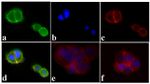
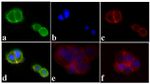
Phospho-IR/IGF1R (Tyr1162, Tyr1163) Antibody (44-804G) in ICC/IF
Immunofluorescence analysis of IR/IGF1R (pYpY1162/1163) was done on 70% confluent log phase MCF7 cells treated with insulin (100nM for 5 min). The cells were fixed with 4% paraformaldehyde for 15 minutes, permeabilized with 0.25% Triton™ X-100 for 10 minutes, and blocked with 5% BSA for 1 hour at room temperature. The cells were labeled with IR/IGF1R (pYpY1162/1163) Rabbit polyclonal Antibody (Product # 44-... View More

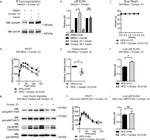
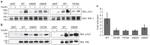
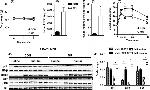
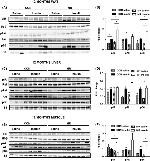
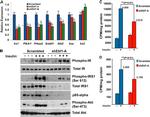
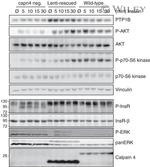
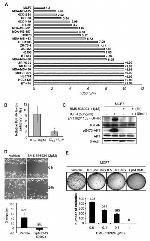
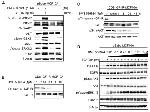
Please note: We are reviewing Western blot images included in the antibody testing data in our catalog, including those provided by third parties. Unless expressly labeled or annotated as “raw-unedited”, Western blot images included in the antibody testing data in our catalog may have been edited, optimized or otherwise adjusted for presentation.


产品信息
44-804G
应用
建议稀释比
已发表文章
产品规格
种属反应
Human
已发表种属
Human,
Mouse,
Rat
宿主/亚型
Rabbit
/ IgG
分类
Polyclonal
类型
Antibody
抗原
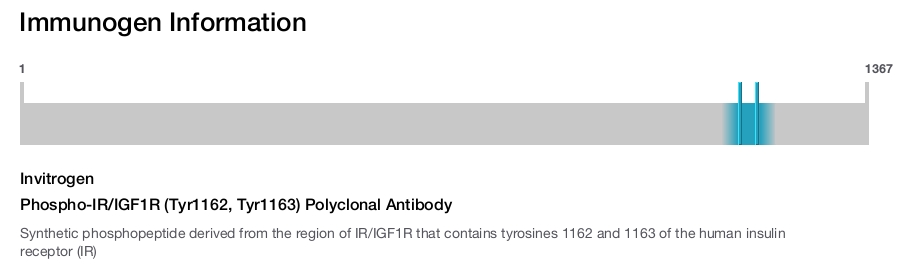
Synthetic phosphopeptide derived from the region of IR/IGF1R that contains tyrosines 1162 and 1163 of the human insulin receptor (IR)
偶联物
Unconjugated
Unconjugated
Unconjugated
形式
Liquid
纯化类型
Antigen affinity chromatography
保存液
Dulbecco's PBS, pH 7.3, with 1mg/mL BSA
内含物
0.05% sodium azide
保存条件
-20°C
运输条件
Ambient (domestic); Wet ice (international)
RRID
产品详细信息
The antibody has been negatively preadsorbed using a non-phosphopeptide corresponding to the site of phosphorylation to remove antibody reactive with non-phosphorylated insulin/insulin-like growth factor-1 receptor (IR/IGF1R). The final product is generated by affinity chromatography using an IR/IGF1R-derived peptide that is phosphorylated at tyrosines 1162 and 1163 (tyrosines 1135 and 1136 for IGF1R. The antiserum was produced against a chemically synthesized phosphopeptide derived from the region of IR/IGF1R that contains tyrosines 1162 and 1163 of the human insulin receptor (IR) as numbered according to Ebina, et al. (1150 and 1151 according to Ullrich et al.). The corresponding residues in the IGF1R are 1135 and 1136. The sequence is conserved in mouse and rat for both the IR and IGF1R. Although exhibiting a preference for IR/IGF1R, this antibody has been shown by both peptide competition and protein blotting to react with other dual-phosphotyrosine motifs from proteins such as c-Met and Shc.
This antibody has been used in western blotting and previous lots of this antibody have been used in immunostaining. Positive controls used with this antibody in western analysis were Chinese hamster ovary cells transfected with a vector containing human insulin receptor (CHO-T) and stimulated with insulin, or 3T3-L1 cells stimulated with insulin.
靶标信息
Insulin and Insulin-like Growth Factor receptors are transmembrane tyrosine kinase receptors that play critical roles in development, cell growth and metabolism. Insulin/Insulin-like growth factor-1 binding to the extracellular domain of IR and IGFR leads to autophosphorylation of the receptor and activation of the intrinsic tyrosine kinase activity, which allows appropriate substrates to be phosphorylated. Phosphorylation sites that are unique to each receptor presumably play a key role in these signaling differences. The catalytic loops within the tyrosine kinase domains contain a three tyrosine motif corresponding to Tyr1158, 1162 and 1163 (for the IR) and Tyr1131, 1135 and 1136 (for the IGF1R). Autophosphorylation of the tyrosine sites within the activation loop proceeds in a processive manner initiating at the second tyrosine (1162 or 1135), followed by phosphorylation at tyrosines 1158 (IGF-1R tyrosine 1131), 1163 (IGF-1R tyrosine 1136), resulting in the full activation of IR and IGF1R.
仅用于科研。不用于诊断过程。未经明确授权不得转售。
生物信息学
蛋白别名: IGF-I receptor; IGF-I Receptor beta; IGF1 Receptor; IGF1 Receptor beta; IGF1R beta; insulin receptor precursor; IR; unnamed protein product
基因别名: CD220; CD221; HHF5; IGFIR; IGFR; JTK13
UniProt ID: (Human) P08069, (Human) P06213
Entrez Gene ID: (Human) 3480, (Human) 3643
protein kinase activity
protein tyrosine kinase activity
transmembrane receptor protein tyrosine kinase activity
insulin-activated receptor activity
insulin-like growth factor-activated receptor activity
insulin receptor binding
structural molecule activity
protein binding
insulin-like growth factor binding
ATP binding
insulin-like growth factor I binding
identical protein binding
phosphatidylinositol 3-kinase binding
insulin binding
insulin receptor substrate binding
beta-amyloid binding
insulin-like growth factor receptor binding
GTP binding
protein domain specific binding
protein kinase activator activity
insulin-like growth factor II binding
cargo receptor activity
macromolecular complex binding
PTB domain binding
immune response
signal transduction
transmembrane receptor protein tyrosine kinase signaling pathway
positive regulation of cell proliferation
insulin receptor signaling pathway
positive regulation of cell migration
peptidyl-tyrosine autophosphorylation
negative regulation of apoptotic process
positive regulation of protein complex disassembly
negative regulation of MAPK cascade
positive regulation of MAPK cascade
protein kinase B signaling
transcytosis
regulation of JNK cascade
protein autophosphorylation
insulin-like growth factor receptor signaling pathway
positive regulation of protein kinase B signaling
cellular response to glucose stimulus
dendritic spine maintenance
beta-amyloid clearance
positive regulation of cold-induced thermogenesis
cellular response to oxygen-containing compound
cellular response to beta-amyloid
positive regulation of receptor internalization
heart morphogenesis
regulation of glycogen biosynthetic process
regulation of transcription, DNA-templated
receptor-mediated endocytosis
G-protein coupled receptor signaling pathway
learning
memory
male gonad development
regulation of gene expression
regulation of glucose metabolic process
adrenal gland development
cellular response to insulin stimulus
glucose homeostasis
positive regulation of I-kappaB kinase/NF-kappaB signaling
positive regulation of nitric oxide biosynthetic process
positive regulation of glycogen biosynthetic process
positive regulation of glycolytic process
positive regulation of mitotic nuclear division
positive regulation of transcription, DNA-templated
regulation of embryonic development
positive regulation of glucose import
viral entry into host cell
animal organ development
positive regulation of developmental growth
system development
positive regulation of cellular component organization
regulation of multicellular organismal process
positive regulation of meiotic cell cycle
positive regulation of respiratory burst
transport across blood-brain barrier
neuron projection maintenance
regulation of female gonad development
Disclaimer

Clicking the images or links will redirect you to a website hosted by BenchSci that provides third-party scientific content. Neither the content nor the BenchSci technology and processes for selection have been evaluated by us; we are providing them as-is and without warranty of any kind, including for use or application of the Thermo Fisher Scientific products presented.

