Search
Proteintech
PRPS2 Polyclonal Antibody
{{$productOrderCtrl.translations['antibody.pdp.commerceCard.promotion.promotions']}}
{{$productOrderCtrl.translations['antibody.pdp.commerceCard.promotion.promocode']}}: {{promo.promoCode}} {{promo.promoTitle}} {{promo.promoDescription}}. {{$productOrderCtrl.translations['antibody.pdp.commerceCard.promotion.learnmore']}}
{{$ctrl.translations['antibody.pdp.skuNotes.additionalInformation']}}:
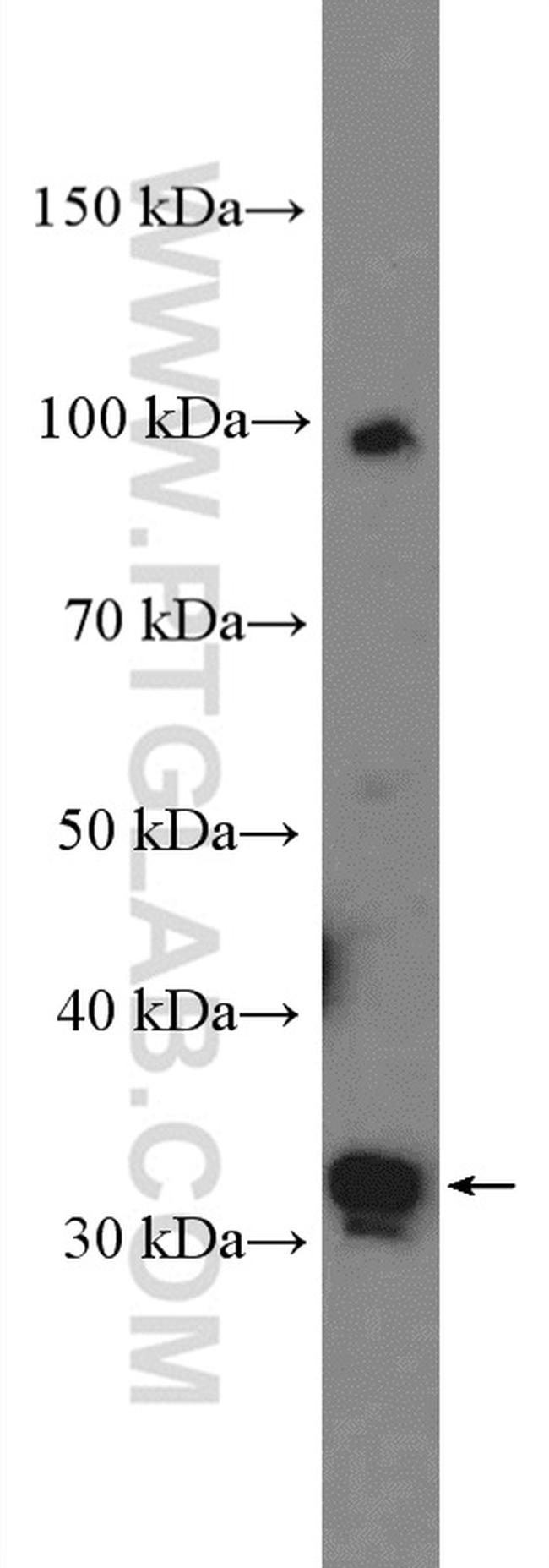
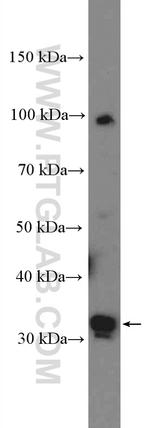
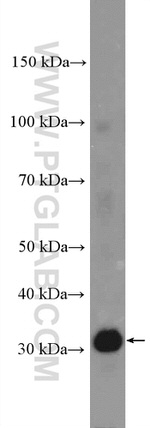
Please note: We are reviewing Western blot images included in the antibody testing data in our catalog, including those provided by third parties. Unless expressly labeled or annotated as “raw-unedited”, Western blot images included in the antibody testing data in our catalog may have been edited, optimized or otherwise adjusted for presentation.


产品信息
27024-1-AP
应用
建议稀释比
已发表文章
产品规格
种属反应
Human,
Mouse
宿主/亚型
Rabbit
/ IgG
分类
Polyclonal
类型
Antibody
抗原
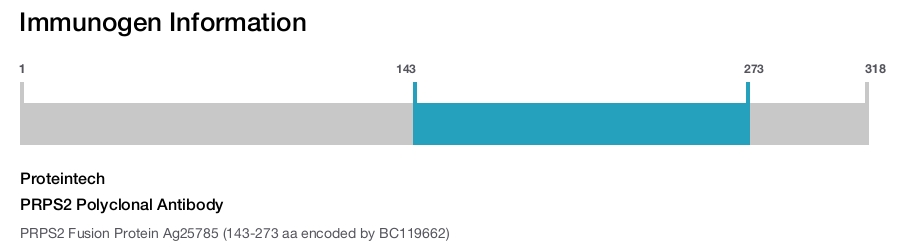
PRPS2 Fusion Protein Ag25785 (143-273 aa encoded by BC119662)
偶联物
Unconjugated
Unconjugated
Unconjugated
形式
Liquid
浓度
0.27 mg/mL
规格
40.5 µg
纯化类型
Antigen affinity chromatography
保存液
PBS, pH 7.3, with 50% glycerol
内含物
0.02% sodium azide
保存条件
-20°C
运输条件
Wet ice (domestic); Dry ice (international)
产品详细信息
Immunogen sequence: IPVDNLYAE PAVLQWIREN IAEWKNCIIV SPDAGGAKRV TSIADRLNVE FALIHKERKK ANEVDRMVLV GDVKDRVAIL VDDMADTCGT ICHAADKLLS AGATKVYAIL THGIFSGPAI SRINNAAFEA VV (143-273 aa encoded by BC119662)
靶标信息
The Phosphoribosyl Pyrophosphate Synthetase 2 (PRPS2) gene plays a critical role in cellular metabolism by encoding an enzyme that conducts a key reaction linking central carbon metabolism and nucleotide production, essential for various biological functions. Structurally, PRPS2 shares a high sequence identity with PRPS1, making it less sensitive to allosteric inhibition and particularly significant in certain oncology contexts due to its upregulation at the translational level in some cancers. The enzyme encoded by PRPS2 is pivotal in coupling protein and nucleotide biosynthesis, aided by a unique cis-regulatory element in its 5' UTR, which is influenced by oncogenic pathways. This gene manifests a tissue-specific expression profile, predominantly in proliferative tissues such as the thymus, lung, and small intestine, highlighting its significance in cell growth and proliferation. The evolutionary origins of PRPS2, along with its functional diversification into multiple PRPS genes in eukaryotes, underscore its indispensable role in cellular physiology and pathology.
仅用于科研。不用于诊断过程。未经明确授权不得转售。
生物信息学
蛋白别名: phosphoribosyl pyrophosphate synthase II; phosphoribosyl pyrophosphate synthetase II; PPRibP synthetase; PRS-II; ribose-phosphate diphosphokinase 2; testicular secretory protein Li 41; unnamed protein product
基因别名: 2610101M19Rik; Prps-2; PRSII
UniProt ID: (Human) P11908, (Mouse) Q9CS42
Entrez Gene ID: (Human) 5634, (Mouse) 110639
Disclaimer

Clicking the images or links will redirect you to a website hosted by BenchSci that provides third-party scientific content. Neither the content nor the BenchSci technology and processes for selection have been evaluated by us; we are providing them as-is and without warranty of any kind, including for use or application of the Thermo Fisher Scientific products presented.

