Search


引用和文献 (1)
Thermo Scientific™
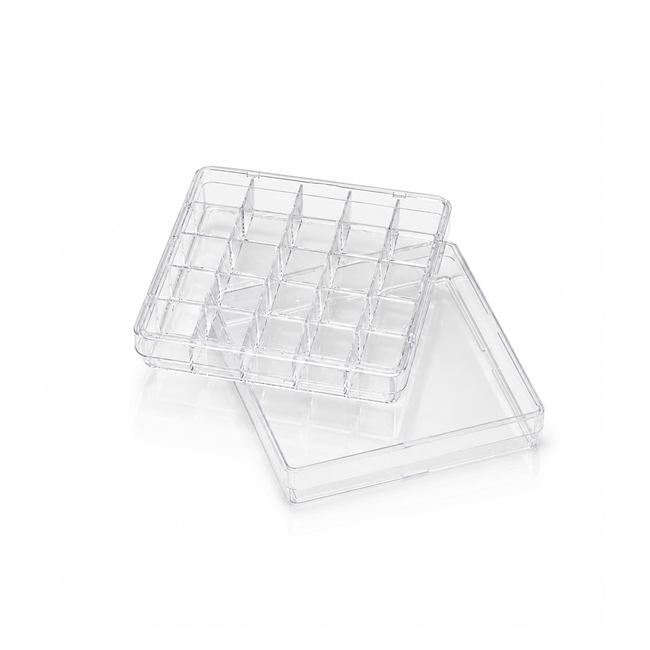
Sterilin™ 100 mm 方形皮氏培养皿
使用 Thermo Scientific™ Sterilin™ 100mm 方形皮氏培养皿开展各种应用,此款产品提供有分区和无分区两种规格。
Have Questions?
更改视图

| 货号 | 孔数 | 排气口 |
|---|---|---|
| 103 | 25 | 可选 |
| 109-17 | 1 | 否 |
货号 103
价格(CNY)
-
孔数:
25
排气口:
可选
使用 Thermo Scientific™ Sterilin™ 100 mm 方形皮氏培养皿开展各种应用,此款产品提供有分区和无分区两种规格。在洁净室条件(类别 7 ISO14644)下无菌生产,以排除微生物污染。
目前不在美国提供
无隔区:
- 适合要求表面积较大且底部较为平坦时进行抗生素敏感性测试
隔区:
- 适合小型液体培养基工作或存放样品
- 25 个隔区均具有 3.7 cm2 的表面积和 5 mL 的容量
- 盖子带有可选通风或无通风位置,盖子转至 90° 时可允许培养皿通风或不通风
订购信息:
目前不在北美提供
For Research Use Only. Not for use in diagnostic procedures.
规格
描述培养皿,100 mm
每箱数量120
每架数量4
形状方形
类型培养皿
排气口可选
底部形状平
高度(公制)20.8 mm
无菌无菌
孔数25
Unit SizeEach
常见问题解答 (FAQ)
What are the concentrations of the components in your BrdU Labeling reagent (Cat# 00-0103)?
How long does the BrdU labeling reagent (Cat. No. 00-0103) last in cells? Can it last for 3-5 days?
引用和文献 (1)
引用和文献
Abstract
Rapid development of severe hyperplastic gastritis with gastric epithelial dedifferentiation in Helicobacter felis-infected IL-10(-/-) mice.
Journal:Am J Pathol
PubMed ID:9588906
'Interleukin (IL)-10 is a potent anti-inflammatory and immune-regulatory cytokine. Mice deficient in IL-10 production (IL-10(-/-)) develop a spontaneous inflammatory bowel disease, indicating that IL-10 is an important regulator of the mucosal immune response in vivo. To study the role of IL-10 in the host response to gastric Helicobacter infection, stomachs