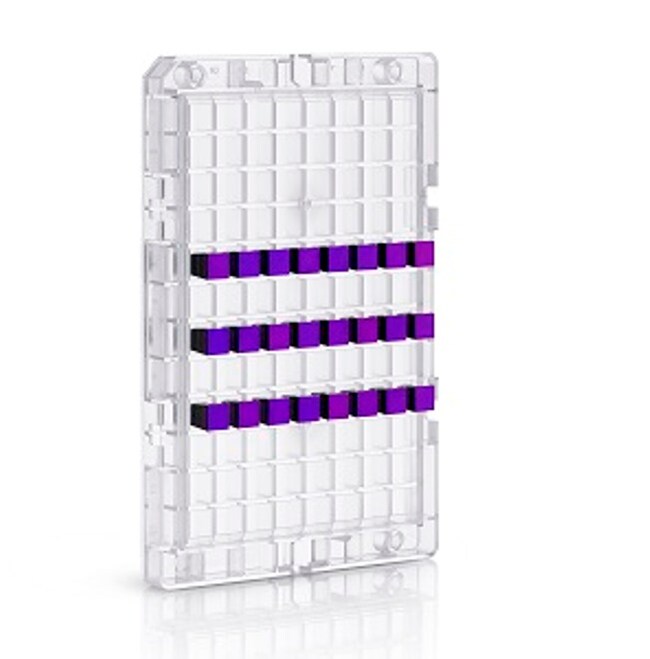
GeneChip™ 果蝇基因 1.1 ST 阵列板
Applied Biosystems™

GeneChip™ 果蝇基因 1.1 ST 阵列板

GeneChip™ 果蝇基因 1.1 ST 阵列板使您能够:•检测该片段在整个基因中的表达情况,且分辨率和准确度均高于经典 3'-端偏倚微阵列方案• 通过对每个转录本进行多次独立测量获取精确且可重现的数据• 使用 GeneTitan™ 仪器在单个阵列板上处理多达了解更多信息
Have Questions?
货号 902154
价格(CNY)
-
GeneChip™ 果蝇基因 1.1 ST 阵列板使您能够:
•检测该片段在整个基因中的表达情况,且分辨率和准确度均高于经典 3'-端偏倚微阵列方案
• 通过对每个转录本进行多次独立测量获取精确且可重现的数据
• 使用 GeneTitan™ 仪器在单个阵列板上处理多达 96 份样品

基因表达微阵列开发

对比较基因组学研究、进化生物学而言,模型及应用研究微生物拥有巨大价值,并且在破译人类疾病的分子机制及农作物改良方面将持续发挥关键作用。基因 1.1 ST 阵列板已被开发用于检测多种模型和应用研究生物。这些生物体是不断壮大的基因表达微阵列家族的最新成员,可提供全转录本覆盖。基因 1.1 ST 阵列板由我们与知名研究人员合作设计,如 Roslin 研究所遗传学和基因组学部主任 Alan Archibald(猪基因 1.1 ST 阵列设计)、干细胞研究计划主管 Leonard Zon 和波士顿哈佛医学院儿童医院干细胞研究项目的基因组核心主任 Yi Zhou(斑马鱼基因 1.1 ST 阵列设计)。

关键优势
较高的转录本覆盖度 — 对良好注释内容进行可靠的表达测定,每个转录本含高达26个探针
全转录组分析 — 可捕获 3’ 端偏倚表达设计可能遗漏的转录本亚型
高数据相关性 — 可实现较高的阵列条带间和阵列条带内的信号相关性 (R >0.99)
方便的形式 — 可同时处理多达96份样品,仅需较少的手动阵列处理

符合行业标准的成熟性能
基因 1.1 ST 阵列板实现所选模型和应用研究微生物的全转录组覆盖。所有设计均基于较新的基因组内容,并且提供较高的探针覆盖范围(完整长度基因中可多达 26 个探针)。这使得它可以精确进行全转录组微阵列分析检测,并可提供比市场上其他经典 3'-端偏倚微阵列方案更高的分辨率和准确性。全转录组分析方法使研究人员能够检测多个转录本亚型,包括使用 3’-端偏倚表达设计时可能遗漏的亚型,如剪接变异、非多聚腺苷酸转录本、带有选择性多聚腺苷酸化位点的转录本以及截短转录本。

内容概况
基因 1.1 ST 阵列板可以覆盖较新的转录基因组范围。我们使用全面的信息源来设计用于检测每个转录本多达 26 个独特序列的探针。全部这些 26 种独特的 25-mer 探针可检测每个转录本至多 650 个碱基。整个转录本的高探针覆盖度带来了出色的性能和数据可信度,同时也能够随着您对每个基因组和转录组的理解加深时更新您的实验数据。
For Research Use Only. Not for use in diagnostic procedures.
规格
产品线GeneChip™
数量1 plate
类型果蝇基因 1.1 ST 阵列板
数组转录组谱分析
产品规格
阵列数量24 阵列
种属果蝇
Unit SizeEach

常见问题解答 (FAQ)

What is contained in the tab-delimited format of the GeneChip probe sequence download file?

The tab-delimited probe sequence file contains the following information:
-Probe Set Name
-Probe X: The X coordinate of the probe sequence on the GeneChip probe array.
-Probe Y: The Y coordinate of the probe sequence on the GeneChip probe array.
-Probe Interrogation Position: The base position on the consensus/exemplar sequence where the central base of the probe aligns, which is the 13th base of a 25mer probe.
-Probe Sequence: The 25-base perfect match sequence.
-Target Strandedness: The sense/antisense orientation of the target sequence that can hybridize with the probe sequence.

Find additional tips, troubleshooting help, and resources within our Microarray Analysis Support Center.

What is the NetAffx Analysis Center?

The NetAffx Analysis Center used to contain information and files regarding array content, probe sets, and functional annotations. However, the NetAffx Analysis Center has been retired. Much of the content provided by the NetAffx Analysis Center can now be accessed on the arrays’ thermofisher.com product pages or by contacting Technical Support (techsupport@thermofisher.com).

Find additional tips, troubleshooting help, and resources within our Microarray Analysis Support Center.

Is the hybridization mix for cartridges the same as the hybridization mix for PEG arrays (array plates)?

The hybridization mix for PEG arrays is different from the hybridization mix for cartridges. The concentrations of the hybridization mix are different and in addition, DMSO is not added into the hybridization mix for PEG arrays because it can affect the glue that holds the PEG to the plate.

What is an Event Score in TAC 4.0 Software?

TAC 4.0 includes two algorithms for identifying alternative splicing events: the TAC 2.0 algorithm and the new EventPointer. Algorithmic determination of alternate splicing remains a challenging problem. TAC 4.0 supports two different approaches that have different sets of strengths and weaknesses. After considerable testing, the new TAC 4.0 “'Event Score” leverages both previous TAC 2.0 event estimation score and Event Pointer p-value and sorts the most likely alternative splicing events to the top. Of course, the TAC 2.0 event score and EventPointer p-values remain individually available.

Find additional tips, troubleshooting help, and resources within our Microarray Analysis Support Center.

What are the new software components of TAC 4.0?

LIMMA: LIMMA stands for Linear Models for MicroArray data. It is an R/Bioconductor software package that provides an integrated solution for analyzing data from gene expression experiments. It contains rich features for handling complex experimental designs and for information borrowing to overcome the problem of small sample sizes. Over the past decade, LIMMA has been a popular choice for gene discovery through differential expression analyses of microarray data. There are ˜8000 citations using LIMMA and Affymetrix arrays. The TAC 4.0 interface exposes the core differential expression analysis functionality including real covariates and random factors. In addition, the interface simplifies the creation of the design and contrast matrices that specify the experimental design and comparisons for the analysis.

Batch Effect Adjustment: Batch effects are systematic changes in microarray sample intensities that reflect changes in the assay sometimes found in different batches. These effects occur more commonly in larger studies in which all of the samples cannot be processed at the same time. TAC 4.0 enables the interface to the ComBat batch adjustment algorithm, which can remove the batch effects from the signals.

EventPointer: EventPointer is a Bioconductor package that identifies alternative splicing events in microarray data. TAC 4.0 incorporates an interface to this package.

Exploratory Grouping Analysis: Exploratory Grouping Analysis (EGA) is an interface to a set of R packages that offer the ability to examine the relationships between multiple microarray samples. While the scientist typically has a preconceived idea regarding the classification of the samples in an experiment, the resulting data often show additional substructure due to unexpected biological differences or batch effects. The EGA interface enables the identification of this substructure. Biological differences can be further explored using LIMMA differential expression analysis. Batch effects can be removed using ComBat to prevent them from obscuring the biology of interest.

Find additional tips, troubleshooting help, and resources within our Microarray Analysis Support Center.