Search

Invitrogen™
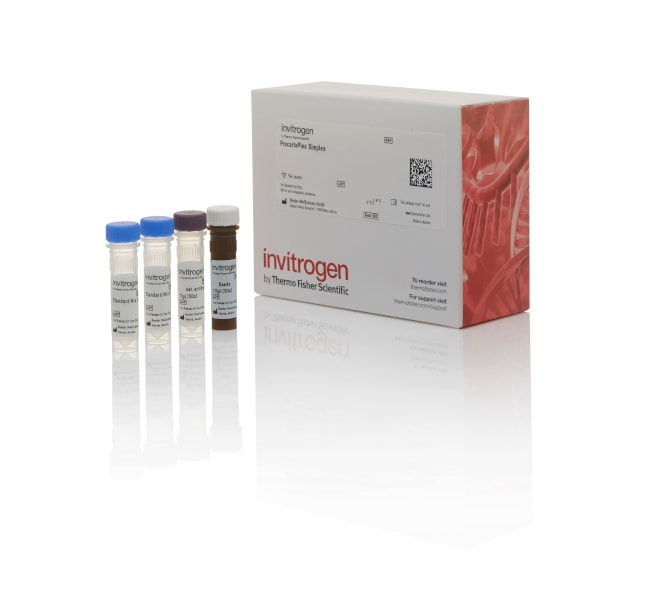
PD-L1 小鼠 ProcartaPlex™ Simplex 试剂盒
小鼠 PD-L1 Simplex ProcartaPlex 试剂盒可以测量 PD-L1 蛋白并与其他 Simplex 试剂盒组合使用,这样,您可以创建自己的利用 Luminex xMAP 技术进行蛋白检测/定量的多重检测组合。
| 货号 | 数量 |
|---|---|
| EPX010-26054-901 | 96 次测试 |
货号 EPX010-26054-901
价格(CNY)
-
数量:
96 次测试
The Mouse PD-L1 Simplex ProcartaPlex Kit measures PD-L1 protein and is designed to be combinable with other Simplex kits so that you can create your own multiplex panel that utilizes Luminex xMAP technology for protein detection/quantitation. When combining multiple Simplex kits (i.e., when you are not using a pre-configured Multiplex Panel), only one buffer kit (sold separately) is needed for each assay plate regardless of plex size.
小鼠 PD-L1 Simplex ProcartaPlex 试剂盒可以测量 PD-L1 蛋白并与其他 Simplex 试剂盒组合使用,这样,您可以创建自己的利用 Luminex xMAP 技术进行蛋白检测/定量的多重检测组合。当多个 Simplex 试剂盒结合使用时(即,当您未使用预配置的多通路检测组合时),每个检测板仅需要一个缓冲液试剂盒(单独出售),无需考虑通路大小。
关于用于 Luminex 平台的 ProcartaPlex 检测
ProcartaPlex 免疫检测基于夹心式 ELISA 的原理,使用与一种蛋白的不同抗原决定簇结合的两种高度特异性抗体,通过 Luminex 仪器同时定量所有蛋白靶标。ProcartaPlex 多通路检测只需 25 µL 血浆或血清,或 50 µL 细胞培养物上清液,只需四小时即可获得分析结果。
• 每份样品可得到更多结果—在单一 25 - 50 µL 样品中可同时测量多种蛋白靶标
•成熟的 Luminex 技术—较常参考的蛋白检测和定量测定多通路平台
ProcartaPlex 检测利用 Luminex xMAP(多分析物分析)技术用于在单一 25-50 µL 样品(血浆、血清、细胞培养物上清液和其他体液)中同时检测和定量测定多达 80 种蛋白靶标。
ProcartaPlex 检测中的 Luminex 微珠用精确比例的红色和红外荧光基团进行内部染色,生成光谱独特的标记,可通过 Luminex xMAP 检测系统(例如 Luminex 200、FLEXMAP 3D 和 MAGPIX)识别。与夹心ELISA类似,ProcartaPlex测定使用匹配的抗体对来鉴定目的蛋白质。在多通路检测中,每种光谱独特的微珠用单一靶蛋白特异性抗体标记,并且用生物素化抗体和链霉素亲和素 R-藻红蛋白 (RPE) 识别结合蛋白。蛋白特异性抗体与独特微珠偶联可用于在单孔中分析多个靶标。
ProcartaPlex 检测与 ELISA 之间极显著的区别在于 ProcartaPlex 检测中的捕获抗体与微珠偶联并且不吸附于微孔板孔中,因此 ProcartaPlex 检测试剂在溶液中自由漂浮。例如,对于检测,Luminex 200仪器包含两个激光器,一个用于区分每个珠子的光谱特征,另一个用于量化RPE荧光的量,其与样品中存在的蛋白质的量成比例。ProcartaPlex 多通路测定可以在样品量明显减少的情况下分析更多靶蛋白,同时还能执行传统三明治 ELISA。
ProcartaPlex 多通路检测组合有多种规格,可以覆盖六个物种(人、小鼠、大鼠、非人灵长类动物、猪和犬)。
关于用于 Luminex 平台的 ProcartaPlex 检测
ProcartaPlex 免疫检测基于夹心式 ELISA 的原理,使用与一种蛋白的不同抗原决定簇结合的两种高度特异性抗体,通过 Luminex 仪器同时定量所有蛋白靶标。ProcartaPlex 多通路检测只需 25 µL 血浆或血清,或 50 µL 细胞培养物上清液,只需四小时即可获得分析结果。
• 每份样品可得到更多结果—在单一 25 - 50 µL 样品中可同时测量多种蛋白靶标
•成熟的 Luminex 技术—较常参考的蛋白检测和定量测定多通路平台
ProcartaPlex 检测利用 Luminex xMAP(多分析物分析)技术用于在单一 25-50 µL 样品(血浆、血清、细胞培养物上清液和其他体液)中同时检测和定量测定多达 80 种蛋白靶标。
ProcartaPlex 检测中的 Luminex 微珠用精确比例的红色和红外荧光基团进行内部染色,生成光谱独特的标记,可通过 Luminex xMAP 检测系统(例如 Luminex 200、FLEXMAP 3D 和 MAGPIX)识别。与夹心ELISA类似,ProcartaPlex测定使用匹配的抗体对来鉴定目的蛋白质。在多通路检测中,每种光谱独特的微珠用单一靶蛋白特异性抗体标记,并且用生物素化抗体和链霉素亲和素 R-藻红蛋白 (RPE) 识别结合蛋白。蛋白特异性抗体与独特微珠偶联可用于在单孔中分析多个靶标。
ProcartaPlex 检测与 ELISA 之间极显著的区别在于 ProcartaPlex 检测中的捕获抗体与微珠偶联并且不吸附于微孔板孔中,因此 ProcartaPlex 检测试剂在溶液中自由漂浮。例如,对于检测,Luminex 200仪器包含两个激光器,一个用于区分每个珠子的光谱特征,另一个用于量化RPE荧光的量,其与样品中存在的蛋白质的量成比例。ProcartaPlex 多通路测定可以在样品量明显减少的情况下分析更多靶蛋白,同时还能执行传统三明治 ELISA。
ProcartaPlex 多通路检测组合有多种规格,可以覆盖六个物种(人、小鼠、大鼠、非人灵长类动物、猪和犬)。
仅供科研使用。不可用于诊断程序。
规格
测定范围根据批次 1 测定:26至 107600 pg/mL
检测灵敏度根据批次 1 测定:3.1 pg/mL
磁珠类型PD-L1 [29 ]
适用于(设备)Luminex™ 仪器
产品规格Simplex 试剂盒
基因CD274 抗原
基因别名B7h1,Pdcd1l1,Pdcd1lg1,Pdl1
基因 ID (Entrez)60533
基因符号CD274
产品线ProcartaPlex
蛋白质程序性细胞死亡 1 配体 1
蛋白质子类型B7-H1
样品类型血清、血浆、细胞培养物上清液, Plasma, Cell Culture Supernatants
样品体积血清,血浆:25 μL;CCS:50 μL
运输条件湿冰
UniProt IDQ9EP73
可组合性可结合使用
产品类型Simplex 试剂盒
数量96 次测试
研究领域Immunology, Oncology
种属小鼠
Unit SizeEach
内容与储存
- 1 小瓶捕获微珠 (50X)
- 1 小瓶生物素化检测抗体 (50X)
- 2 小瓶小鼠标准品混合物 F(冻干)
- 存储在 2°C 到 8°C。