Search
Invitrogen
Pan Succinyl Lysine Recombinant Rabbit Monoclonal Antibody (4A3S5)
{{$productOrderCtrl.translations['antibody.pdp.commerceCard.promotion.promotions']}}
{{$productOrderCtrl.translations['antibody.pdp.commerceCard.promotion.promocode']}}: {{promo.promoCode}} {{promo.promoTitle}} {{promo.promoDescription}}. {{$productOrderCtrl.translations['antibody.pdp.commerceCard.promotion.learnmore']}}
{{$ctrl.translations['antibody.pdp.skuNotes.additionalInformation']}}:
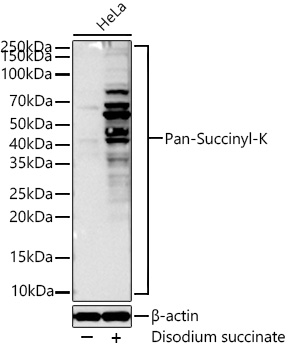
FIGURE: 1 / 3
Pan Succinyl Lysine Antibody (MA568793) in WB
Western blot analysis of Pan Succinyl Lysine in HeLa cells. Samples were probed with Pan Succinyl Lysine recombinant monoclonal antibody (Product # MA568792) at 1:1,000 dilution incubated overnight at 4°C. Secondary antibody: HRP-conjugated Goat anti-Rabbit IgG (H+L) at 1:10,000 dilution. Lysates/proteins: 30 µg per lane. Blocking buffer: 3 % nonfat dry milk in TBST.
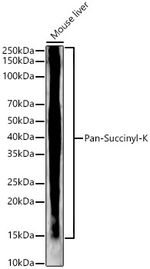
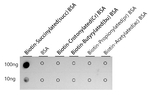
Please note: We are reviewing Western blot images included in the antibody testing data in our catalog, including those provided by third parties. Unless expressly labeled or annotated as “raw-unedited”, Western blot images included in the antibody testing data in our catalog may have been edited, optimized or otherwise adjusted for presentation.


Product Details
MA568793
Applications
Tested Dilution
Publications
Product Specifications
Species Reactivity
Human,
Mouse,
Rat
Host/Isotype
Rabbit
/ IgG
Expression System
HEK293 cells
Class
Recombinant Monoclonal
Type
Antibody
Clone
4A3S5
Immunogen
Synthetic peptide.
Conjugate
Unconjugated
Unconjugated
Unconjugated
Form
Liquid
Concentration
1.1 mg/mL
Amount
22 µg
Purification
Affinity chromatography
Storage buffer
PBS, pH 7.3., with 50% glycerol, 0.05% BSA
Contains
0.09% sodium azide
Storage conditions
-20°C, Avoid Freeze/Thaw Cycles
Shipping conditions
Ambient (domestic); Wet ice (international)
Target Information
Pan-succinyl-lysine is a post-translational modification where a succinyl group is added to the lysine residue of a protein, influencing protein function and localization. This modification generally occurs in the mitochondria, where it plays a pivotal role in the regulation of metabolic enzymes. The succinyl group is transferred to lysine residues by specific enzymes, leading to changes in protein structure and activity. Succinylation is essential for processes like the tricarboxylic acid (TCA) cycle, fatty acid metabolism, and amino acid degradation. Dysregulation of lysine succinylation is associated with various diseases, including cancer and metabolic disorders.
For Research Use Only. Not for use in diagnostic procedures. Not for resale without express authorization.
References (0)
Have you cited this product in a publication?
Let us know so we can reference it here.
Bioinformatics
Protein Aliases: ADP-ribosyltransferase (NAD+; poly (ADP-ribose) polymerase); ADP-ribosyltransferase diphtheria toxin-like 1; ADP-ribosyltransferase NAD(+); carboxypeptidase A1 (pancreatic); casein kinase I; casein kinase I alpha S-like; CASP-1; caspase 1, apoptosis-related cysteine peptidase; CKI-alpha; CKI-alpha-like; class IVb beta tubulin; clock regulator kinase; CSNK1A1; cysteine protease; DNA ADP-ribosyltransferase PARP1; down-regulated in lung cancer; epididymis secretory sperm binding protein; epididymis secretory sperm binding protein Li 77p; G protein beta1/gamma2 subunit-interacting factor 1; H3 histone family, member A; HIST1H3A; histone 1, H3a; histone cluster 1 H3 family member a; histone cluster 1, H3a; histone H3/a; IL-1 beta-converting enzyme; IL-1B converting enzyme; IL-1BC; IL1B-convertase; interleukin 1, beta, convertase; interleukin 1-B converting enzyme; interleukin-1 beta convertase; interleukin-1 beta-converting enzyme; microtubule protein; microtubule-associated protein tau; NAD(+) ADP-ribosyltransferase 1; neurofibrillary tangle protein; p45; paired helical filament-tau; pancreatic carboxypeptidase A; PHF-tau; poly (ADP-ribose) polymerase family, member 1; poly(ADP-ribose) polymerase; poly(ADP-ribose) synthetase; poly(ADP-ribosyl)transferase; poly[ADP-ribose] synthase 1; protein phosphatase 1, regulatory subunit 103; protein poly-ADP-ribosyltransferase PARP1; Tau-derived paired helical filament hexapeptide; tubulin beta-2 chain; tubulin beta-2C chain; tubulin, beta 2C; tubulin, beta, 2; unnamed protein product
Gene Aliases: ADPRT; ADPRT 1; ADPRT1; ARTD1; Beta2; CK1; CK1a; CKIa; CPA; DDPAC; FTD1; FTDP-17; H3/A; H3FA; HEL-S-77p; HIST1H3A; HLCDGP1; ICE; IL1BC; LCAEOD; MAPTL; MSTD; MTBT1; MTBT2; P45; pADPRT-1; PARP; PARP-1; PARS; Poly-PARP; PPND; PPOL; PPP1R103; PRO2975; TAU; tau-40; Tau-PHF6; TUBB2; TUBB2C
UniProt ID: (Human) P29466, (Human) P15085, (Human) P48729, (Human) Q8N752, (Mouse) P29452, (Rat) P97633, (Human) P68431, (Human) P10636, (Human) P09874, (Human) P68371
Entrez Gene ID: (Human) 834, (Human) 1357, (Human) 1452, (Human) 122011, (Mouse) 12362, (Rat) 113927, (Human) 8350, (Human) 4137, (Human) 142, (Human) 10383
endopeptidase activity
cysteine-type endopeptidase activity
protein binding
cysteine-type peptidase activity
cysteine-type endopeptidase activator activity involved in apoptotic process
enzyme binding
kinase binding
cytokine binding
identical protein binding
CARD domain binding
metallocarboxypeptidase activity
exopeptidase activity
zinc ion binding
protein kinase activity
protein serine/threonine kinase activity
ATP binding
protein serine kinase activity
peptidase activity
scaffold protein binding
magnesium ion binding
peptide binding
phosphoprotein binding
DNA binding
structural constituent of chromatin
nucleosomal DNA binding
cadherin binding
protein heterodimerization activity
AT DNA binding
double-stranded DNA binding
single-stranded DNA binding
RNA binding
actin binding
enzyme inhibitor activity
microtubule binding
tubulin binding
SH3 domain binding
protein kinase binding
protein binding, bridging
apolipoprotein binding
dynactin binding
phosphatidylinositol binding
sequence-specific DNA binding
chaperone binding
protein phosphatase 2A binding
Hsp90 protein binding
lipoprotein particle binding
histone-dependent DNA binding
microtubule lateral binding
microtubule stabilizing activity
phosphatidylinositol bisphosphate binding
chromatin binding
damaged DNA binding
NAD+ ADP-ribosyltransferase activity
enzyme activator activity
estrogen receptor binding
nucleosome binding
ubiquitin protein ligase binding
protein homodimerization activity
histone deacetylase binding
non-sequence-specific DNA binding, bending
NAD binding
RNA polymerase II sequence-specific DNA binding transcription factor binding
R-SMAD binding
NAD DNA ADP-ribosyltransferase activity
transcription regulator activator activity
NAD+-protein-serine ADP-ribosyltransferase activity
NAD+-protein-aspartate ADP-ribosyltransferase activity
NAD+-protein-glutamate ADP-ribosyltransferase activity
NAD+-protein-tyrosine ADP-ribosyltransferase activity
NAD+-protein-histidine ADP-ribosyltransferase activity
NAD+-histone H2BS6 serine ADP-ribosyltransferase activity
NAD+-histone H3S10 serine ADP-ribosyltransferase activity
NAD+-histone H2BE35 glutamate ADP-ribosyltransferase activity
single-strand break-containing DNA binding
protein ADP-ribosylase activity
double-stranded RNA binding
GTPase activity
structural constituent of cytoskeleton
GTP binding
MHC class I protein binding
negative regulation of transcription from RNA polymerase II promoter
response to hypoxia
microglial cell activation
plasma membrane repair
positive regulation of cytokine production
pattern recognition receptor signaling pathway
proteolysis
inflammatory response
osmosensory signaling pathway
myoblast fusion
memory
protein secretion
response to xenobiotic stimulus
response to bacterium
regulation of autophagy
programmed cell death
protein processing
protein autoprocessing
protein catabolic process
response to lipopolysaccharide
positive regulation of interleukin-1 alpha production
positive regulation of interleukin-1 beta production
positive regulation of interleukin-18 production
response to ATP
interleukin-18-mediated signaling pathway
defense response to bacterium
regulation of apoptotic process
positive regulation of apoptotic process
positive regulation of I-kappaB kinase/NF-kappaB signaling
positive regulation of circadian sleep/wake cycle, non-REM sleep
ceramide biosynthetic process
regulation of inflammatory response
positive regulation of inflammatory response
defense response to Gram-negative bacterium
protein maturation
defense response to virus
mitochondrial depolarization
membrane hyperpolarization
protein poly-ADP-ribosylation
pyroptosis
interleukin-1-mediated signaling pathway
cellular response to lipopolysaccharide
cellular response to interferon-gamma
programmed necrotic cell death
cytokine precursor processing
signaling receptor ligand precursor processing
AIM2 inflammasome complex assembly
pyroptotic cell death
positive regulation of NLRP3 inflammasome complex assembly
response to paraquat
positive regulation of tumor necrosis factor-mediated signaling pathway
microtubule cytoskeleton organization
mitotic cell cycle
cytoskeleton organization
microtubule-based process
sperm motility
natural killer cell mediated cytotoxicity
apoptotic process
signal transduction
positive regulation of neuron apoptotic process
icosanoid biosynthetic process
cellular response to mechanical stimulus
positive regulation of release of cytochrome c from mitochondria
cell morphogenesis
protein phosphorylation
Golgi organization
cellular response to nutrient
positive regulation of proteasomal ubiquitin-dependent protein catabolic process
positive regulation of Rho protein signal transduction
intermediate filament cytoskeleton organization
negative regulation of canonical Wnt signaling pathway
negative regulation of NLRP3 inflammasome complex assembly
positive regulation of TORC1 signaling
cellular response to DNA damage stimulus
cell-cell signaling
synapse assembly
learning or memory
response to lead ion
negative regulation of gene expression
negative regulation of mitochondrial membrane potential
rRNA metabolic process
axonal transport of mitochondrion
central nervous system neuron development
regulation of microtubule polymerization or depolymerization
regulation of microtubule polymerization
positive regulation of microtubule polymerization
cytoplasmic microtubule organization
neuron projection development
positive regulation of superoxide anion generation
regulation of chromosome organization
stress granule assembly
cellular response to heat
cellular response to reactive oxygen species
positive regulation of axon extension
microtubule polymerization
astrocyte activation
regulation of synaptic plasticity
intracellular distribution of mitochondria
generation of neurons
synapse organization
regulation of calcium-mediated signaling
protein polymerization
protein homooligomerization
regulation of microtubule-based movement
axon development
regulation of microtubule cytoskeleton organization
plus-end-directed organelle transport along microtubule
regulation of mitochondrial fission
negative regulation of mitochondrial fission
fibril organization
axonal transport
regulation of cellular response to heat
regulation of long term synaptic depression
positive regulation of protein localization to synapse
neurofibrillary tangle assembly
negative regulation of establishment of protein localization to mitochondrion
positive regulation of cellular protein localization
amyloid fibril formation
cellular response to nerve growth factor stimulus
cellular response to brain-derived neurotrophic factor stimulus
single strand break repair
telomere maintenance
DNA repair
double-strand break repair
transcription from RNA polymerase II promoter
mitochondrion organization
transforming growth factor beta receptor signaling pathway
response to gamma radiation
positive regulation of cardiac muscle hypertrophy
carbohydrate biosynthetic process
signal transduction involved in regulation of gene expression
macrophage differentiation
DNA ADP-ribosylation
mitochondrial DNA metabolic process
positive regulation of DNA-templated transcription, elongation
cellular response to insulin stimulus
regulation of protein localization
positive regulation of intracellular estrogen receptor signaling pathway
negative regulation of transcription elongation from RNA polymerase II promoter
cellular response to oxidative stress
cellular response to UV
protein modification process
mitochondrial DNA repair
regulation of circadian sleep/wake cycle, non-REM sleep
response to ethanol
negative regulation of innate immune response
negative regulation of transcription, DNA-templated
positive regulation of transcription from RNA polymerase II promoter
decidualization
positive regulation of mitochondrial depolarization
positive regulation of SMAD protein import into nucleus
positive regulation of necroptotic process
protein auto-ADP-ribosylation
protein localization to chromatin
establishment of protein localization to chromatin
cellular response to zinc ion
cellular response to transforming growth factor beta stimulus
replication fork reversal
negative regulation of cGAS/STING signaling pathway
positive regulation of protein localization to nucleus
cellular response to oxygen-containing compound
regulation of oxidative stress-induced neuron intrinsic apoptotic signaling pathway
response to aldosterone
negative regulation of adipose tissue development
negative regulation of telomere maintenance via telomere lengthening
cellular response to beta-amyloid
positive regulation of myofibroblast differentiation
regulation of base-excision repair
positive regulation of double-strand break repair via homologous recombination
ATP generation from poly-ADP-D-ribose
negative regulation of ATP biosynthetic process
cell surface receptor signaling pathway
Wnt signaling pathway
viral protein processing
regulation of Wnt signaling pathway
proteasome-mediated ubiquitin-dependent protein catabolic process
leukotriene metabolic process
response to cadmium ion
chromatin organization
nucleosome assembly
heterochromatin assembly
telomere organization
regulation of gene expression, epigenetic
Disclaimer

Clicking the images or links will redirect you to a website hosted by BenchSci that provides third-party scientific content. Neither the content nor the BenchSci technology and processes for selection have been evaluated by us; we are providing them as-is and without warranty of any kind, including for use or application of the Thermo Fisher Scientific products presented.

Performance Guarantee
If an Invitrogen™ antibody doesn't perform as described on our website or datasheet,we'll replace the product at no cost to you, or provide you with a credit for a future purchase.*
Learn more
We're here to help
Get expert recommendations for common problems or connect directly with an on staff expert for technical assistance related to applications, equipment and general product use.
Contact tech support