Search
Invitrogen
STING Polyclonal Antibody
{{$productOrderCtrl.translations['antibody.pdp.commerceCard.promotion.promotions']}}
{{$productOrderCtrl.translations['antibody.pdp.commerceCard.promotion.promocode']}}: {{promo.promoCode}} {{promo.promoTitle}} {{promo.promoDescription}}. {{$productOrderCtrl.translations['antibody.pdp.commerceCard.promotion.learnmore']}}
{{$ctrl.translations['antibody.pdp.skuNotes.additionalInformation']}}:
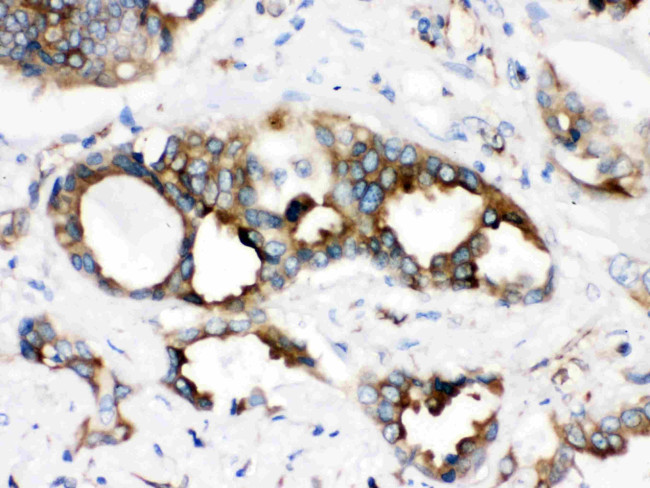
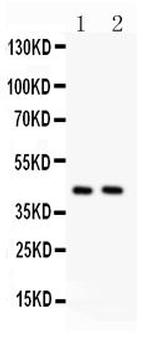
Please note: We are reviewing Western blot images included in the antibody testing data in our catalog, including those provided by third parties. Unless expressly labeled or annotated as “raw-unedited”, Western blot images included in the antibody testing data in our catalog may have been edited, optimized or otherwise adjusted for presentation.


Product Details
PA5-95268
Applications
Tested Dilution
Publications
Product Specifications
Species Reactivity
Human
Host/Isotype
Rabbit
/ IgG
Class
Polyclonal
Type
Antibody
Immunogen
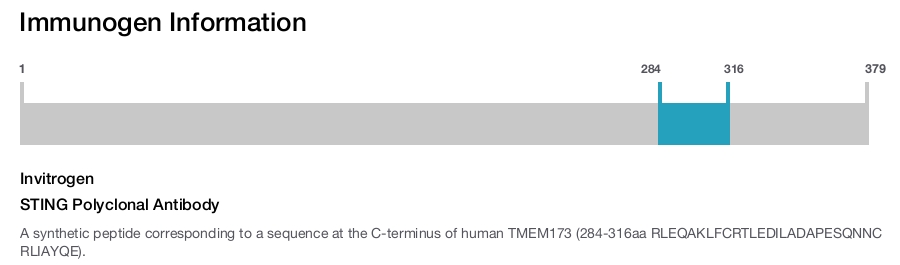
A synthetic peptide corresponding to a sequence at the C-terminus of human TMEM173 (284-316aa RLEQAKLFCRTLEDILADAPESQNNCRLIAYQE).
Conjugate
Unconjugated
Unconjugated
Unconjugated
Form
Lyophilized
Concentration
500 µg/mL once reconstituted
Amount
100 µg
Purification
Affinity chromatography
Storage buffer
PBS with 5mg BSA
Contains
0.05mg sodium azide
Storage conditions
-20°C
Shipping conditions
Ambient (domestic); Wet ice (international)
RRID
Product Specific Information
Reconstitute with 0.2 mL of distilled water to yield a concentration of 500 µg/mL.
Positive Control - WB: Rat Thymus Tissue, Mouse Thymus Tissue. IHC: human lung cancer tissue.|Store at -20°C for one year from date of receipt. After reconstitution, at 4°C for one month. It can also be aliquotted and stored frozen at -20°C for six months. Avoid repeated freeze-thaw cycles.
Target Information
STING is a 379 amino acid containing signaling protein that acts as an important component of innate immune signaling. This signaling protein is able to activate both NF-kappa-B and IRF3 transcription pathways to induce expression of type I interferon (IFN-alpha and IFN-beta) and exert a potent anti-viral state following expression. STING may have translocon function, the translocon possibly being able to influence the induction of type I interferons and is also involved in transduction of apoptotic signals via its association with the major histocompatibility complex class II (MHC-II) thus facilitating the detection of intracellular viral RNA species as well as B-form DNA and mediates death signaling via activation of the extracellular signal-regulated kinase (ERK) pathway. Generally seen in endoplasmic reticulum membrane, cell membrane and mitochondrion outer membrane, it is ubiquitously expressed in most of tissues.
For Research Use Only. Not for use in diagnostic procedures. Not for resale without express authorization.
References (0)
Have you cited this product in a publication?
Let us know so we can reference it here.
Bioinformatics
Protein Aliases: endoplasmic reticulum IFN stimulator; endoplasmic reticulum interferon stimulator; membrane protein; mitochondrial mediator of IRF3 activation; N-terminal methionine-proline-tyrosine-serine plasma membrane tetraspanner; stimulator of interferon protein; stimulator of interferon response cGAMP interactor-deltaC; stimulator of interferon response cGAMP interactor-deltaN; sting 1; STING-deltaC; STING-deltaN; tm173; transmembrane protein 173; transmembrane protein 173; TMEM173; unnamed protein product
Gene Aliases: ERIS; hMITA; hSTING; MITA; MPYS; NET23; SAVI; STING; STING-beta; TMEM173
UniProt ID: (Human) Q86WV6
Entrez Gene ID: (Human) 340061
transcription coactivator activity
protein binding
hydrogen ion channel activity
cholesterol binding
protein kinase binding
ubiquitin protein ligase binding
cyclic-di-GMP binding
signaling adaptor activity
identical protein binding
protein homodimerization activity
cyclic-GMP-AMP binding
RNA polymerase II sequence-specific DNA binding transcription factor binding
phosphatidylinositol-3,5-bisphosphate binding
protein serine/threonine kinase binding
autophagosome assembly
positive regulation of cytokine production
activation of innate immune response
pattern recognition receptor signaling pathway
positive regulation of defense response to virus by host
cytoplasmic pattern recognition receptor signaling pathway
autophagy
positive regulation of macroautophagy
positive regulation of type I interferon production
positive regulation of interferon-beta production
positive regulation of I-kappaB kinase/NF-kappaB signaling
innate immune response
negative regulation of glycolytic process
positive regulation of transcription from RNA polymerase II promoter
protein oligomerization
defense response to virus
lipid homeostasis
positive regulation of type I interferon-mediated signaling pathway
reticulophagy
protein localization to endoplasmic reticulum
cellular response to exogenous dsRNA
cellular senescence
antibacterial innate immune response
antiviral innate immune response
cGAS/STING signaling pathway
hydrogen ion transmembrane transport
negative regulation of TORC1 signaling
positive regulation of lysosome organization
Disclaimer

Clicking the images or links will redirect you to a website hosted by BenchSci that provides third-party scientific content. Neither the content nor the BenchSci technology and processes for selection have been evaluated by us; we are providing them as-is and without warranty of any kind, including for use or application of the Thermo Fisher Scientific products presented.

Performance Guarantee
If an Invitrogen™ antibody doesn't perform as described on our website or datasheet,we'll replace the product at no cost to you, or provide you with a credit for a future purchase.*
Learn more
We're here to help
Get expert recommendations for common problems or connect directly with an on staff expert for technical assistance related to applications, equipment and general product use.
Contact tech support