Search
Invitrogen
PSD-95 Polyclonal Antibody
{{$productOrderCtrl.translations['antibody.pdp.commerceCard.promotion.promotions']}}
{{$productOrderCtrl.translations['antibody.pdp.commerceCard.promotion.promocode']}}: {{promo.promoCode}} {{promo.promoTitle}} {{promo.promoDescription}}. {{$productOrderCtrl.translations['antibody.pdp.commerceCard.promotion.learnmore']}}
{{$ctrl.translations['antibody.pdp.skuNotes.additionalInformation']}}:
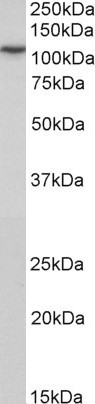
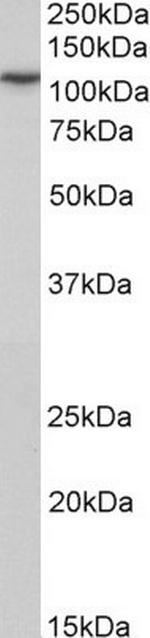
Please note: We are reviewing Western blot images included in the antibody testing data in our catalog, including those provided by third parties. Unless expressly labeled or annotated as “raw-unedited”, Western blot images included in the antibody testing data in our catalog may have been edited, optimized or otherwise adjusted for presentation.


Product Details
PA5-19114
Product Specifications
Species Reactivity
Rat
Host/Isotype
Goat
/ IgG
Class
Polyclonal
Type
Antibody
Immunogen
Synthetic peptide sequence (EEQARKAFDRATK) corresponding to the internal amino acids of DLG4 (aa 667-680).
Conjugate
Unconjugated
Unconjugated
Unconjugated
Form
Liquid
Concentration
0.5 mg/mL
Amount
100 µg
Purification
Ammonium sulfate precipitation
Storage buffer
TBS, pH 7.3, with 0.5% BSA
Contains
0.02% sodium azide
Storage conditions
-20°C, Avoid Freeze/Thaw Cycles
Shipping conditions
Ambient (domestic); Wet ice (international)
RRID
Product Specific Information
This antibody is predicted to react with bovine, canine, human and mouse based on sequence homology.
This antibody is tested in Peptide ELISA: antibody detection limit dilution 16,000.
Target Information
Post Synaptic Density 95 kDa (PSD-95), also known as synapse associated protein 90 kDa (SAP90), is one of a family of membrane-associated proteins found in the postsynaptic density in forebrain neurons and certain presynaptic structures in the cerebellum. Like other members of the family, PSD-95 has three 90 amino acid repeats called PDZ domains followed by an SH3 domain and a yeast guanylate kinase homology (GuK) domain. PSD-95 is believed to participate in the clustering of certain proteins, including NMDA receptors, Shaker-type potassium channels at the synaptic membrane in central nervous system (CNS) neurons. There are two principal modes of interaction between PSD-95 and other proteins. NMDA receptors and shaker-type potassium channels both share C-terminal sequence homology consisting of a threonine/serine-X-valine-COOH (T/SXV) motif. Other neuronal proteins that share this motif (beta 1 adrenergic receptor, some serotonin receptors, some sodium channel subunits, and additional potassium channel subunits), and some of these proteins may interact with PSD-95 by binding to its PDZ domains. Neuronal nitric oxide synthase (nNOS), which lacks the T/SXV motif but which has its own PDZ domain, has been shown to associate with PSD-95 in vitro through a pseudo-homotypic PDZ-PDZ interaction.
For Research Use Only. Not for use in diagnostic procedures. Not for resale without express authorization.
References (0)
Have you cited this product in a publication?
Let us know so we can reference it here.
Bioinformatics
Protein Aliases: discs, large homolog 4; FLJ97752; FLJ98574; post synaptic density; postsynaptic density protein 95; PSD-95; SAP-90; synapse-associated protein 90; synapse-associated protein SAP90
Gene Aliases: Dlgh4; PSD95; Sap90
UniProt ID: (Rat) P31016
Entrez Gene ID: (Rat) 29495
receptor binding
frizzled binding
protein binding
kinesin binding
kinase binding
protein kinase binding
protein phosphatase binding
PDZ domain binding
beta-1 adrenergic receptor binding
beta-2 adrenergic receptor binding
D1 dopamine receptor binding
P2Y1 nucleotide receptor binding
acetylcholine receptor binding
glutamate receptor binding
ionotropic glutamate receptor binding
macromolecular complex binding
neuroligin family protein binding
scaffold protein binding
structural constituent of postsynaptic density
negative regulation of receptor internalization
positive regulation of cytosolic calcium ion concentration
chemical synaptic transmission
nervous system development
synaptic vesicle maturation
developmental maturation
cerebral cortex development
social behavior
protein localization to synapse
locomotory exploration behavior
cellular response to potassium ion
neuronal ion channel clustering
establishment of protein localization
regulation of neuronal synaptic plasticity
regulation of long-term neuronal synaptic plasticity
positive regulation of dendrite morphogenesis
positive regulation of synaptic transmission
neuromuscular process controlling balance
positive regulation of synapse assembly
dendritic spine morphogenesis
protein-containing complex assembly
vocalization behavior
protein localization to membrane
dendritic spine organization
AMPA glutamate receptor clustering
receptor localization to synapse
cell-cell adhesion
NMDA selective glutamate receptor signaling pathway
regulation of postsynaptic membrane neurotransmitter receptor levels
maintenance of postsynaptic density structure
neurotransmitter receptor localization to postsynaptic specialization membrane
positive regulation of neuron projection arborization
positive regulation of AMPA glutamate receptor clustering
regulation of N-methyl-D-aspartate selective glutamate receptor activity
positive regulation of excitatory postsynaptic potential
regulation of grooming behavior
Disclaimer

Clicking the images or links will redirect you to a website hosted by BenchSci that provides third-party scientific content. Neither the content nor the BenchSci technology and processes for selection have been evaluated by us; we are providing them as-is and without warranty of any kind, including for use or application of the Thermo Fisher Scientific products presented.

Performance Guarantee
If an Invitrogen™ antibody doesn't perform as described on our website or datasheet,we'll replace the product at no cost to you, or provide you with a credit for a future purchase.*
Learn more
We're here to help
Get expert recommendations for common problems or connect directly with an on staff expert for technical assistance related to applications, equipment and general product use.
Contact tech support