Search

Thermo Scientific™
Pierce™ Nickel Coated Plates
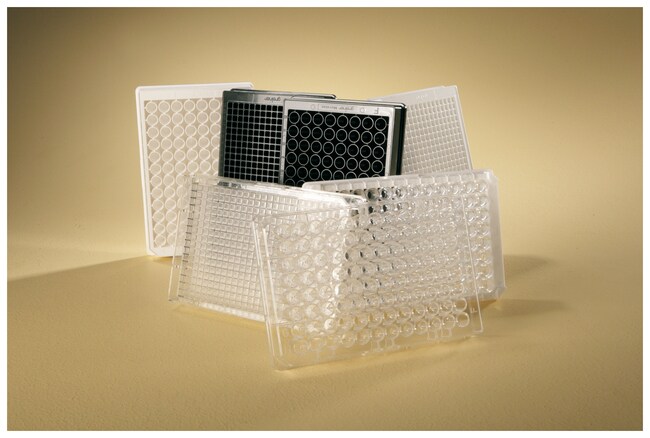
Thermo Scientific™ Pierce Nickel Coated Plates provide a simple format to bind His-tagged fusion proteins for ELISA and other plate-based assays involving protein interactions of expressed recombinant proteins.
Have Questions?
Change view

| Catalog Number | Color | Format | Detection Method |
|---|---|---|---|
| 15242 | White | Standard | Chemiluminescence |
| 15342 | Black | Standard | Fluorescence |
| 15142 | Clear | Strip Plate | Colorimetric |
| 15442 | Clear | Standard | Colorimetric |
Catalog number 15242
Price (CNY)
4,692.00
Each
Color:
White
Format:
Standard
Detection Method:
Chemiluminescence
Price (CNY)
4,692.00
Each
These Ni(2+) chelate-coated plates are ideal for analyzing polyhistidine-tagged fusion proteins by ELISA-based methods. Proteins that contain a succession of several histidine residues at the amino or carboxyl terminus have a strong binding affinity for metal. Bacterial lysates containing polyhistidine-tagged fusion proteins can be added directly to the plates without the need for blocking. The clear, white or black plates can be used with colorimetric, chemiluminescent or fluorescent detection methods, respectively.
Thermo Scientific Pierce Nickel Coated White 96-Well Plates provide a simple format to bind His-tagged fusion proteins for ELISA and other plate-based assays involving protein interactions of expressed recombinant proteins. These white plates can be used with chemiluminescent detection methods.
Features of Pierce Nickel Coated Plates include:
• Ni2+ activated surface enables metal-chelate binding of His-tagged proteins
• Detergents used to lyse cells don't inhibit binding to activated plates as they do with plain polystyrene
• Better binding for sensitive assays compared to other commercially available nickel-activated plates
• Detection limit: 1 ng of polyhistidine fusion protein
• Binding capacity: approx. 9 pmol His-tagged protein (27 kDa) per well
• Activation level: 200 μL
These Ni(2+) chelate-coated plates are ideal for analyzing polyhistidine-tagged fusion proteins by ELISA-based methods. Proteins that contain a succession of several histidine residues at the amino or carboxyl terminus have a strong binding affinity for metal. Bacterial lysates containing polyhistidine-tagged fusion proteins can be added directly to the plates without the need for blocking.
Features of Pierce Nickel Coated Plates include:
• Ni2+ activated surface enables metal-chelate binding of His-tagged proteins
• Detergents used to lyse cells don't inhibit binding to activated plates as they do with plain polystyrene
• Better binding for sensitive assays compared to other commercially available nickel-activated plates
• Detection limit: 1 ng of polyhistidine fusion protein
• Binding capacity: approx. 9 pmol His-tagged protein (27 kDa) per well
• Activation level: 200 μL
These Ni(2+) chelate-coated plates are ideal for analyzing polyhistidine-tagged fusion proteins by ELISA-based methods. Proteins that contain a succession of several histidine residues at the amino or carboxyl terminus have a strong binding affinity for metal. Bacterial lysates containing polyhistidine-tagged fusion proteins can be added directly to the plates without the need for blocking.
For Research Use Only. Not for use in diagnostic procedures.
Specifications
Binding PropertyStandard Capacity, Affinity
Detection MethodChemiluminescence
FormatStandard
Packaging5 Plates
Plate BlockingBlocker™ BSA Buffer
Product TypeMicroplate
Quantity5 plates
Volume (Metric) Well200 μL
ColorWhite
MaterialPolystyrene
No. of Wells96
Product LinePierce
Surface TreatmentDivalent Nickel, Metal Chelate
Unit SizeEach
Contents & Storage
Upon receipt store plates at 4°C in unopened pouches. Once opened, place unused plates in a resealable bag with desiccant and store at 4°C.