Search

Gibco™
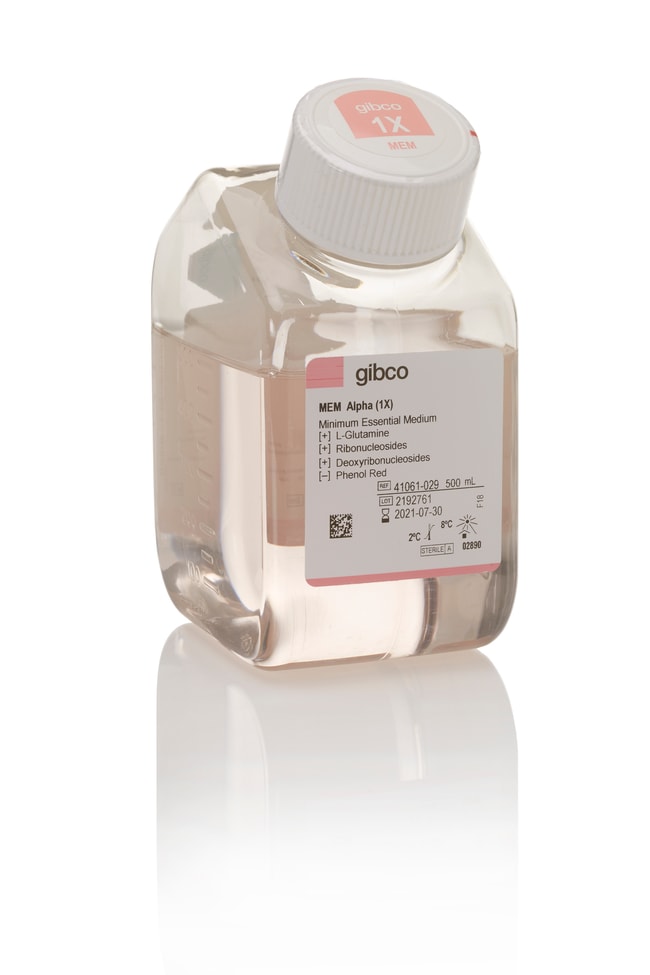
MEM α, nucleosides, no phenol red
Minimum Essential Medium (MEM) α is widely used for mammalian cell culture as well as selection for transfected DHFR negative cells.
Have Questions?
Change view

| Catalog Number | Quantity |
|---|---|
| 41061037 | 10 x 500 mL |
| 41061029 | 1 x 500 mL |
Catalog number 41061037
Price (CNY)
6,770.00
飞享价
Ends: 31-Dec-2026
8,462.00Save 1,692.00 (20%)
Each
Quantity:
10 x 500 mL
Price (CNY)
6,770.00
飞享价
Ends: 31-Dec-2026
8,462.00Save 1,692.00 (20%)
Each
Minimum Essential Medium (MEM) α is widely used for mammalian cell culture as well as selection for transfected DHFR negative cells. MEM α can be used with a variety of suspension and adherent mammalian cells, including keratinocytes, primary rat astrocytes, and human melanoma cells. We offer a variety of Gibco™ MEM α modifications for a range of cell culture applications. Find the right formulation using the media selector tool.
This MEM α is modified as follows:
With: Ribonucleosides, Deoxyribonucleosides, L-glutamine
Without: Phenol Red
The complete formulation is available.
Gibco™ MEM α is a modification of Minimum Essential Medium (MEM) that contains non-essential amino acids, sodium pyruvate, lipoic acid, vitamin B12, biotin, and ascorbic acid. MEM α is available without nucleosides for use as a selection medium for DG44 and other DHFR negative cells. This product is made with Earle's salts.
Product Use
For Research Use Only: Not intended for animal or human diagnostic or therapeutic use.
MEM α contains no proteins, lipids, or growth factors. Therefore, MEM α requires supplementation, commonly with 10% Fetal Bovine Serum (FBS). MEM α uses a sodium bicarbonate buffer system (2.2 g/L) and therefore requires a 5-10% CO2 environment to maintain physiological pH.
For Research Use Only. Not intended for animal or human diagnostic or therapeutic use.
Specifications
Cell LineHeLa, BHK-21, 293, HEP-2, HT-1080, MCF-7, and fibroblasts
Cell TypeMammalian Cells
Concentration1X
Culture EnvironmentCO2
For Use With (Application)Mammalian Cell Culture
FormatBottles
Manufacturing QualitycGMP-compliant under the ISO 13485 standard
Product LineGibco
Product TypeMEM α (Minimum Essential Medium α)
Quantity10 x 500 mL
Shelf Life12 Months From Date of Manufacture
Shipping ConditionAmbient
ClassificationAnimal Origin-free
Culture TypeMammalian Cell Culture
FormLiquid
Serum LevelStandard Serum Supplementation
SterilitySterile-filtered
Sterilization MethodSterile-filtered
With AdditivesLow Glucose, Glutamine, Sodium Pyruvate, Ribonucleosides, Deoxyribonucleosides
Without AdditivesNo HEPES, No Phenol Red
Unit SizeEach
Contents & Storage
Storage conditions: 2°C to 8°C (protect from light)
Shipping conditions: Ambient
Shelf life: 12 months from date of manufacture
Shipping conditions: Ambient
Shelf life: 12 months from date of manufacture