Search


Citations & References (1595)
Applied Biosystems™
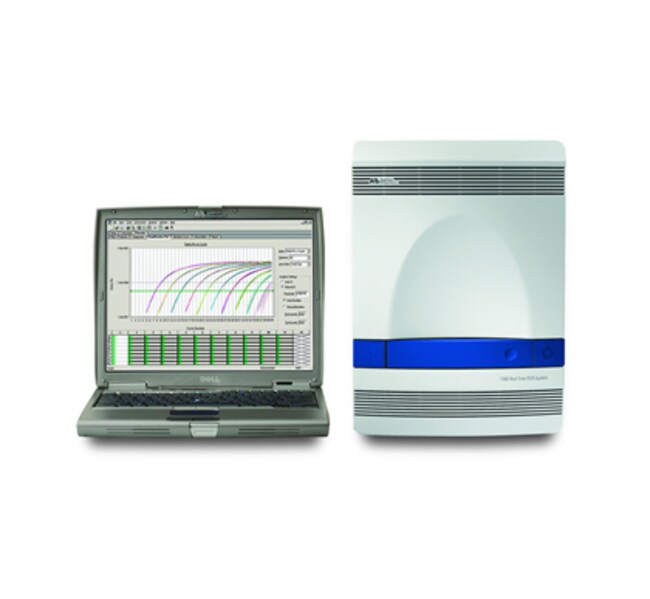
7500 System SDS 21 CFR Part 11 Module
The new 21 CFR Part 11 Module for the 7500 Real-Time PCR System offers the flexibility of user-customizable CFR configurationRead more
| Catalog Number | Quantity |
|---|---|
| 4377354 | 1 kit |
Catalog number 4377354
Price (CNY)
-
Quantity:
1 kit
The new 21 CFR Part 11 Module for the 7500 Real-Time PCR System offers the flexibility of user-customizable CFR configuration settings to assist in compliance with the Code of Federal Regulations Title 21 Part 11.
For Research Use Only. Not for use in diagnostic procedures.
Specifications
Depth (English)17.72 in.
Depth (Metric)45 cm
For Use With (Application)Real Time PCR (qPCR)
For Use With (Equipment)7500 System
Height (English)19.29 in.
Height (Metric)49 cm
Quantity1 kit
Software TypeSoftware
Thermal Accuracy±0.0.25°C
Thermal Range4°C to 100°C
Thermal Uniformity±0.0°C (30 s after Clock Start)
Warranty1 Year
Weight34 kg (75 lb.)
Width (English)13.99 in.
Width (Metric)34 cm
Block Configurations96-well
Block FormatPeltier-based
Capacity96-well Plate x 0.2 mL Tubes
Product Type7500 System SDS
Unit SizeEach
Frequently asked questions (FAQs)
Are there differences in the tube/plate format between Applied Biosystems 7500 Real-Time PCR Systems and Applied Biosystems 7500 Fast Real-Time PCR Systems?
Citations & References (1595)
Citations & References
Abstract
Role of APE1 in differentiated neuroblastoma SH-SY5Y cells in response to oxidative stress: Use of APE1 small molecule inhibitors to delineate APE1 functions
Journal:DNA REPAIR
PubMed ID:
Oxidative DNA damage has been implicated in a number of central nervous system pathologies. The base excision repair (BER) pathway is one of the most important cellular protection mechanisms that respond to oxidative DNA damage. Human apurinic (apyrimidinic) endonuclease/redox effector factor (APE1/Ref1 or APE1) is an essential enzyme in the
Characterization of matrix metalloproteinase-2 and matrix metalloproteinase-9 and their inhibitors in equine granulosa cells in vivo and in vitro
Journal:JOURNAL OF ANIMAL SCIENCE
PubMed ID:
Matrix metalloproteinases (MMP) and tissue inhibitors of MMP (TIMP) regulate tissue remodeling events necessary for ovulation. Thus, changes in MMP and TIMP expression and protein enzyme activity were examined in vivo and in vitro during follicular development and atresia in the horse. Equine granulosa cells and follicular fluid from medium
Characterization of matrix metalloproteinase-2 and matrix metalloproteinase-9 and their inhibitors in equine granulosa cells in vivo and in vitro
Journal:JOURNAL OF ANIMAL SCIENCE
PubMed ID:
Matrix metalloproteinases (MMP) and tissue inhibitors of MMP (TIMP) regulate tissue remodeling events necessary for ovulation. Thus, changes in MMP and TIMP expression and protein enzyme activity were examined in vivo and in vitro during follicular development and atresia in the horse. Equine granulosa cells and follicular fluid from medium
The time of prenatal immune challenge determines the specificity of inflammation-mediated brain and behavioral pathology.
Journal:J Neurosci
PubMed ID:16672647
Disturbance to early brain development is implicated in several neuropsychiatric disorders including autism, schizophrenia, and mental retardation. Epidemiological studies have indicated that the risk of developing these disorders is enhanced by prenatal maternal infection, presumably as a result of neurodevelopmental defects triggered by cytokine-related inflammatory events. Here, we demonstrate that
Distinct roles for IFN regulatory factor (IRF)-3 and IRF-7 in the activation of antitumor properties of human macrophages.
Journal:Cancer Res
PubMed ID:17079482
When properly activated, macrophages can be tumoricidal, thus making them attractive additions to standard cancer therapies. To this end, tolerance and activity of human autologous IFN-gamma-activated macrophages, produced in large scale for clinical use (MAK cells), have been assessed in pilot trials in cancer patients. In the present study, we