Search

Thermo Scientific™
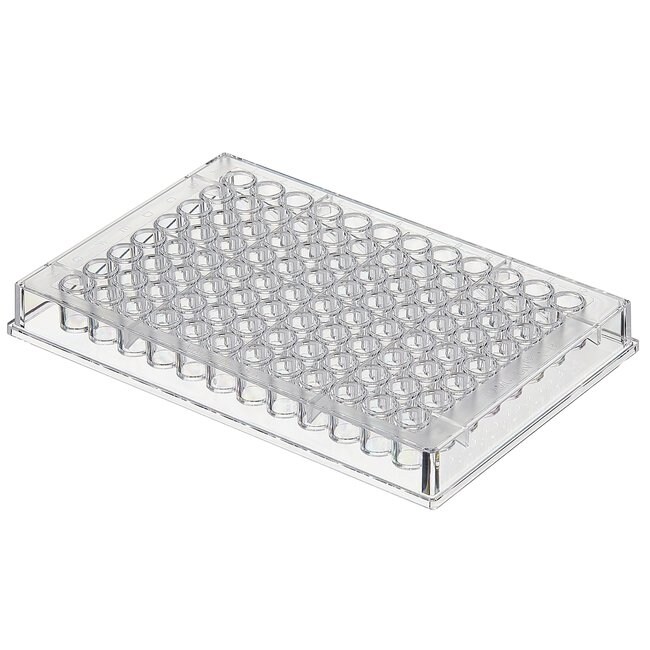
Clear Flat-Bottom Immuno Nonsterile 96-Well Plates
Choose from four binding surfaces of these 96-well plates for reliable and reproducible results in colormetric assays.
Have Questions?
Change view

| Catalog Number | Surface Treatment | Certified | Volume (Metric) Working | Barcode |
|---|---|---|---|---|
| 456529 | PolySorp | No | 350 μL | No Barcode |
| 3355 | Immulon 1 B | No | 230 μL | No Barcode |
| 3455 | Immulon 2 HB | No | 280 μL | No Barcode |
| 3855 | Immulon 4 HBX | No | 280 μL | No Barcode |
| 439454 | MaxiSorp | Yes | 350 μL | No Barcode |
| 442404 | MaxiSorp | No | 350 μL | No Barcode |
| 456537 | MaxiSorp | Yes | 350 μL | No Barcode |
| 460984 | MaxiSorp | Yes | 350 μL | Includes Barcode |
| 467320 | MediSorp | Yes | 350 μL | No Barcode |
| 467340 | MultiSorp | No | 350 μL | No Barcode |
| 475094 | PolySorp | No | 350 μL | No Barcode |
| 9502227 | Universal Binding | No | 330 μL | No Barcode |
| 95029330 | Enhanced Binding | Yes | 330 μL | No Barcode |
Catalog number 456529
Price (CNY)
3,433.65
Online exclusive
Ends: 31-Dec-2026
8,584.13Save 5,150.48 (60%)
Case of 180
Surface Treatment:
PolySorp
Certified:
No
Volume (Metric) Working:
350 μL
Barcode:
No Barcode
Price (CNY)
3,433.65
Online exclusive
Ends: 31-Dec-2026
8,584.13Save 5,150.48 (60%)
Case of 180
Choose from four binding surfaces for reliable and reproducible results in colormetric assays with Thermo Scientific™ Clear Flat-Bottom Immuno Nonsterile 96-Well Plates, which feature Thermo Scientific™ Nunc™, Immulon™ and Microtiter™ clear plates that are ideal for quantitative and qualitative solid phase immunoassays.
96-Well Solid Plates:
- Clear polystyrene
- Choice of four surfaces for optimal binding
- Alphanumerically labeled rows and columns
Surfaces:
- Thermo Scientific PolySorp, Immulon 1B, and Universal Binding (UB) are for adsorption of hydrophobic molecules.
- Thermo Scientific Medisorp and Immulon 2HB are slightly hydrophilic and bind a diverse range of biomolecules.
- Thermo Scientific MaxiSorp, Immulon 4 HBX, and Enhanced Binding(EB) are hydrophilic and ideal for antibody sandwich assays.
- Thermo Scientific MultiSorp is very hydrophilic and works well for glycans and water soluble proteins.
Ordering Information:
Please note that availability may vary by country. 467320, 456537, 460984 and 439454 include certificate
Specifications
Binding TypeAdsorption
CertifiedNo
Detection MethodColorimetric
FormatStandard
LidWithout Lid
No. per Case180
No. per Pack10
Packaging180 Cases
Plate BlockingNone
Product TypeMicroplate
Quantity180/Cs.
Target MoleculeLipids
Volume (Metric) Well400 μL
Volume (Metric) Working350 μL
Array8 x 12
BarcodeNo Barcode
ColorClear
MaterialPolystyrene
No. of Wells96
SterilityNon-sterile
Surface TreatmentPolySorp
Well ShapeFlat Bottom (F-well)
Unit SizeCase of 180