Search


Citations & References (3)
Invitrogen™
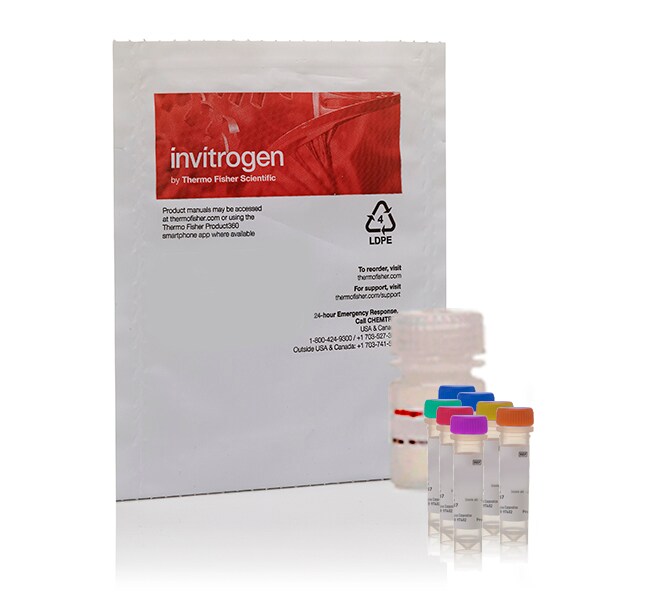
Amplex™ Red Galactose/Galactose Oxidase Assay Kit
Detects galactose or monitors galactose oxidase activity.
| Catalog Number | Quantity |
|---|---|
| A22179 | 400 Assays |
Catalog number A22179
Price (CNY)
5,850.00
Each
Quantity:
400 Assays
Price (CNY)
5,850.00
Each
The Amplex™ Red Galactose/Galactose Oxidase Assay Kit provides a sensitive and simple method for detecting galactose oxidase activity or galactose using a fluorescence microplate reader or fluorometer.
- Detect concentrations as low as 2 mU/mL of galactose oxidase activity or 4 μM galactose
- Format allows for multiple time point measurements
- Designed for minimal autofluorescence interference
Galactose oxidase is an important tool in the detection of galactose in biological fluids. The Amplex™ Red Galactose/Galactose Oxidase Assay Kit provides an ultrasensitive method for detecting galactose or for monitoring galactose oxidase activity. Galactose oxidase catalyzes the oxidation of galactose at the C6 position and generates hydrogen peroxide. In the presence of horseradish peroxidase (HRP), hydrogen peroxide reacts in a 1:1 stoichiometric ratio with the Amplex™ Red reagent to generate the red-fluorescent compound resorufin.
Because resorufin has absorption and fluorescence emission maxima of approximately 571 nm and 585 nm, respectively, there is little interference from autofluorescence in most biological samples.
Use Amplex™ Red Assays for a Broad Range of Investigations
A wide variety of validated Amplex™ Red assays are available for studying cell signaling and lipids, neurobiology, inflammation and immune function, and metabolism. We also offer Amplex™ UltraRed Reagent (Cat. No. A36006), a second-generation reagent providing greater sensitivity and brighter fluorescence, and the Amplex™ Red/UltraRed Stop Reagent (Cat. No. A33855). The Amplex™ Red/UltraRed Stop Reagent provides convenience and control by allowing the fluorescence signal-generating reaction to be terminated at a user-determined time point. After addition of the stop reagent, the fluorescence signal remains stable for at least three hours. Custom assay design and packaging are also available.
For Research Use Only. Not for use in diagnostic procedures.
Specifications
Detection MethodFluorescence
Dye TypeAmplex Red
Emission Wavelength585 nm
Excitation Wavelength571 nm
Format96-well plate
Quantity400 Assays
Shipping ConditionRoom Temperature
For Use With (Application)Enzyme and Metabolic Activity
For Use With (Equipment)Microplate Reader, Spectrophotometer, Fluorometer
Product LineAmplex
Product TypeAmplex Red Assay Kit
Unit SizeEach
Contents & Storage
Store in freezer -5°C to -30°C and protect from light.
Frequently asked questions (FAQs)
I'm using an Amplex Red kit, the reagent changes color to pink almost immediately in my own Krebs-Ringer buffer but not in HBSS. Why is this?
Can Amplex Red Assays be performed using cell lysates?
Citations & References (3)
Citations & References
Abstract
Galactose oxidase action on galactose containing glycolipids--a fluorescence method.
Journal:Chem Phys Lipids
PubMed ID:16647698
'Features that alter the glycolipid sugar headgroup accessibility at the membrane interface have been studied in bilayer lipid model vesicles using a fluorescence technique with the enzyme galactose oxidase. The effects on oxidation caused by variation in the hydrophobic moiety of galactosylceramide or the membrane environment for galactosylceramide, monogalactosyldiacylglycerol and
Physicochemical and biological characterization of targeted, nucleic acid-containing nanoparticles.
Journal:Bioconjug Chem
PubMed ID:17326672
Nucleic acid-based therapeutics have the potential to provide potent and highly specific treatments for a variety of human ailments. However, systemic delivery continues to be a significant hurdle to success. Multifunctional nanoparticles are being investigated as systemic, nonviral delivery systems, and here, we describe the physicochemical and biological characterization of
Distinct properties of the five UDP-D-glucose/UDP-D-galactose 4-epimerase isoforms of Arabidopsis thaliana.
Journal:J Biol Chem
PubMed ID:16644739
Plant genomes contain genetically encoded isoforms of most nucleotide sugar interconversion enzymes. Here we show that Arabidopsis thaliana has five genes encoding functional UDP-D-glucose/UDP-D-galactose 4-epimerase (named UGE1 to UGE5). All A. thaliana UDP-d-glucose 4-epimerase isoforms are dimeric in solution, maximally active in vitro at 30-40 degrees C, and show good