Search

Applied Biosystems™
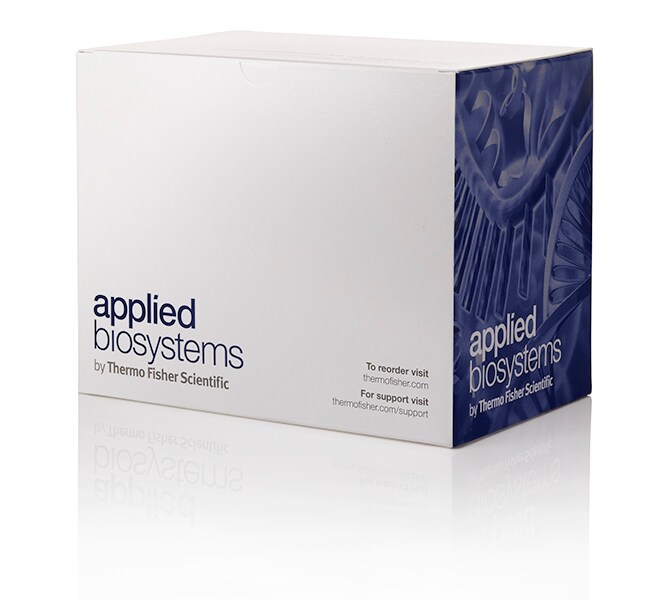
Detection Enhancer, for real-time PCR
Detection Enhancer is uniquely formulated to improve template amplification in real-time PCR (qPCR) workflows. This reagent is particularly beneficial withRead more
Have Questions?
Change view

| Catalog Number | No. of Reactions |
|---|---|
| A44811 | 1000 x 25 μL Reactions |
| A44941 | 500 x 25 μL Reactions |
| A44810 | 100 x 25 μL Reactions |
Catalog number A44811
Price (CNY)
781.00
Each
No. of Reactions:
1000 x 25 μL Reactions
Price (CNY)
781.00
Each
Detection Enhancer is uniquely formulated to improve template amplification in real-time PCR (qPCR) workflows. This reagent is particularly beneficial with DNA samples containing GC-rich sequences and/or persistent secondary structure. Detection Enhancer is a component of the AgPath-ID One-Step RT-qPCR Reagents kit and is offered here as a stand-alone product that can be used with any Applied Biosystem real-time PCR master mix.
• Improve qPCR amplification of templates containing high GC content and persistent secondary structure
• Compatible with any Applied Biosystem real-time PCR master mix
• Flexible kit sizes for a range of laboratory throughputs
GC-rich samples
GC-rich DNA sequences are usually defined as those that contain >60% cytosine (C) or guanine (G). GC-rich samples can be particularly challenging to amplify because the sequences are more stable than those with lower GC content. In qPCR experiments, this results in a higher DNA melting point. In addition, GC-rich sequences can form secondary structure, which can add further amplification challenges. Adding a small volume of Detection Enhancer to your reaction mix can dramatically improve qPCR amplification in GC-rich samples.
Enhancing amplification
Detection Enhancer is specifically formulated to address qPCR amplification in particularly stable DNA sequences. It is only for use in real-time PCR workflows where amplification is affected by templates that are GC rich and/or contain persistent secondary structure. The reagents may affect sensitivity for other target types, so it is recommended to first assemble the reaction without Detection Enhancer. If no signal is observed from samples that are expected to be positive, then add Detection Enhancer to the reaction.
The recommended volume of Detection Enhancer per 25 μL reaction is 1.67 μL. For more information on applications of Detection Enhancer, please see the AgPath-ID One-Step RT-qPCR Reagents kit user guide.
• Improve qPCR amplification of templates containing high GC content and persistent secondary structure
• Compatible with any Applied Biosystem real-time PCR master mix
• Flexible kit sizes for a range of laboratory throughputs
GC-rich samples
GC-rich DNA sequences are usually defined as those that contain >60% cytosine (C) or guanine (G). GC-rich samples can be particularly challenging to amplify because the sequences are more stable than those with lower GC content. In qPCR experiments, this results in a higher DNA melting point. In addition, GC-rich sequences can form secondary structure, which can add further amplification challenges. Adding a small volume of Detection Enhancer to your reaction mix can dramatically improve qPCR amplification in GC-rich samples.
Enhancing amplification
Detection Enhancer is specifically formulated to address qPCR amplification in particularly stable DNA sequences. It is only for use in real-time PCR workflows where amplification is affected by templates that are GC rich and/or contain persistent secondary structure. The reagents may affect sensitivity for other target types, so it is recommended to first assemble the reaction without Detection Enhancer. If no signal is observed from samples that are expected to be positive, then add Detection Enhancer to the reaction.
The recommended volume of Detection Enhancer per 25 μL reaction is 1.67 μL. For more information on applications of Detection Enhancer, please see the AgPath-ID One-Step RT-qPCR Reagents kit user guide.
For Research Use Only. Not for use in diagnostic procedures.
Specifications
For Use With (Equipment)7500 System
No. of Reactions1000 x 25 μL Reactions
Product LineApplied Biosystems
Product TypeDetection Enhancer
Quantity1000 reactions
Sample TypeViral Samples
Shipping ConditionDry Ice
Volume2.4 mL
Detection MethodPrimer-probe
For Use With (Application)Real Time PCR (qPCR)
GC-Rich PCR PerformanceHigh
PCR Method1-step RT-qPCR
Reaction SpeedStandard
Unit SizeEach
Contents & Storage
2 x 1.2 mL Detection Enhancer, store at -5 to -30°C