APEX Upgrade
APEX Upgrade
APEX Upgrade
APEX Upgrade
Thermo Scientific™

APEX Upgrade

Extend the life of your DSP3, DSP IP and Metal Eliminator metal detectors by upgrading to the latest APEX metal detection technology.
Have Questions?
Catalog NumberDescription
APEXUPGRADEAPEX Upgrade Program
Catalog number APEXUPGRADE
Price (CNY)
-
Request A Quote
Description:
APEX Upgrade Program

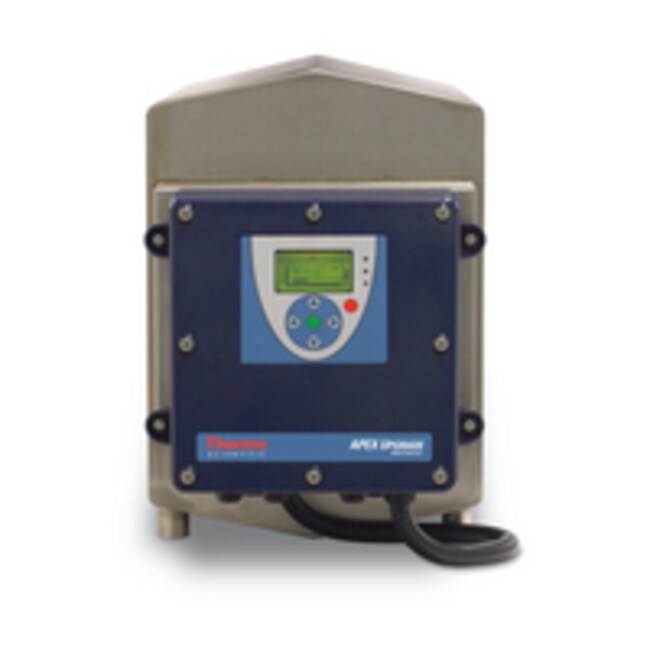
Improve food safety with the most up to date metal detection equipment. Now you can breathe new life into your old metal detector with the Thermo Scientific™ APEX Upgrade. The APEX Upgrade provides a cost effective migration path for older metal detectors, offering new features, improved performance and a common platform for the future, so you can be sure even the smallest metal contaminants won't slip through the cracks. The upgrade can often be done right in your factory in a matter of hours, or in our repair depot at a fraction of the cost of installing a new metal detector.

The Apex Upgrade gives your old metal detector a second wind. With these Apex Upgrade advantages, you’ll know that your food, pharmaceutical, and other consumer products are safe and metal-free.

Reduced Cost of Ownership

  • Protect your investment by extending the usable life of Thermo Scientific™ Goring Kerr DSP3, DSP IP, DSP IP+, and Metal Eliminator metal detectors.
  • Upgrade all production lines to a common platform, simplifying training, maintenance and reducing spares.

Leading-Edge Performance

  • Meets new, more stringent quality standards by detecting smaller diameter metal.
  • Meets Protection Ratings IP69K, Type 3 enclosure, and hazardous location Class II Division 2 Groups F & G.
  • Improved sensitivity reduces rework and scrap caused by occasional false rejects.
  • New phase-tracking function and Thermo Scientific™ Intellitrack XR (IXR) software eliminates the need for setup adjustments.

Simplified, More Reliable Design

  • New electronic design simplifies installation and service.
  • Food-grade ABS control panel easily handles shock, vibration, water and various cleaning solutions.
  • Innovative, touch-panel keypad has no moving parts improving long-term reliability.

APEX Upgrade Options

Field Upgrade

  • On-site installation of the APEX Upgrade by a Thermo Scientific field service professional.
  • Preventive maintenance and certification of the upgraded metal detector.
  • Technician and operator training.
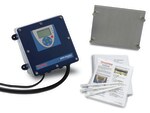
  • New Users Guide and Quickstart Manual.
  • New test pieces selected for your application.
  • A one-year, all-inclusive on-site warranty.

Return-to-Factory Upgrade

  • Factory installation of the APEX Upgrade.
  • Preventive maintenance and certification of the upgraded metal detector.
  • New Users Guide and Quickstart Manual.
  • New test pieces selected for your application.
  • A one-year, all-inclusive return-to-factory warranty.

Important Upgrade Notes

Field service charges are determined locally and are not included in the APEX Upgrade price. This offer includes all DSP-based products/applications (conveyors, drop throughs, pipelines) except the DSP Rx, DSP2 Minitek UK and DSP1.

The APEX Upgrade control panel must be mounted remotely for the DSP IP and DSP IP+ due to the small size of metal detector cases.

Return-to-factory upgrades will typically be completed within 2-4 weeks of receipt of your old metal detector and a purchase order in our facility. Please clean all food residues from the old metal detector before shipping it to the factory.

The above upgrades do NOT include any repair work due to moisture ingress, physical damage or general abuse. If the metal detector is in poor condition such that the APEX Upgrade may not function correctly the service or factory technician will notify you in advance of installation of the kit.

A 5-10% improvement in sensitivity typically can be achieved with the APEX upgrade, but is dependent on your application and installation

Recommended for: Food, Bakery, Meat, Confectionary, Snack Foods

Specifications
Air Supply5.5 bar (80 psi)
Certifications/CompliancecCSAus, CE, ISO9001 certified
CommunicationsOptional ModBus serial or Ethernet modules
ConstructionABS plastic control panel
DescriptionAPEX Upgrade Program
Electrical Requirements85/260 V AC single phase plus earth ground; 47/65 Hz, 100 watts max.
For Use With (Application)Metal detection: Food, beverages, other products.
IP RatingIP69K, Type 3 enclosure, hazardous location Class II Division 2 Groups F and G
Input AllocationSpeed Sensor, Keylock, Product Select 1, Product Select 2, Infeed PEC, Reject Confirmation 1 and Bin Full External Suppression, External Alarm and External Reset
Input ApplicationsSpeed Sensor, Keylock, Product Select 1, Product Select 2, Infeed PEC, Reject Confirmation 1 and Bin Full External Suppression, External Alarm and External Reset
Input Types6 Inputs - Active 12VDC+ 12 V auxiliary supply for input sensors
Operating Temperature-10°C to +40°C (14°F to 104°F)
Output AllocationReject 1, Reject 2, Fault, Alarm, Warning, QA Lamp
Output ApplicationsReject 1, Reject 2, Fault, Alarm, Warning, QA Lamp
Output Types6 Relays outputs; Relays: 250 volt AC 2 amp max. 50 volt DC 1 amp max.
Relative Humidity20 to 80% non-condensing
Speed0.5 m/min. (1.7 ft./min.) to 1000 m/min. (3300 ft./min.)
LanguagesEnglish, Spanish, French, German, Italian, Dutch, Chinese, Czech, Russian, Polish, Thai, Korean, Brazilian Portuguese
Unit SizeEach

Frequently asked questions (FAQs)

What is the best inspection technology for dry/kibble pet food?

Metal detection works very well with dry/kibble pet food and treats that do not have a product effect that wet or moist pet foods do. Metal detection equipment provides reliable, cost-effective protection from even the smallest metal contaminants found in pet food production anywhere in a process. If the packaging material contains metal, X-ray inspection would be the right choice. In addition, if there are other contaminant concerns such as stone, high density plastic or glass, X-ray inspection systems will detect these contaminants as well.

Where are the best places along the production line to inspect baked goods and snack products?

There are several points in the baked goods/snack foods production process that benefit from food safety inspection using metal detectors (https://www.thermofisher.com/us/en/home/industrial/food-beverage/food-weighing-inspection/metal-detectors.html), X-ray inspection (https://www.thermofisher.com/us/en/home/industrial/food-beverage/food-weighing-inspection/x-ray-detection-inspection-systems.html), or checkweighing (https://www.thermofisher.com/us/en/home/industrial/food-beverage/food-weighing-inspection/checkweighers.html)technology. They are listed below:

1. Incoming ingredients. Most of the larger bakers demand that their vendors meet specific HACCP objectives. They may require that metal detectors be used, provide proof of inspection, etc. Even with those methodologies in place, some will also inspect incoming ingredients. Typical incoming inspection consists of drop through and bulk flow metal detectors.

2. Dough stage. Before the product is baked or otherwise processed, this is an ideal location to conduct upstream inspection. Metal detectors are the equipment of choice because metal-based packaging is not part of the process at this stage. Bar products are another example. They can be examined right after sheeting, or after the individual bars are cut, or before the product goes into the wrapper. Alternatively, they can also be inspected after packaging.

3. After baking/before packaging. The inspection equipment type will depend on the product type and whether or not its formulation creates a “product effect”. Warm, moist, high salt content products such as breads are more suited toward X-ray equipment, while metal detectors perform well with typically-inert snack foods. Checkweighers can also be located at this stage to make sure that the product weight falls within the min/max specifications and will not create problems (such as line stoppages due to oversize) at the packaging stage. Checkweighers can also be used to confirm that all of the late-stage filling components, such as icing and other toppings, have been properly dispensed.

4. After packaging. The recommended inspection equipment type is dependent on the packaging material or combination of materials that have been selected for this product. Metal components such as aluminum foil trays or metalized firm structures are much more suited to X-ray inspection. Flexible materials without a metal component, paperboard folding cartons and/or a combination of the two, work very well with metal detectors. Checkweighers are frequently located at this stage of the operation.

5. After case packing. Some bakers or processors prefer to inspect after the final packaging stage: case packing. This is typically done via X-ray inspection, provided that the unit is large enough to accompany a case. In addition to inspection, the X-ray system's ability to detect missing pieces will help ensure that the specified count has been loaded into the case. In certain situations, especially when X-ray inspection is not included at the end of the line, checkweighers are placed here to ensure that the proper number of packages are contained inside the case.

What is the best inspection technology for frozen baked goods?

Food metal detectors (https://www.thermofisher.com/us/en/home/industrial/food-beverage/food-weighing-inspection/metal-detectors.html) work extremely well with frozen baked goods which no longer have a product effect that “just out of the oven” versions do. The challenge is to make sure that the freezer is efficient and is holding the product at the correct temperature. If a product isn't completely frozen, its unfrozen center will have a tendency to look like a piece of metal to the detector.

In addition, many cake and pie products are frozen immediately after production, so some bakers choose to inspect after the items are case packed using food X-ray inspection (https://www.thermofisher.com/us/en/home/industrial/food-beverage/food-weighing-inspection/x-ray-detection-inspection-systems.html) equipment that can accommodate the case size.

What is the best inspection technology for cakes and pies?

The recommended food safety inspection machinery type for cakes and pies is dependent on the packaging materials used. Since most pies are in aluminum foil pans, food metal detectors (https://www.thermofisher.com/us/en/home/industrial/food-beverage/food-weighing-inspection/metal-detectors.html) can be useful to examine ingredients and dough. However, after the pie has been placed into the pan and/or folding carton, X-ray inspection (https://www.thermofisher.com/us/en/home/industrial/food-beverage/food-weighing-inspection/x-ray-detection-inspection-systems.html) should be used. Cakes also sometimes rely on aluminum foil pans, folding cartons, and metalized film, so the inspection solution recommended is also X-ray.

What is "product effect" for food products?

“Product effect” occurs when a product has a conductive property which affects the magnetic field generated by the food metal detector (https://www.thermofisher.com/us/en/home/industrial/food-beverage/food-weighing-inspection/metal-detectors.html). This is typically found in high salt, high moisture product environments. For example, warm bread coming out of the oven, coupled with its salt content, tends to have a high product effect. This negatively impacts the metal detector's ability to distinguish between actual non-ferrous metal contaminants and the false signal given by the combination of typical product attributes. This is further complicated by the varying densities, air bubbles, and other physical characteristics of each loaf, since no two loaves are exactly the same (there also are variations between bread types). In these situations, food X-ray inspection equipment will produce significantly better results since product effect is not a factor.