Search


Citations & References (648)
Invitrogen™
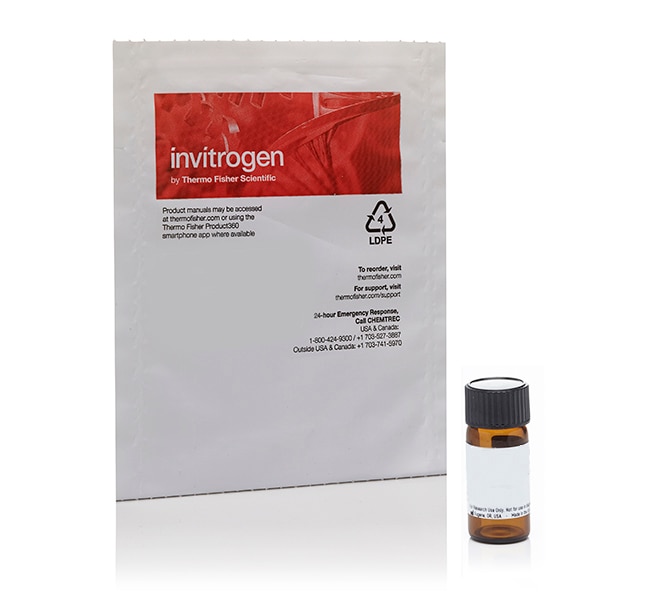
BAPTA, AM, cell permeant chelator
BAPTA, AM is a cell-permeant chelator, which is a highly selective for Ca2+ over Mg2+ , and it can beRead more
Have Questions?
Change view

| Catalog Number | Quantity |
|---|---|
| B1205 | 25 mg |
| B6769 | 20 x 1 mg |
Catalog number B1205
Price (CNY)
3,641.00
Each
Quantity:
25 mg
Price (CNY)
3,641.00
Each
BAPTA, AM is a cell-permeant chelator, which is a highly selective for Ca2+ over Mg2+ , and it can be used to control the level of intracellular Ca2+. BAPTA is more selective for Ca2+ than EDTA and EGTA, and its metal binding is also less sensitive to pH.
For Research Use Only. Not for use in diagnostic procedures.
Specifications
Dye TypeChelator (Non-Fluorescent)
Quantity25 mg
Shipping ConditionRoom Temperature
For Use With (Application)Cell Viability and Proliferation
Product TypeCell Permeant Chelator
Unit SizeEach
Contents & Storage
Store in freezer -5°C to -30°C.
Citations & References (648)
Citations & References
Abstract
Rescue of vasopressin V2 receptor mutants by chemical chaperones: specificity and mechanism.
Journal:Molecular biology of the cell
PubMed ID:16267275
Because missense mutations in genetic diseases of membrane proteins often result in endoplasmic reticulum (ER) retention of functional proteins, drug-induced rescue of their cell surface expression and understanding the underlying mechanism are of clinical value. To study this, we tested chemical chaperones and sarco(endo)plasmic reticulum Ca(2+) ATPase pump inhibitors on
The small GTP-binding protein Rac promotes the dissociation of gelsolin from actin filaments in neutrophils.
Journal:J Biol Chem
PubMed ID:9422735
Gelsolin is an actin filament-capping protein that has been shown to play a key role in cell migration. Here we have studied the involvement of phosphoinositide 3-kinase (PI 3-kinase) and GTP-binding proteins (G-proteins) in the regulation of gelsolin-actin interactions in neutrophils. Inhibition of PI 3-kinase activity in vivo by wortmannin
Isoform-specific up-regulation by ouabain of Na+,K+-ATPase in cultured rat astrocytes.
Journal:J Neurochem
PubMed ID:9349566
There are two alpha-subunit isoforms (alpha1 and alpha2) and two beta-subunit isoforms (beta1 and beta2) of Na+,K+-ATPase in astrocytes, but the functional heterodimer composition is not known. Ouabain (0.5-1.0 mM) increased the levels of alpha1 and beta1 mRNAs, whereas it decreased those of alpha2 and beta2 mRNAs in cultured rat
Degradation of lamin B1 precedes oligonucleosomal DNA fragmentation in apoptotic thymocytes and isolated thymocyte nuclei.
Journal:J Immunol
PubMed ID:7535814
Chromatin condensation and nuclear envelope breakdown are characteristic features of apoptotic cell death, but the mechanisms underlying these phenomena have not been identified. Solubilization of nuclear lamin is responsible for both events in mitosis. In this work, we report that glucocorticoids stimulate rapid degradation of lamin B1 that occurs before
Calcineurin feedback inhibition of agonist-evoked cAMP formation.
Journal:J Biol Chem
PubMed ID:7499291
The effects of immunosuppressant blockers of calcineurin (protein phosphatase 2B) on cAMP formation and hormone release were investigated in mouse pituitary tumor (AtT20) cells. Immunosuppressants enhanced corticotropin-releasing factor- and isoproterenol-evoked cAMP production in proportion with their potency to block calcineurin. Further analysis of cAMP production revealed that intracellular Ca2+ derived