Search


Citations & References (115)
Invitrogen™
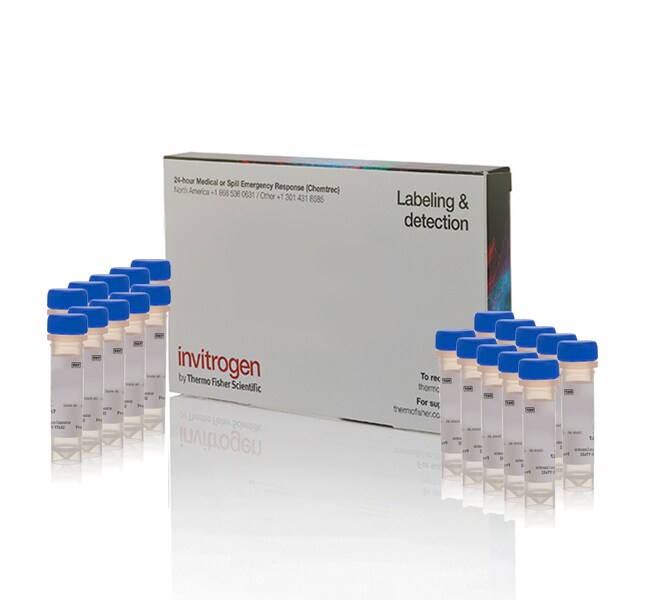
CM-H2DCFDA (General Oxidative Stress Indicator)
CM-H2DCFDA is a chloromethyl derivative of H2DCFDA, useful as an indicator for reactive oxygen species (ROS) in cells. This indicatorRead more
| Catalog Number | Quantity |
|---|---|
| C6827 | 20 x 50 μg |
Catalog number C6827
Price (CNY)
4,840.00
飞享价
Ends: 31-Dec-2026
6,630.00Save 1,790.00 (27%)
Each
Quantity:
20 x 50 μg
Price (CNY)
4,840.00
飞享价
Ends: 31-Dec-2026
6,630.00Save 1,790.00 (27%)
Each
CM-H2DCFDA is a chloromethyl derivative of H2DCFDA, useful as an indicator for reactive oxygen species (ROS) in cells. This indicator exhibits much better retention in live cells than H2DCFDA. CM-H2DCFDA passively diffuses into cells, where its acetate groups are cleaved by intracellular esterases and its thiol-reactive chloromethyl group reacts with intracellular glutathione and other thiols. Subsequent oxidation yields a fluorescent adduct that is trapped inside the cell, thus facilitating long-term studies.
ROS Indicator Specifications:
- Excitation: ∼492–495 nm
- Emission: 517–527 nm
- Product is air sensitive and should be stored under dry argon or nitrogen
- Product may be dissolved in DMSO, DMF, or ethanol for use
- Indicator is cell permeant (cell loading protocols are available in the literature)
- Fluorescence can be monitored using a flow cytometer, fluorometer, microplate reader, or fluorescence microscope, using excitation sources and filters appropriate for fluorescein
Find more ROS indicators
We offer an assortment of Molecular Probes™ products for the generation of reactive oxygen species (ROS), including singlet oxygen, superoxide, hydroxyl radical and various peroxide and hydroperoxides, as well as for their fluorometric detection in solution. Review Generating and Detecting Reactive Oxygen Species—Section 18.2 in the Molecular Probes™ Handbook for more information on these products.
Dissolve the dye using high-quality, anhydrous dimethylsulfoxide (DMSO), dimethylformamide (DMF), or 100% ethanol to prepare stock concentration up to 5 mM. Working solutions should be freshly prepared. This probe oxidizes readily in solution thus presence of moisture will facilitate the decomposition of the dye.
For Research Use Only. Not for use in diagnostic procedures.
Specifications
Quantity20 x 50 μg
Product TypeROS Indicator
Unit SizeEach
Frequently asked questions (FAQs)
I want to assay cells for reactive oxygen species using carboxy-H2DCFDA, but I want to do so with a plate reader instead of microscope. Will it work?
I have GFP-transfected cells and need to label for reactive oxygen species. Can I use H2DCFDA?
I labeled my cell with CM-H2DCFDA for reactive oxygen detection, but upon illuminating the cell there is a significant increase in fluorescence in the control cells. Why?
I need a formaldehyde-fixable reactive oxygen species detection assay. Is H2 DCFDA fixable?
Why don't I see a significant change in signal for my live-cell fluorescent indicator dye?
Citations & References (115)
Citations & References
Abstract
Journal:
PubMed ID:18258751
Large-scale chemical dissection of mitochondrial function.
Journal:Nature biotechnology
PubMed ID:18297058
Mitochondrial oxidative phosphorylation (OXPHOS) is central to physiology and disease pathogenesis. To systematically investigate its activity and regulation, we performed a wide range of assays of OXPHOS physiology and nuclear and mitochondrial gene expression across 2490 chemical perturbations in muscle cells. Through mining of the resulting compendium, we discovered that:
Reactive oxygen species production via NADPH oxidase mediates TGF-beta-induced cytoskeletal alterations in endothelial cells.
Journal:Am J Physiol Renal Physiol
PubMed ID:16159901
'Cytoskeletal alterations in endothelial cells have been linked to nitric oxide generation and cell-cell interactions. Transforming growth factor (TGF)-beta has been described to affect cytoskeletal rearrangement in numerous cell types; however, the underlying pathway is unclear. In the present study, we found that human umbilical vein endothelial cells (HUVEC) have
The yeast prion Ure2p native-like assemblies are toxic to mammalian cells regardless of their aggregation state.
Journal:J Biol Chem
PubMed ID:16571726
'The yeast prion Ure2p assembles in vitro into oligomers and fibrils retaining the alpha-helix content and binding properties of the soluble protein. Here we show that the different forms of Ure2p native-like assemblies (dimers, oligomers, and fibrils) are similarly toxic to murine H-END cells when added to the culture medium.
Role of extracellular signal-regulated protein kinase in neuronal cell death induced by glutathione depletion in neuron/glia mesencephalic cultures.
Journal:J Neurochem
PubMed ID:15485497
'To date, glutathione (GSH) depletion is the earliest biochemical alteration shown in brains of Parkinson''s disease patients, but the role of GSH in dopamine cell survival is debated. In this study we show that GSH depletion, produced with GSH synthesis inhibitor, L-buthionine-(S,R)-sulfoximine (BSO), induces selectively neuronal cell death in neuron/glia,