Search


Citations & References (365)
Invitrogen™
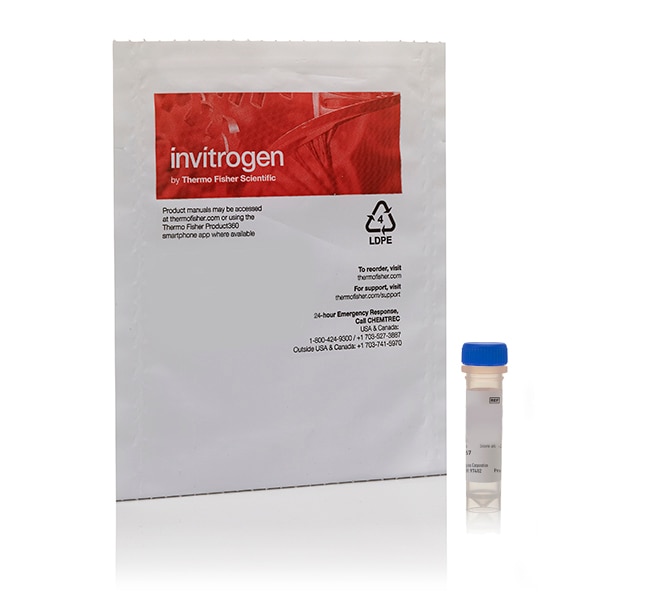
Dihydrorhodamine 123
Dihydrorhodamine 123 is an uncharged and nonfluorescent reactive oxygen species (ROS) indicator that can passively diffuse across membranes where itRead more
| Catalog Number | Quantity |
|---|---|
| D23806 | 1 mL |
Catalog number D23806
Price (CNY)
5,050.00
Each
Quantity:
1 mL
Price (CNY)
5,050.00
Each
Dihydrorhodamine 123 is an uncharged and nonfluorescent reactive oxygen species (ROS) indicator that can passively diffuse across membranes where it is oxidized to cationic rhodamine 123 which localizes in the mitochondria and exhibits green fluorescence.
For Research Use Only. Not for use in diagnostic procedures.
Specifications
Quantity1 mL
Unit SizeEach
Frequently asked questions (FAQs)
I am using the reactive oxygen species detection dye, Dihydrorhodamine 123, and when I put the dye in a solution of water and illuminate with UV light, I see a quick change in signal, even without cells. What is happening and how can I stop this?
What is the excitation and emission wavelength for rhodamine?
Citations & References (365)
Citations & References
Abstract
Nuclear factor-kappaB mediates the cell survival-promoting action of activity-dependent neurotrophic factor peptide-9.
Journal:Journal of neurochemistry
PubMed ID:10854252
Is rhodamine 123 an appropriate fluorescent probe to assess P-glycoprotein mediated multidrug resistance in vinblastine-resistant CHO cells?
Journal:Anal Cell Pathol
PubMed ID:9354229
Cellular drug resistance, which involves several mechanisms such as P-glycoprotein (P-gp) overexpression, kinetic and metabolic quiescence, or the increase in the intracellular levels of glutathione, limits the effectiveness of cancer treatment. It has been reported that functional assessment of the cationic dye rhodamin 123 (Rho123) efflux reveals accurately the drug-resistant
Flow cytometric measurement of the production of reactive oxygen intermediate in activated rat mast cells.
Journal:APMIS
PubMed ID:7520710
The production of reactive oxygen intermediates (ROI) in compound 48/80- or calcium ionophore A 23187- activated pleural or peritoneal mast cells was monitored using flow cytometry and the fluorescence indicator dihydrorhodamine 123 (a derivate of rhodamine 123). Mast cell degranulation and ROI production were estimated by flow cytometric fluorescence and
A microtiter plate assay for screening antioxidant activity in extracts of marine organisms.
Journal:Mar Biotechnol (NY)
PubMed ID:14502401
A novel microtiter plate assay was developed to determine the total peroxyl radical-trapping activity of antioxidants extracted from marine organisms by measuring the inhibition rate of dye-substrate oxidation. We compared use of dihydrorhodamine-123, dihydrofluorescein, and dichlorodihydrofluorescein as reduced substrates for oxidation by peroxyl radicals generated from 2,2'-azobis(2-amidinopropane) dihydrochloride. The oxidation
Direct real-time evaluation of nitration with green fluorescent protein in solution and within human cells reveals the impact of nitrogen dioxide vs. peroxynitrite mechanisms.
Journal:Proc Natl Acad Sci U S A
PubMed ID:11904413
'3-Nitrotyrosyl adducts in proteins have been detected in a wide range of diseases. The mechanisms by which reactive nitrogen oxide species may impede protein function through nitration were examined by using a unique model system, which exploits a critical tyrosyl residue in the fluorophoric pocket of recombinant green fluorescent protein