Search


Citations & References (6)
Invitrogen™
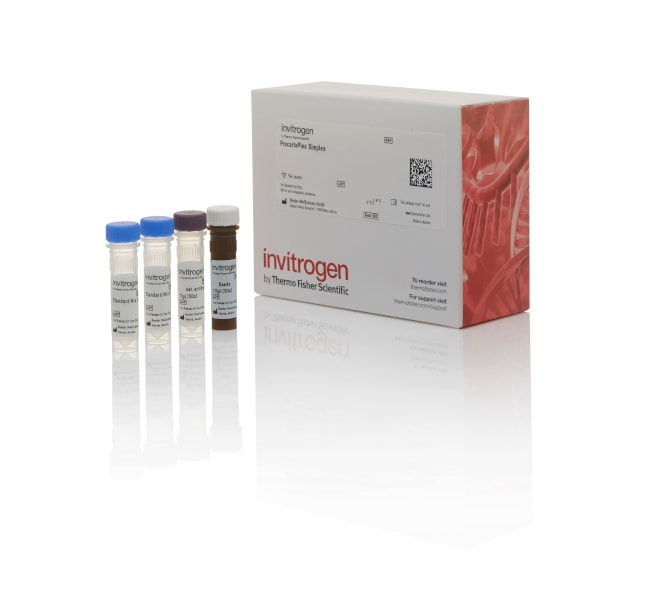
IL-2 Mouse ProcartaPlex™ Simplex Kit
The Mouse IL-2 Simplex ProcartaPlex Kit measures IL-2 protein and is designed to be combinable with other Simplex kits so that you can create your own multiplex panel that utilizes Luminex xMAP technology for protein detection/quantitation.
| Catalog Number | Quantity |
|---|---|
| EPX01A-20601-901 | 96 Tests |
Catalog number EPX01A-20601-901
Price (CNY)
-
Quantity:
96 Tests
The Mouse IL-2 Simplex ProcartaPlex Kit measures IL-2 protein and is designed to be combinable with other Simplex kits so that you can create your own multiplex panel that utilizes Luminex xMAP technology for protein detection/quantitation. When combining multiple Simplex kits (i.e., when you are not using a pre-configured Multiplex Panel), only one buffer kit (sold separately) is needed for each assay plate regardless of plex size.
About ProcartaPlex Assays for the Luminex Platform
ProcartaPlex immunoassays are based on the principles of a sandwich ELISA, using two highly specific antibodies binding to different epitopes of one protein to quantitate all protein targets simultaneously using a Luminex instrument. ProcartaPlex multiplex assays require as little as 25 μL of plasma or serum, or 50 μL of cell culture supernatant, and just four hours to obtain analyzed results.
- More results per sample—measure multiple protein targets simultaneously in a single 25–50 μL sample
- Well-established Luminex technology—highly referenced multiplexing platform for protein detection and quantitation
ProcartaPlex assays utilize Luminex xMAP (multianalyte profiling) technology for the simultaneous detection and quantitation of up to 80 protein targets in a single 25–50 μL sample from plasma, serum, cell culture supernatants, and other bodily fluids.
The Luminex beads in the ProcartaPlex assay are internally dyed with precise proportions of red and infrared fluorophores to create spectrally unique signatures that can be identified by the Luminex xMAP detection systems (e.g. Luminex 200, FLEXMAP 3D, and MAGPIX). Similar to a sandwich ELISA, the ProcartaPlex assay uses matched antibody pairs to identify the protein of interest. In a multiplexed assay, each spectrally unique bead is labeled with antibodies specific for a single target protein, and bound proteins are identified with biotinylated antibodies and streptavidin–R-phycoerythrin (RPE). The conjugation of protein-specific antibodies to a distinct bead allows for analysis of multiple targets in a single well.
The most significant difference between a ProcartaPlex assay and ELISA is that the capture antibody in the ProcartaPlex assay is conjugated to a bead and not adsorbed to the microplate well, so the ProcartaPlex assay reagents are free-floating in the solution. For detection, the Luminex 200 instrument, for example, contains two lasers, one to distinguish the spectral signature of each bead and the second to quantify the amount of RPE fluorescence, which is proportional to the amount of protein present in the sample. ProcartaPlex multiplex assays can profile more target proteins using significantly less sample in the same time that it takes to perform a traditional sandwich ELISA.
ProcartaPlex multiplex panels are available in multiple formats across six species (human, mouse, rat, nonhuman primate, porcine, and canine). Visit thermofisher.com/procartaplex for more information, including a comprehensive list of individual protein targets.
For Research Use Only. Not for use in diagnostic procedures.
Specifications
Assay RangeAs determined for Lot 1: 1.2 - 5000 pg/mL
Assay SensitivityAs determined for Lot 1: 0.10 pg/mL
Bead TypeIL-2 [20]
For Use With (Equipment)Luminex™ Instruments
FormatSimplex Kit
GeneInterleukin 2
Gene AliasIL-2
Gene ID (Entrez)16183
Gene SymbolIL2
Product LineProcartaPlex
ProteinInterleukin-2
Protein SubtypeIL-2, T-cell growth factor, TCGF
Sample TypeSerum, Plasma, Cell Culture Supernatants
Sample VolumeSerum, Plasma: 25 μL, CCS: 50 μL
Shipping ConditionWet Ice
UniProt IDP04351
CombinabilityCombinable
Product TypeSimplex Kit
Quantity96 Tests
Research AreaImmunology, Oncology, Neurobiology, Toxicology
SpeciesMouse
Unit SizeEach
Contents & Storage
• 1 vial Capture Beads (50X)
• 1 vial biotinylated Detection Antibody (50X)
• 2 vials Mouse Standard Mix A (lyophilized)
Store at 2°C to 8°C.
Frequently asked questions (FAQs)
What is the size of the Luminex beads you currently use?
I am interested in performing Luminex assays using BioSource kits, and I have a Luminex xMAP system. Besides the kits and system, what other reagents and equipment will I need?
Do the Luminex beads require special care in handling?
Why would the Luminex acquisition software display "Sample Empty" messages during analysis?
What are the Luminex beads made of?
Citations & References (6)
Citations & References
Abstract
Glomerular common gamma chain confers B- and T-cell-independent protection against glomerulonephritis.
Journal:Kidney Int
PubMed ID:28111009
'Crescentic glomerulonephritis is a life-threatening renal disease that has been extensively studied by the experimental anti-glomerular basement membrane glomerulonephritis (anti-GBM-GN) model. Although T cells have a significant role in this model, athymic/nude mice and rats still develop severe renal disease. Here we further explored the contribution of intrinsic renal cells
Dual Inhibition of PI3K/Akt and mTOR by the Dietary Antioxidant, Delphinidin, Ameliorates Psoriatic Features In Vitro and in an Imiquimod-Induced Psoriasis-Like Disease in Mice.
Journal:Antioxid Redox Signal
PubMed ID:27393705
'The treatment of psoriasis remains elusive, underscoring the need for identifying novel disease targets and mechanism-based therapeutic approaches. We recently reported that the PI3K/Akt/mTOR pathway that is frequently deregulated in many malignancies is also clinically relevant for psoriasis. We also provided rationale for developing delphinidin (Del), a dietary antioxidant for
Expanding biological activities of Ts19 Frag-II toxin: Insights into IL-17 production.
Journal:Toxicon
PubMed ID:28528178
Tityus serrulatus (Ts) venom is composed of a mixture of toxins presenting diverse biological functions. However, although this venom has been studied over the past three decades, omics analysis revealed that most of its toxins are not identified or their biological activities are unknown. Ts19 Frag-II is included in this
Intracellular accumulation and immunological responses of lipid modified magnetic iron nanoparticles in mouse antigen processing cells.
Journal:Biomater Sci
PubMed ID:28516182
Understanding the effects of magnetic iron nanoparticles (MINPs) on the immune response is vitally important for biomedical applications such as cancer therapy, disease diagnosis and novel cancer imaging. In this study, lipid modified MINPs were designed and prepared by introducing the neutral lipid DSPE-PEG or the zwitterionic lipid DSPE-PCB into
Post-transplantation cyclophosphamide prevents graft-versus-host disease by inducing alloreactive T cell dysfunction and suppression.
Journal:J Clin Invest
PubMed ID:30913039
Post-transplantation cyclophosphamide (PTCy) recently has had a marked impact on human allogeneic hematopoietic cell transplantation (HCT). Yet, our understanding of how PTCy prevents graft-versus-host disease (GVHD) largely has been extrapolated from major histocompatibility complex (MHC)-matched murine skin allografting models that were highly contextual in their efficacy. Herein, we developed a