Search


Citations & References (5)
Invitrogen™
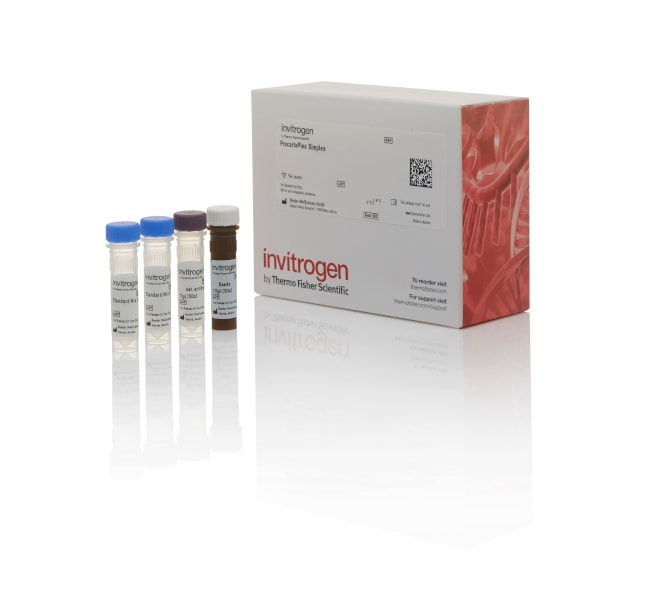
Eotaxin (CCL11) Human ProcartaPlex™ Simplex Kit
The Human Eotaxin (CCL11) Simplex ProcartaPlex Kit measures Eotaxin (CCL11) protein and is designed to be combinable with other Simplex kits so that you can create your own multiplex panel that utilizes Luminex xMAP technology for protein detection/quantitation.
| Catalog Number | Quantity |
|---|---|
| EPX01B-12120-901 | 96 Tests |
Catalog number EPX01B-12120-901
Price (CNY)
-
Quantity:
96 Tests
The Human Eotaxin (CCL11) Simplex ProcartaPlex Kit measures Eotaxin (CCL11) protein and is designed to be combinable with other Simplex kits so that you can create your own multiplex panel that utilizes Luminex xMAP technology for protein detection/quantitation. When combining multiple Simplex kits (i.e., when you are not using a pre-configured Multiplex Panel), only one buffer kit (sold separately) is needed for each assay plate regardless of plex size.
About ProcartaPlex Assays for the Luminex Platform
ProcartaPlex immunoassays are based on the principles of a sandwich ELISA, using two highly specific antibodies binding to different epitopes of one protein to quantitate all protein targets simultaneously using a Luminex instrument. ProcartaPlex multiplex assays require as little as 25 μL of plasma or serum, or 50 μL of cell culture supernatant, and just four hours to obtain analyzed results.
- More results per sample—measure multiple protein targets simultaneously in a single 25–50 μL sample
- Well-established Luminex technology—highly referenced multiplexing platform for protein detection and quantitation
ProcartaPlex assays utilize Luminex xMAP (multianalyte profiling) technology for the simultaneous detection and quantitation of up to 80 protein targets in a single 25–50 μL sample from plasma, serum, cell culture supernatants, and other bodily fluids.
The Luminex beads in the ProcartaPlex assay are internally dyed with precise proportions of red and infrared fluorophores to create spectrally unique signatures that can be identified by the Luminex xMAP detection systems (e.g. Luminex 200, FLEXMAP 3D, and MAGPIX). Similar to a sandwich ELISA, the ProcartaPlex assay uses matched antibody pairs to identify the protein of interest. In a multiplexed assay, each spectrally unique bead is labeled with antibodies specific for a single target protein, and bound proteins are identified with biotinylated antibodies and streptavidin–R-phycoerythrin (RPE). The conjugation of protein-specific antibodies to a distinct bead allows for analysis of multiple targets in a single well.
The most significant difference between a ProcartaPlex assay and ELISA is that the capture antibody in the ProcartaPlex assay is conjugated to a bead and not adsorbed to the microplate well, so the ProcartaPlex assay reagents are free-floating in the solution. For detection, the Luminex 200 instrument, for example, contains two lasers, one to distinguish the spectral signature of each bead and the second to quantify the amount of RPE fluorescence, which is proportional to the amount of protein present in the sample. ProcartaPlex multiplex assays can profile more target proteins using significantly less sample in the same time that it takes to perform a traditional sandwich ELISA.
ProcartaPlex multiplex panels are available in multiple formats across six species (human, mouse, rat, nonhuman primate, porcine, and canine).
Specifications
Assay RangeAs determined for Lot 1: 0.61 to 2500 pg/mL
Assay SensitivityAs determined for Lot 1: 1.4 pg/mL
Bead TypeEotaxin (CCL11) [33]
For Use With (Equipment)Luminex™ Instruments
FormatSimplex Kit
GeneC-C motif chemokine ligand 11
Gene AliasScya11
Gene ID (Entrez)6376
Gene SymbolCCL11
Product LineProcartaPlex
ProteinEotaxin
Protein SubtypeC-C motif chemokine 11, Eosinophil chemotactic protein, Small-inducible cytokine A11
Sample TypeSerum, Plasma, Cell Culture Supernatants
Sample VolumeSerum, Plasma: 25 μL, CCS: 50 μL
Shipping ConditionWet Ice
UniProt IDP51671
CombinabilityCombinable
Product TypeSimplex Kit
Quantity96 Tests
Research AreaImmunology, Oncology, Neurobiology, Toxicology, Chemokines
SpeciesHuman
Unit SizeEach
Contents & Storage
• 1 vial Capture Beads (50X)
• 1 vial biotinylated Detection Antibody (50X)
• 2 vials Human Standard Mix B (lyophilized)
Store at 2°C to 8°C.
Frequently asked questions (FAQs)
What is the size of the Luminex beads you currently use?
I am interested in performing Luminex assays using BioSource kits, and I have a Luminex xMAP system. Besides the kits and system, what other reagents and equipment will I need?
Do the Luminex beads require special care in handling?
Why would the Luminex acquisition software display "Sample Empty" messages during analysis?
What are the Luminex beads made of?
Citations & References (5)
Citations & References
Abstract
Pro-inflammatory cytokines IL-6 and CCL2 suppress expression of circadian gene Period2 in mammary epithelial cells.
Journal:Biochim Biophys Acta Gene Regul Mech
PubMed ID:30343691
'Chronic inflammation is known to contribute to tumor initiation and cancer progression. In breast tissue, the core circadian gene Period (PER)2 plays a critical role in mammary gland development and possesses tumor suppressor function. Interleukin (IL)-6 and C-C motif chemokine ligand (CCL) 2 are among the most abundant cytokines in
Evaluation of plasma cytokines in patients with cocaine use disorders in abstinence identifies transforming growth factor alpha (TGFa) as a potential biomarker of consumption and dual diagnosis.
Journal:PeerJ
PubMed ID:29038767
Cocaine use disorder (CUD) is a complex health condition, especially when it is accompanied by comorbid psychiatric disorders (dual diagnosis). Dual diagnosis is associated with difficulties in the stratification and treatment of patients. One of the major challenges in clinical practice of addiction psychiatry is the lack of objective biological
No difference in human mast cells derived from peanut allergic versus non-allergic subjects.
Journal:Immun Inflamm Dis
PubMed ID:29992767
Mast cells are the primary effector cells of allergy. This study aimed at characterizing human peripheral blood-derived mast cells (PBdMC) from peanut allergic and non-allergic subjects by investigating whether the molecular and stimulus-response profile of PBdMC discriminate between peanut allergic and healthy individuals.
Inflammatory mediators and dual depression: Potential biomarkers in plasma of primary and substance-induced major depression in cocaine and alcohol use disorders.
Journal:PLoS One
PubMed ID:30870525
Major depressive disorder (MDD) is the most prevalent comorbid mental disorder among people with substance use disorders. The MDD can be both primary and substance-induced and its accurate diagnosis represents a challenge for clinical practice and treatment response. Recent studies reported alterations in the circulating expression of inflammatory mediators in
Hepatocellular cancer-derived alpha fetoprotein uptake reduces CD1 molecules on monocyte-derived dendritic cells.
Journal:Cell Immunol
PubMed ID:30392891
Alpha fetoprotein (AFP) is produced by over 50% of hepatocellular carcinomas (HCC). Uptake of tumor-derived AFP (tAFP) can impair activity of human dendritic cells (DC). The expression pattern of the lipid antigen presenting genes from the CD1 family is reduced in AFP-treated monocyte-derived DC. Surface CD1 family proteins, particularly CD1d,