Search


Citations & References (4)
Invitrogen™
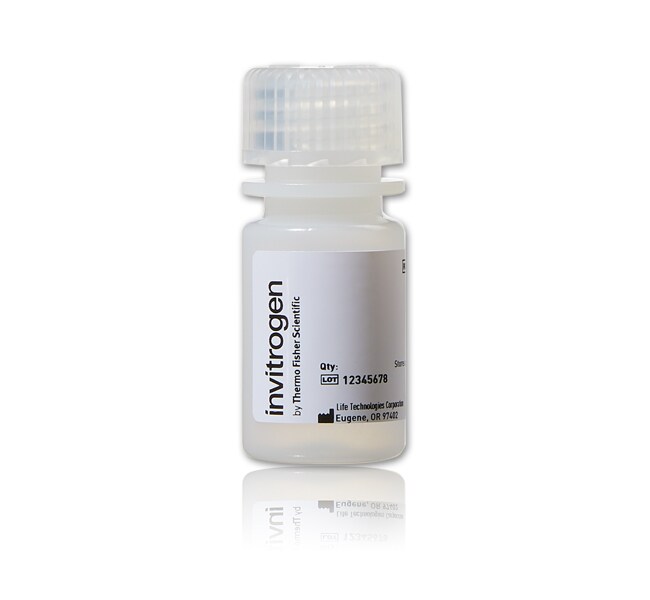
FluoSpheres™ Polystyrene Microspheres, 1.0 μm, red fluorescent (580/605), for tracer studies
Microspheres (also called latex beads or latex particles) are spherical particles in the colloidal size range that are formed fromRead more
| Catalog Number | Quantity |
|---|---|
| F13083 | 5 mL |
Catalog number F13083
Price (CNY)
6,762.00
Each
Quantity:
5 mL
Price (CNY)
6,762.00
Each
Microspheres (also called latex beads or latex particles) are spherical particles in the colloidal size range that are formed from an amorphous polymer such as polystyrene. Our Molecular Probes™ FluoSpheres™ beads are manufactured using high-quality, ultraclean polystyrene and are loaded with a variety of our proprietary dyes to create intensely fluorescent beads that typically show little or no photobleaching, even when excited with the intense illumination required for fluorescence microscopy.
For tracking particles and cells, tracing fluid dynamics, discriminating the size dependence of uptake or transport in vivo, etc., we offer more concentrated, 0.04 μm diameter FluoSpheres™ microspheres preparations (5% solids) that lack the sodium azide preservative present in the majority of our FluoSpheres™ products. The 0.04 μm particles are small enough to be microinjected or to be taken up by phagocytosis.
We also offer 1.0 μm FluoSpheres™ microsphere preparations that contain a much higher dye content than our other FluoSpheres™ products. This allows stronger signals to be generated using fewer microspheres per tracing experiment.
In many biological systems, the concentrated fluorescence and spherical shape of the FluoSpheres™ beads permit them to be detected against a relatively high but diffuse background fluorescence. Typically for these types of studies, the microspheres and the fluorescent dyes they contain are first extracted from the tissue sample, and then the fluorescence is quantified on a spectrofluorometer or fluorescence microplate reader. The use of fluorescent microspheres eliminates the radiation hazards and disposal hurdles associated with radiolabeled microspheres.
FluoSpheres™ Microsphere Specifications:
• Label (Ex/Em): Red fluorescent (580/605)
• Nominal bead diameter: 1.0 μm
• Coupling surface: Carboxylate
• Solids: 2%
Characteristics of the Carboxylate Coupling Surface
Carboxylate-modified FluoSpheres™ beads have a high density of pendent carboxylic acids on their surface, making them suitable for covalent coupling of proteins and other amine-containing biomolecules using water-soluble carbodiimide reagents such as EDAC.
Choices for FluoSpheres™ Fluorescent Microspheres
In addition to microspheres for tracing, investigate our complete offering of fluorescent microspheres products. Among those products you’ll find beads with these variations:
• Ten fluorescent colors
• Ten nominal bead diameters: 0.02 μm, 0.04 μm, 0.1 μm, 0.2 μm, 0.5 μm, 1.0 μm, 2.0 μm, 4.0 μm, 10.0 μm, and 15.0 μm
• Four surface modifications for protein coupling: carboxylate, sulfate, aldehyde-sulfate, amine
• Microspheres that are additionally precoupled with streptavidin, NeutrAvidin, biotin, europium, and platinum
Choices for Unstained Microspheres
We also offer hundreds of choices for UltraClean™ surfactant-free microspheres for research and commercial applications.
We’ll Make a Custom Microsphere Product for You
We will prepare custom orders upon request. For example, FluoSpheres™ beads can be prepared with intensities that are lower than those of our regular selection, a desirable feature in some multicolor applications. Our custom conjugation service is efficient and confidential, and we stand by quality of our work. We are ISO 13485:2000 certified.
For Research Use Only. Not intended for animal or human therapeutic or diagnostic use.
For tracking particles and cells, tracing fluid dynamics, discriminating the size dependence of uptake or transport in vivo, etc., we offer more concentrated, 0.04 μm diameter FluoSpheres™ microspheres preparations (5% solids) that lack the sodium azide preservative present in the majority of our FluoSpheres™ products. The 0.04 μm particles are small enough to be microinjected or to be taken up by phagocytosis.
We also offer 1.0 μm FluoSpheres™ microsphere preparations that contain a much higher dye content than our other FluoSpheres™ products. This allows stronger signals to be generated using fewer microspheres per tracing experiment.
In many biological systems, the concentrated fluorescence and spherical shape of the FluoSpheres™ beads permit them to be detected against a relatively high but diffuse background fluorescence. Typically for these types of studies, the microspheres and the fluorescent dyes they contain are first extracted from the tissue sample, and then the fluorescence is quantified on a spectrofluorometer or fluorescence microplate reader. The use of fluorescent microspheres eliminates the radiation hazards and disposal hurdles associated with radiolabeled microspheres.
FluoSpheres™ Microsphere Specifications:
• Label (Ex/Em): Red fluorescent (580/605)
• Nominal bead diameter: 1.0 μm
• Coupling surface: Carboxylate
• Solids: 2%
Characteristics of the Carboxylate Coupling Surface
Carboxylate-modified FluoSpheres™ beads have a high density of pendent carboxylic acids on their surface, making them suitable for covalent coupling of proteins and other amine-containing biomolecules using water-soluble carbodiimide reagents such as EDAC.
Choices for FluoSpheres™ Fluorescent Microspheres
In addition to microspheres for tracing, investigate our complete offering of fluorescent microspheres products. Among those products you’ll find beads with these variations:
• Ten fluorescent colors
• Ten nominal bead diameters: 0.02 μm, 0.04 μm, 0.1 μm, 0.2 μm, 0.5 μm, 1.0 μm, 2.0 μm, 4.0 μm, 10.0 μm, and 15.0 μm
• Four surface modifications for protein coupling: carboxylate, sulfate, aldehyde-sulfate, amine
• Microspheres that are additionally precoupled with streptavidin, NeutrAvidin, biotin, europium, and platinum
Choices for Unstained Microspheres
We also offer hundreds of choices for UltraClean™ surfactant-free microspheres for research and commercial applications.
We’ll Make a Custom Microsphere Product for You
We will prepare custom orders upon request. For example, FluoSpheres™ beads can be prepared with intensities that are lower than those of our regular selection, a desirable feature in some multicolor applications. Our custom conjugation service is efficient and confidential, and we stand by quality of our work. We are ISO 13485:2000 certified.
For Research Use Only. Not intended for animal or human therapeutic or diagnostic use.
For Research Use Only. Not for use in diagnostic procedures.
Specifications
Concentration1 x 1010 beads/mL
Product LineFLUOSPHERES
Quantity5 mL
Shipping ConditionRoom Temperature
Surface ModificationOther Modification or Label
ColorRed
Diameter (Metric)1 μm
MaterialPolystyrene
Product TypeMicrosphere
Unit SizeEach
Contents & Storage
Store in refrigerator (2–8°C) and protect from light.
Frequently asked questions (FAQs)
What is the warranty for FluoSpheres microspheres?
After washing and centrifugation, there was only a very small pellet left of my microsphere beads and the solution was transparent. Why is this?
I've had my microspheres for over a year, and I'm wondering if they're still good to use. What are some good ways to check their functionality?
I accidentally froze my microspheres; can I still use them?
My protein-coated microspheres appear to be non-specifically binding in my experimental system. Do you have a product that can help reduce these non-specific interactions?
Citations & References (4)
Citations & References
Abstract
Proinflammatory and vasodilator effects of nociceptin/orphanin FQ in the rat mesenteric microcirculation are mediated by histamine.
Journal:Am J Physiol Heart Circ Physiol
PubMed ID:17766480
'Nociceptin/orphanin FQ (N/OFQ) is the endogenous ligand for the N/OFQ peptide receptor (NOP). N/OFQ causes hypotension and vasodilation, and we aimed to determine the role of histamine in inflammatory microvascular responses to N/OFQ. Male Wistar rats (220-300 g, n = 72) were anesthetized with thiopental (30 mg/kg bolus, 40-90 mg
Kinetochore asymmetry defines a single yeast lineage.
Journal:Proc Natl Acad Sci U S A
PubMed ID:19346480
Asymmetric cell division is of fundamental importance in biology as it allows for the establishment of separate cell lineages during the development of multicellular organisms. Although microbial systems, including the yeast Saccharomyces cerevisiae, are excellent models of asymmetric cell division, this phenotype occurs in all cell divisions; consequently, models of
In vivo pattern of lipopolysaccharide and anti-CD3-induced NF-kappa B activation using a novel gene-targeted enhanced GFP reporter gene mouse.
Journal:J Immunol
PubMed ID:15265883
NF-kappa B is a family of transcription factors involved in regulating cell death/survival, differentiation, and inflammation. Although the transactivation ability of NF-kappa B has been extensively studied in vitro, limited information is available on the spatial and temporal transactivation pattern in vivo. To investigate the kinetics and cellular localization of
In vivo non-linear optical (NLO) imaging in live rabbit eyes using the Heidelberg Two-Photon Laser Ophthalmoscope.
Journal:Exp Eye Res
PubMed ID:20558159
Imaging of non-linear optical (NLO) signals generated from the eye using ultrafast pulsed lasers has been limited to the study of ex vivo tissues because of the use of conventional microscopes with slow scan speeds. The purpose of this study was to evaluate the ability of a novel, high scan