Search

Invitrogen™
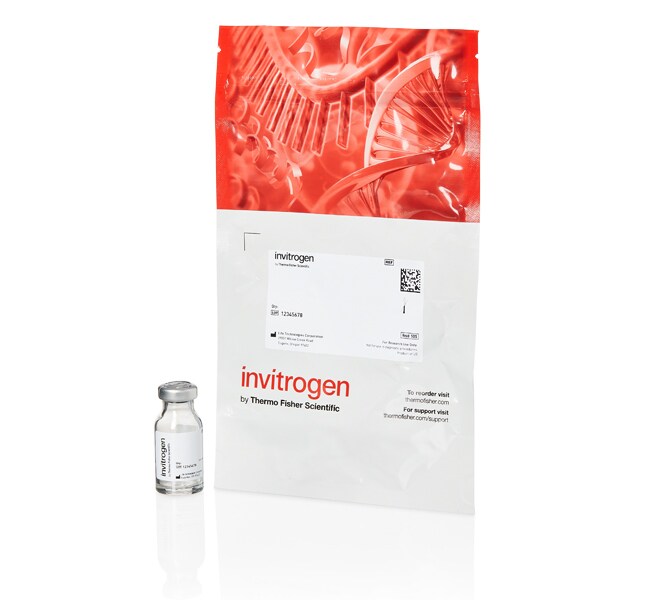
FluoSpheres™ Polystyrene Microspheres, 15 μm, red-orange fluorescent (565/580), for blood flow determination
Microspheres (also called latex beads or latex particles) are spherical particles in the colloidal size range that are formed from an amorphous polymer such as polystyrene.
| Catalog Number | Quantity |
|---|---|
| F21012 also known as F-21012 | 10 mL |
Catalog number F21012
also known as F-21012
Price (CNY)
7,064.00
Each
Quantity:
10 mL
Price (CNY)
7,064.00
Each
Microspheres (also called latex beads or latex particles) are spherical particles in the colloidal size range that are formed from an amorphous polymer such as polystyrene. Our Molecular Probes™ FluoSpheres™ beads are manufactured using high-quality, ultraclean polystyrene and are loaded with a variety of our proprietary dyes to create intensely fluorescent beads that typically show little or no photobleaching, even when excited with the intense illumination required for fluorescence microscopy.
FluoSpheres™ microspheres in the 10–15 μm size range were designed specifically for regional blood flow studies in tissues and organs. Typically for these types of studies, the microspheres are injected at desired locations in the circulatory system and eventually lodge in the capillaries, where they can be extracted and the fluorescence quantified. The use of fluorescent microspheres eliminates the radiation hazards and disposal hurdles associated with radiolabeled microspheres. Multiple (up to seven or more with good spectral correction) simultaneously circulating FluoSpheres™ microspheres can be discriminated. Microspheres that have been perfused or injected into tissues and organs retain their fluorescence following histological serial sectioning. Our FluoSpheres™ microspheres for blood flow determination, which are available in eleven distinguishable fluorescent colors, are also compatible with blood flow analyzer systems that perform automated extraction and analysis.
FluoSpheres™ Microsphere Specifications:
- Label (Ex/Em): Red-orange fluorescent (565/580)
- Nominal bead diameter: 15 μm
Choices for FluoSpheres™ Fluorescent Microspheres
In addition to microspheres for blood flow studies, investigate our complete offering of fluorescent microspheres products. Among those products you'll find beads with these variations:
- Ten fluorescent colors
- Ten nominal bead diameters: 0.02 μm, 0.04 μm, 0.1 μm, 0.2 μm, 0.5 μm, 1.0 μm, 2.0 μm, 4.0 μm, 10.0 μm, and 15.0 μm
- Four surface modifications for protein coupling: carboxylate, sulfate, aldehyde-sulfate, amine
- Microspheres that are additionally precoupled with streptavidin, NeutrAvidin, biotin, europium, and platinum
Choices for Unstained Microspheres
We also offer hundreds of choices for UltraClean™ surfactant-free microspheres for research and commercial applications.
We'll Make a Custom Microsphere Product for You
We will prepare custom orders upon request. For example, FluoSpheres™ beads can be prepared with intensities that are lower than those of our regular selection, a desirable feature in some multicolor applications. Our custom conjugation service is efficient and confidential, and we stand by the quality of our work. We are ISO 13485:2000 certified.
For Research Use Only. Not for use in diagnostic procedures.
Specifications
Concentration1.0 x 106 beads/mL
Product LineFLUOSPHERES
Quantity10 mL
Shipping ConditionRoom Temperature
ColorRed-Orange
Diameter (Metric)15 μm
MaterialPolystyrene
Product TypeMicrosphere
Unit SizeEach
Contents & Storage
Store in refrigerator (2°C to 8°C) and protect from light.