Search


Thermo Scientific™
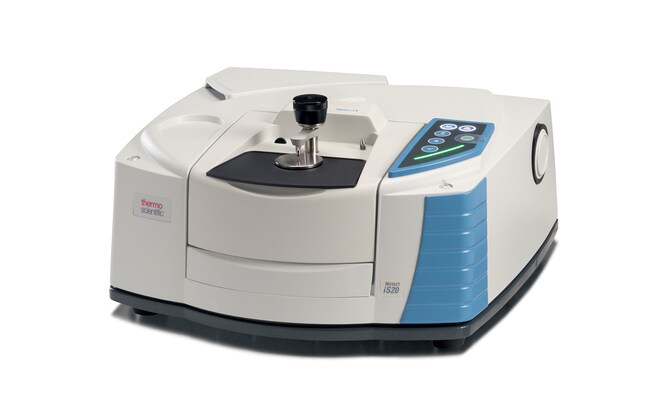
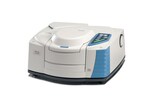
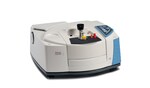
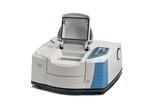
Nicolet™ iS20 FTIR Spectrometer
Streamline data collection and accurately identify mixture components using the Thermo Scientific Nicolet iS20 FTIR Spectrometer.
| Catalog Number | Spectral Resolution | For Use With (Application) |
|---|---|---|
| IQLAADGAAGFAHDMBKG | Better than 0.25 cm-1 | Polymers and Plastics; Analytical Services; Quality Control QA/QC; Pharmaceuticals; Education; Forensics; Gemstone Analysis |
Catalog number IQLAADGAAGFAHDMBKG
Price (CNY)
-
Spectral Resolution:
Better than 0.25 cm-1
For Use With (Application):
Polymers and Plastics; Analytical Services; Quality Control QA/QC; Pharmaceuticals; Education; Forensics; Gemstone Analysis
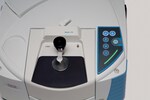
Maximize laboratory productivity and quickly collect high-quality spectral data with the Thermo Scientific™ Nicolet™ iS20 FTIR Spectrometer. An integrated touch panel allows users of any skill level to quickly analyze challenging samples and a new multi-color LED scan bar gives users immediate feedback on whether the instrument is in idle, collect or alert mode. Identify unknown contaminants, perform failure analysis and accurately analyze mixtures using the spectral power of the Thermo Scientific™ LightDrive™ Optical Engine built into each instrument. A 10-year warranty on the source, laser and interferometer provide unmatched peace of mind for years to come.
Trusted by thousands of users around the world, the Nicolet iS10 FTIR Spectrometer set the benchmark for analytical FTIR instruments. Now, the Nicolet iS20 FTIR Spectrometer resets the standard and pushes the limits of innovation to the next level. With its redesigned optical engine and modern industrial design, the Nicolet iS20 spectrometer creates the perfect combination of the instrument platform FTIR users loved with the improvements they need.
Accurately discern multi-component samples: advanced LightDrive optical engine technology delivers higher spectral resolution (0.25 cm-1) and single-to-noise ratios (50,000:1) to help identify possible contaminants or characterize defects present in small quantities
Improve data reproducibility: state-of-the-art infrared source eliminates hot spot migration, resulting in more consistent spectral data, especially through an attenuated total reflectance (ATR) accessory
Streamline workflow productivity: multi-colored LED touch panel provides visual feedback on instrument status for increased productivity(ready, scan, alert); System Performance Verification (SPV) assures day- to-day results are trusted
Reduce cost of ownership: 10-year warranty on the source, laser and interferometer provides peace of mind; the LightDrive interferometer provides a 5-fold increase in relative lifetime over current interferometer technology, minimizing the need for replacements
Share data anytime, anywhere: upload data to the Thermo Fisher Cloud using this cloud-enabled FTIR spectrometer. Students can upload, analyze and share data away from the instrument using the OMNIC Anywhere App on their PC, Apple Computer, Android, or iOS device. All Thermo Fisher Cloud accounts come with 10 GB of free storage.
Be compliant, be sure: fully-automated validation test routines are available for IQ/OQ (installation and operational qualification), European Pharmacopeia (Ph. Eur.), United States Pharmacopeia (USP), Japanese Pharmacopeia (JP) and China Pharmacopeia (CP); 21 CFR Part 11 compliance and data security packages are available
Easily add new capabilities: spectrometer recognizes Thermo Scientific™ Smart™ Accessories, commercially available third party accessories, TGA-IR module, and external microscopes to adapt to challenging sample needs now and in the future
Find more unknowns: award-winning Thermo Scientific™ OMNIC™ Software is a familiar interface that now comes enhanced with OMNIC Specta software, including a library of >9,000 chemical spectra, so that you can quickly identify unknowns with innovative multi-component search routines
Build confidence with unrivaled support: keep your business or research project running with service and support that only our Unity Lab Services (www.unitylabservices) and qualified dealer network can provide (over 7,000 service engineers and 1,800 technical support personnel worldwide)
Applications: Polymers and Plastics; Analytical Services; Quality Control QA/QC; Pharmaceuticals; Education; Forensics; Gemstone Analysis
Specifications
Beam SplitterKBr/Ge mid-infrared optimized (standard); XT-KBr/Ge extended range mid-infrared (optional)
ComponentsLightDrive Optical Engine components: source, laser, interferometer and detector
DescriptionNicolet iS20 FTIR spectrometer
Detector TypeStandard – Fast-recovery deuterated triglycine sulfate (DTGS) detector; Optional – High-
Dimensions (L x W x H)570 x 550 x 250 mm (22.4 x 21.6 x 9.8 in.)
Electrical Requirements100/240 V, 50/60 Hz
For Use With (Application)Polymers and Plastics; Analytical Services; Quality Control QA/QC; Pharmaceuticals; Education; Forensics; Gemstone Analysis
For Use With (Equipment)SMART Accessories, Nicolet iZ10 spectrometer module, TGA-IR, Nicolet iN5 FTIR Microscope, Continuum Microscope Photoacoustic accessories, Standard commercially available accessories
HumidityTightly sealed and desiccated to resist ambient humidity; purge-ready
InterfacePC USB 2.0
LaserSolid-state, temperature controlled diode laser (10-year warranty)
Signal To Noise Ratio50,000:1 (peak to peak, 1 minute measurements, factory verified)
Source TypeStandard: Single point source with non-migrating hot-spot for unmatched data reproducibility (10-year warranty), Optional: Tungsten/halogen source for mid-near IR measurements
Spectral Range7800 to 350 cm-1 optimized, mid-infrared KBr beamsplitter,
11,000 to 375 cm-1 XT KBr extended range mid-infrared optics
11,000 to 375 cm-1 XT KBr extended range mid-infrared optics
Spectral ResolutionBetter than 0.25 cm-1
Weight (English)70 lb.
Weight (Metric)32 kg
Width (English)21.7 in.
Width (Metric)550 mm
Performance VerificationIntegrated validation wheel with Shott NG-11 glass and NIST traceable, serialized polystyrene film
Voltage100/240 V
Unit SizeEach