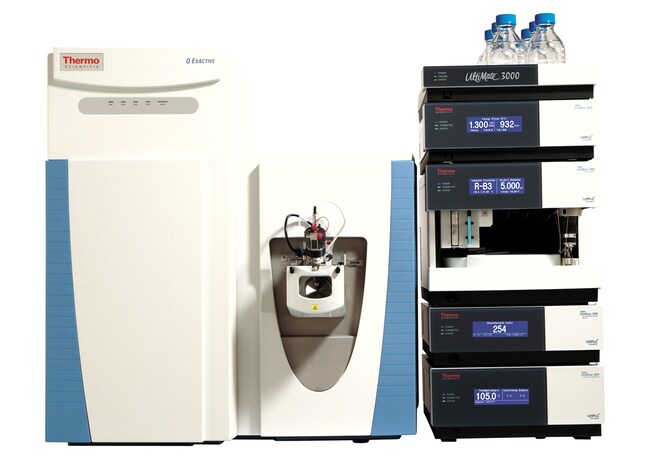
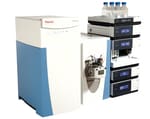
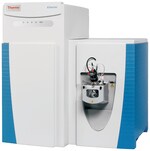
Q Exactive™ Hybrid Quadrupole-Orbitrap™ Mass Spectrometer
Q Exactive™ Hybrid Quadrupole-Orbitrap™  Mass Spectrometer
Thermo Scientific™

Q Exactive™ Hybrid Quadrupole-Orbitrap™ Mass Spectrometer

Identify, quantify and confirm a broad range of compounds rapidly and with confidence using benchtop Thermo Scientific™ Q Exactive™ Hybrid Quadrupole-Orbitrap Mass Spectrometer.

Have Questions?
Catalog NumberScan RatesResolutionMass Range
IQLAAEGAAPFALGMAZRUp to 12 Hz140,000 at m/z 20050 to 6000 m/z
Catalog number IQLAAEGAAPFALGMAZR
Price (CNY)
-
Request A Quote
Scan Rates:
Up to 12 Hz
Resolution:
140,000 at m/z 200
Mass Range:
50 to 6000 m/z

Identify, quantify and confirm more compounds rapidly and with confidence using the Thermo Scientific™ Q Exactive™ Hybrid Quadrupole-Orbitrap Mass Spectrometer. This benchtop LC-MS/MS system combines quadruple precursor ion selection with high-resolution, accurate-mass (HRAM) Orbitrap detection to deliver exceptional performance and versatility. The Q Exactive Mass Spectrometer is equally useful for untargeted or targeted screening and a broad range of qualitative and quantitative applications in drug discovery, proteomics, environmental and food safety, clinical research and forensic toxicology.

Genotoxic impurity analysis in pharmaceutical products

The Food and Drug Administration (FDA) released a liquid chromatography-high resolution mass spectrometry (LC-HRMS) method for the quantitation of N-nitrosodimethylamine (NDMA) in Ranitidine drug substance and drug products using the Q Exactive hybrid quadrupole-Orbitrap mass spectrometer.

High-Confidence Results, Quickly

  • HRAM and full-scan capabilities capture all sample data, all the time, enabling retrospective data analysis without need to re-run samples
  • Resolving power up to 140,000 FWHM eliminates isobaric interferences, increasing confidence in results when analyzing samples in complex matrices
  • Better than 1 ppm mass accuracy in full-scan and all-ion fragmentation (AIF) modes ensures confident compound identification
  • Fast scanning at 12 hz and spectral multiplexing suited to UHPLC applications
  • Rapid polarity switching maximizes information obtained
  • AIF and multiple dissociation techniques—in-source CID and HCD—aid in compound identification
  • Extended mass range to 6000 m/z enhances detection of singly charged small molecules and biomolecules
  • More than four orders of magnitude intrascan dynamic range, along with femtogram-level sensitivity, allow detection of trace-level and high-abundance compounds in the same scan

Greater Confidence for Drug Discovery and Metabolism Studies

  • Triple quadruple-equivalent ability to quantify parent compounds and metabolites along with identity confirmation provides greater throughput
  • Fast HRAM Orbitrap technology eliminates interferences for high-confidence metabolite structural identification and large-scale profiling of metabolomics and lipidomics samples
  • Fast scan-to-scan polarity switching in both MS and MS/MS modes maximizes metabolite detection and identification from a single injection

More Information for Superior Proteomics

  • HCD yields superior fragmentation and higher-quality MS/MS spectra compared to CID, improving identifications
  • High spectral quality and a wide dynamic range make it possible to identify and quantify proteins other instruments cannot find.
  • Quan/qual capability make it easier to transition from proteomic discovery experiments to targeted protein quantification

Highly Specific Environmental and Food Safety Analyses

  • Specificity exceeding triple quadruple Q-TOF or Q-Trap levels make this mass spectrometer the preferred quan/qual screening platform
  • Data-dependent, full-scan MS/MS capabilities and HRAM data ensure the highest possible confidence in every identification

High-Confidence Quanfirmation for Clinical Research and Forensic Toxicology

  • The combination of SRM and HRAM capabilities provides high-confidence quanfirmation of endogenous steroids, drugs of abuse and pain-management therapeutics with ease.

Application-Specific Software for Greater Throughput

  • Thermo Scientific™ ExactFinder™, LCQuan™, Mass Frontier™, MetQuest™, MetWorks™, SIEVE™ and TraceFinder™ software are available to speed data analysis.
Specifications
Dynamic Range>5000:1
Mass AccuracyInternal: <1 ppm RMS, External: <3 ppm RMS
Polarity SwitchingOne Full Cycle in <1 Sec (One Full Positive Mode Scan and One Full Negative Mode Scan (at a Resolution Setting of 35,000))
Scan RatesUp to 12 Hz
SensitivityFull MS: 500 fg Buspirone on Column S/N 100:1, SIM: 50 fg Buspirone on Column Yields S/N 100:1 or Better
Mass Range50 to 6000 m/z
Resolution140,000 at m/z 200
TypeQuadrupole-Orbitrap LC-MS
Unit SizeEach

Frequently asked questions (FAQs)

Why is the turbomolecular pump not operating when using Orbitrap Exactive or Q Exactive mass spectrometry instruments?

A turbomolecular pump may be switched off because of one of the following reasons:

- Turbomolecular pump is blocked
- Failure of fans in turbomolecular pump
Each of the above reasons might lead to an overheating of the pump. When overheated, a turbomolecular pump switches off automatically to prevent its destruction. This overheating protection prevents the outbreak of a fire and minimizes the risk of destructing the pump.

If the Exactive Series mass spectrometer does not work as expected, use the Tune software for error diagnosis:
- The instrument status window displays real-time status information for the instrument components. All parameters are arranged in a tree view. In addition to showing numerical values of parameters (for example, pump speeds or component temperatures), the instrument status window uses icons to indicate the statuses of system components.
- The messages window displays real-time information about the statuses of the instrument, the control service, or other programs. It might display additional information.

In case of an overheated turbomolecular pump, shut down the mass spectrometer as described on page 6-8 of the manual (https://assets.thermofisher.com/TFS-Assets/CMD/manuals/man-bre0012255-exactive-series-manbre0012255-en.pdf). To prevent permanent damage to components of the Exactive Series mass spectrometer, Thermo Fisher Scientific recommends that you call a Thermo Fisher Scientific field service engineer.

Find additional tips, troubleshooting help, and resources within our Mass Spectrometry Support Center.

Why is the temperature of UHV chamber higher than expected when using Orbitrap Exactive or Q Exactive mass spectrometry instruments?

The UHV chamber heating control may have failed. During general operation of the mass spectrometer, the temperature of the UHV chamber is not regulated. Only during a system bakeout, electric power is supplied to the heating elements of the UHV chamber. The heating always operates at maximum power. Thus, failure of the heating control does not lead to a dangerous overheating of the mass spectrometer. If the Exactive Series mass spectrometer does not work as expected, use the Tune software for error diagnosis:

- The messages window displays real-time information about the statuses of the instrument, the control service, or other programs. If the heating was terminated, the window displays a corresponding error message.

In case of a failure of the UHV chamber heating control, shut down the mass spectrometer as described on page 6-8 of the manual (https://assets.thermofisher.com/TFS-Assets/CMD/manuals/man-bre0012255-exactive-series-manbre0012255-en.pdf). To prevent permanent damage to components of the Exactive Series mass spectrometer, Thermo Fisher Scientific recommends that you call a Thermo Fisher Scientific field service engineer.

Find additional tips, troubleshooting help, and resources within our Mass Spectrometry Support Center.

When using Orbitrap Exactive or Q Exactive mass spectrometry instruments, why does the tune software show bad vacuum?

Here are possible causes and solutions:
-System was vented because of a main power failure: A main power failure has the same consequence as switching off with the main power circuit breaker switch. If the power is available again, the system is started up automatically: the pumps are switched on and the vacuum is created. If the system has been vented during the mains failure, it is necessary to bake out the system to obtain the operating vacuum. See “Baking Out the System” on page 8-12 of the manual. If the log file of the data system shows a reboot of the system and the pressure reading in the Tune software shows a bad vacuum, this indicates that the system was vented. In case of frequent but short power failures, we recommend that you install an uninterruptible power supply (UPS). If main power failures occur frequently while the system is not attended (for example, in the night), we recommend that you install a power fail detector. - Vacuum leak: Refer to pages 7-5 and 8-12 in the Operator's Manual (https://assets.thermofisher.com/TFS-Assets/CMD/manuals/man-bre0012255-exactive-series-manbre0012255-en.pdf).

Find additional tips, troubleshooting help, and resources within our Mass Spectrometry Support Center.

Why does the metal needle insert in the heated ESI probe frequently clog when using Orbitrap Exactive or Q Exactive mass spectrometry instruments?

Clogging of the H-ESI spray needle is generally caused by the presence of non-volatile components in the injected samples. If the non-volatile components of the samples are not removed during sample preparation, they will be injected onto the column where they will gradually bleed off over time into the detector. They may also be directly introduced by the use of non-volatile buffers in the mobile phase. Non volatile buffers should be avoided in LC-MS analysis because the spray needle will clog frequently and in addition the MS optics will quickly become contaminated.

Clogging issues may be worsened when using a divert valve or bypass valve. This is because when the valve switches to waste the LC flow to the needle is stopped, causing the residual liquid in the hot needle to quickly evaporate. This in turn causes the non-volatile components to deposit on the inner wall of the tubing which will eventually clog it.

When using a divert or bypass valve, the issue may be fully resolved by adding another HPLC pump to supply make-up flow through the needle when the column eluent is bypassed. The second pump is connected to the divert valve or bypass valve so that when the eluent is diverted to waste, clean solvent flows through the needle to help keep it clean. Alternatively, sample preparation procedures should be modified to reduce the amount of non-volatile components in each sample injection.

Find additional tips, troubleshooting help, and resources within our Mass Spectrometry Support Center.

What is High Energy Collision Dissociation (HCD) as it relates to Orbitrap Exactive or Q Exactive mass spectrometry instruments?

The HCD Cell consists of a straight multipole (octapole) device mounted within a metal tube. The metal tube is in turn connected to the C-Trap in direct line of sight.

The voltage offset between the C-Trap and the HCD Cell is used to accelerate the precursor ions into the gas filled cell. Inside the HCD cell, ions collide with the neutral gas causing rotation, stretching and ultimately cleaving bonds to create fragment ions and neutral species, which are subsequently removed by the vacuum system.

The generated fragment or product ions are then pushed back toward the C-Trap and focused before being pushed toward the Orbitrap analyzer.

Find additional tips, troubleshooting help, and resources within our Mass Spectrometry Support Center.