Search
 Element Search
 Structure Search

Thermo Scientific Chemicals
Carbadox, 98+%
CAS: 6804-07-5 | C13H10BrNO | 276.13 g/mol
Have Questions?
Change view




Catalog number J60284.14
also known as J60284-14
Price (CNY)
-
Quantity:
25 g
Specifications
CAS6804-07-5
Chemical Name or MaterialCarbadox
ColorYellow
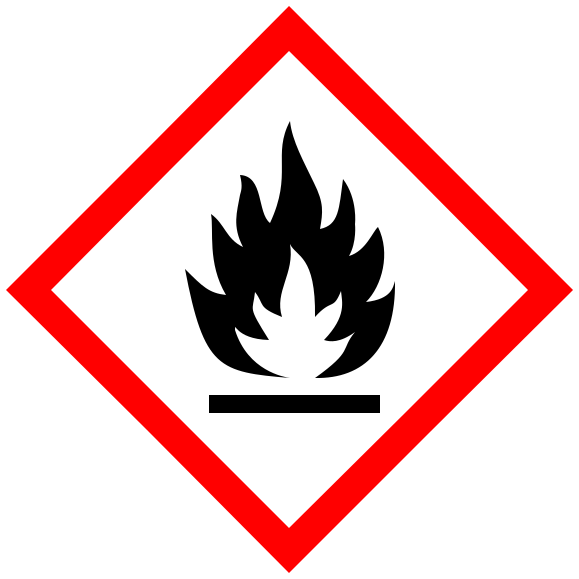
DOT InformationTransport Hazard Class: 4.1; Packing Group: II; Proper Shipping Name: FLAMMABLE SOLIDS, ORGANIC, N.O.S.
Flash Point18°C (64°F)
View more
This Thermo Scientific Chemicals brand product was originally part of the Alfa Aesar product portfolio. Some documentation and label information may refer to the legacy brand. The original Alfa Aesar product / item code or SKU reference has not changed as a part of the brand transition to Thermo Scientific Chemicals.
Suitable for battery materials development.
Applications
Carbadox has been used to suppress aldosterone production, to study the spread of shiga toxin-producing Escherichia coli (STEC) strains, and to compare different antimicrobial activities. Carbadox is a quinoxaline-di-N-oxide antibiotic that is generally used in feed to swine to prevent dysentery and improve feed efficiency. It inhibits bacteria by intercalation and induction of mutations in bacterial genome.
Solubility
Soluble in 1N NaOH (50 mg/ml), and water (partly).
Notes
Store in cool, dry place in a tightly sealed container. Store away from oxidizing agents.
Carbadox has been used to suppress aldosterone production, to study the spread of shiga toxin-producing Escherichia coli (STEC) strains, and to compare different antimicrobial activities. Carbadox is a quinoxaline-di-N-oxide antibiotic that is generally used in feed to swine to prevent dysentery and improve feed efficiency. It inhibits bacteria by intercalation and induction of mutations in bacterial genome.
Solubility
Soluble in 1N NaOH (50 mg/ml), and water (partly).
Notes
Store in cool, dry place in a tightly sealed container. Store away from oxidizing agents.
RUO – Research Use Only
General References:
- T Hayashi, I Suenaga; N Narukawa; T Yamazaki. In vitro and in vivo activities of sedecamycin against Treponema hyodysenteriae. Antimicrobial Agents and Chemotherapy. 1988, 32 (4), 458-461.
- Torey Looft; Heather K Allen; Thomas A Casey; David P Alt; Thaddeus B Stanton. Carbadox has both temporary and lasting effects on the swine gut microbiota. Dyes and Pigments. 2014, 5, 276.