Search


Citations & References (29)
Invitrogen™
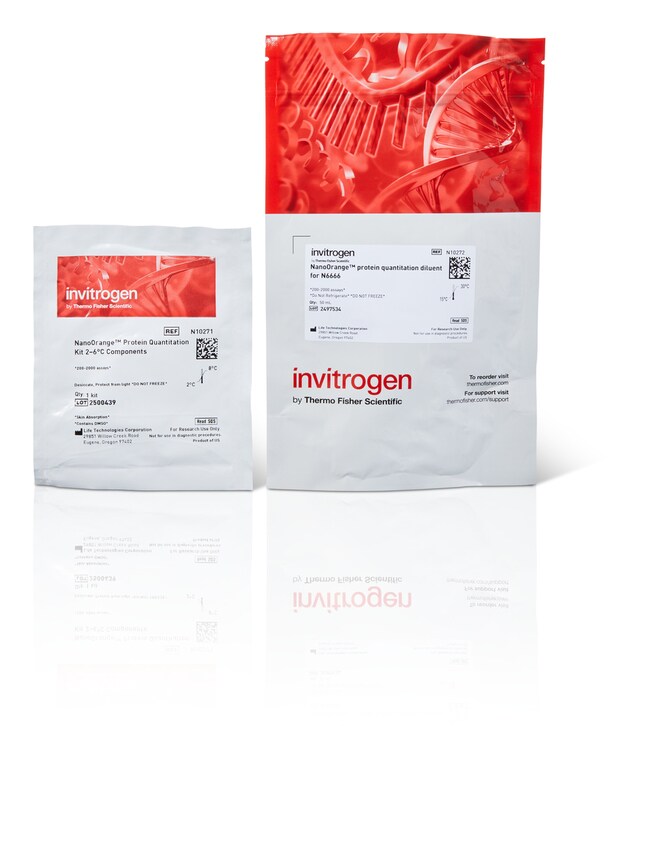
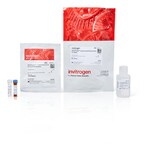
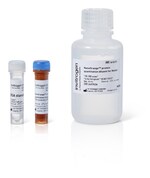
NanoOrange™ Protein Quantitation Kit, 200-2,000 assays
The NanoOrange Protein Quantitation Kit contains a very sensitive and easy assay for protein quantitation, with detection as low asRead more
| Catalog Number | Quantity |
|---|---|
| N6666 | 1 Kit |
Catalog number N6666
Price (CNY)
1,988.00
Each
Quantity:
1 Kit
Price (CNY)
1,988.00
Each
The NanoOrange Protein Quantitation Kit contains a very sensitive and easy assay for protein quantitation, with detection as low as 10 ng/mL of protein in solution. This fluorescent dye is suitable for use with spectrofluorometers and microplate readers. For detection of lipoproteins or proteins in a complex lipid environment, check out our CBQCA Protein Quantitation Kit (C-6667).
For Research Use Only. Not for use in diagnostic procedures.
Specifications
AssayFluorescent Protein Assay
For Use With (Application)Protein quantitation
For Use With (Equipment)Microplate Reader
Product LineNanoOrange
Product TypeProtein Quantitation Assay
Quantity1 Kit
Sufficient For200 to 2000 Assays
Detection MethodFluorescence
Unit SizeEach
Frequently asked questions (FAQs)
When preparing the serial dilutions for the standard curve for the NanoOrange Protein Quantitation Kit (Cat. No. N6666), can they first be diluted in buffer (e.g., Tris) or do they have to be diluted in 1X NanoOrange working solution?
My buffer or components of my buffer are not listed in the compatibility table for my protein assay. What should I do?
All the components of my sample buffer are at or below the indicated compatible concentration for my protein assay, but I am still seeing too much/too little color development. What could be the problem?
My protein assay is not developing color or is developing too much color. What can I do?
My spectrophotometer doesn’t have a filter set for the absorbance maximum. Can I use an alternate wavelength to read the protein assay?
Citations & References (29)
Citations & References
Abstract
Journal:
PubMed ID:10652312
Identification of cyclic AMP-regulated genes in Mycobacterium tuberculosis complex bacteria under low-oxygen conditions.
Journal:J Bacteriol
PubMed ID:15805514
'Mycobacterium tuberculosis is the etiological agent of tuberculosis (TB), which kills approximately 2 million people a year despite current treatment options. A greater understanding of the biology of this bacterium is needed to better combat TB disease. The M. tuberculosis genome encodes as many as 15 adenylate cyclases, suggesting that
Regulation of collagen deposition and lysyl oxidase by tumor necrosis factor-alpha in osteoblasts.
Journal:J Biol Chem
PubMed ID:15138266
'Tumor necrosis factor-alpha (TNF-alpha) inhibits osteoblast function in vitro by inhibiting collagen deposition. Studies generally support that TNF-alpha does not inhibit collagen biosynthesis by osteoblasts but that collagen deposition is in some way diminished. The study investigated TNF-alpha regulation of biosynthetic enzymes and proteins crucial for posttranslational extracellular collagen maturation
Control of neuronal size homeostasis by trophic factor-mediated coupling of protein degradation to protein synthesis.
Journal:J Cell Biol
PubMed ID:9732291
'We demonstrate that NGF couples the rate of degradation of long-lived proteins in sympathetic neurons to the rate of protein synthesis. Inhibiting protein synthesis rate by a specific percentage caused an almost equivalent percentage reduction in the degradation rate of long-lived proteins, indicating nearly 1:1 coupling between the two processes.
Key role of conserved histidines in recombinant mouse beta-carotene 15,15'-monooxygenase-1 activity.
Journal:J Biol Chem
PubMed ID:15951442
'Alignment of sequences of vertebrate beta-carotene 15,15''-monooxygenase-1 (BCMO1) and related oxygenases revealed four perfectly conserved histidines and five acidic residues (His172, His237, His308, His514, Asp52, Glu140, Glu314, Glu405, and Glu457 in mouse BCMO1). Because BCMO1 activity is iron-dependent, we propose that these residues participate in iron coordination and therefore are