Search


Citations & References (16)
Invitrogen™
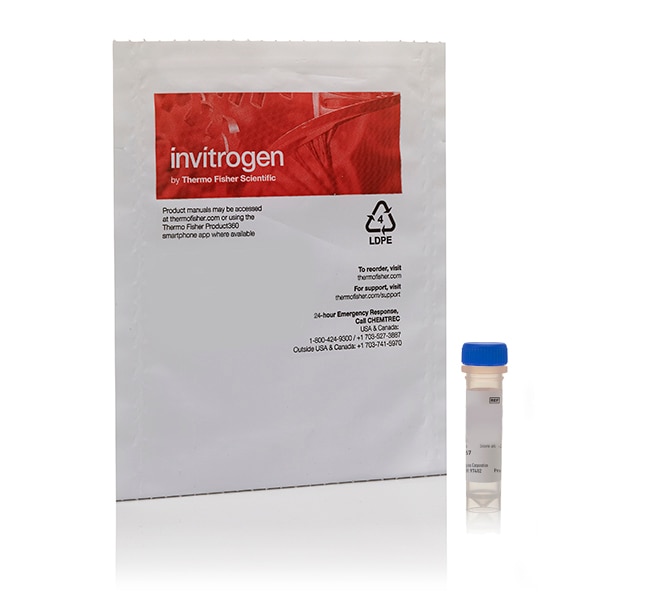
Pepstatin A, BODIPY™ FL Conjugate
For the study of cathepsin D trafficking in cells by fluorescence microscopy, try our BODIPY FL pepstatin A. This green-fluorescentRead more
| Catalog Number | Quantity |
|---|---|
| P12271 | 25 μg |
Catalog number P12271
Price (CNY)
3,001.00
Online exclusive
Ends: 31-Dec-2026
4,168.00Save 1,167.00 (28%)
Each
Quantity:
25 μg
Price (CNY)
3,001.00
Online exclusive
Ends: 31-Dec-2026
4,168.00Save 1,167.00 (28%)
Each
For the study of cathepsin D trafficking in cells by fluorescence microscopy, try our BODIPY FL pepstatin A. This green-fluorescent probe, which inhibits cathepsin D in vitro (IC50 ∼50 nM), targets cathepsin D within lysosomes of live cells. Initial studies with this new probe indicate that it is transported to the lysosomes of live cells via an endocytic pathway and that it can be competitively displaced by unlabeled pepstatin A.
For Research Use Only. Not for use in diagnostic procedures.
Specifications
Product LineBODIPY
Quantity25 μg
Recommended StorageStore in freezer (-5°C to -30°C) and protect from light.
Shipping ConditionRoom Temperature
Physical FormSolid
Product TypeInhibitor
Unit SizeEach
Citations & References (16)
Citations & References
Abstract
Monitoring autophagy in Alzheimer's disease and related neurodegenerative diseases.
Journal:Methods Enzymol
PubMed ID:19216904
'This chapter describes detailed methods to monitor autophagy in neurodegenerative disorders, especially in Alzheimer''s disease. Strategies to assess the competence of autophagy-related mechanisms in disease states ideally incorporate analyses of human disease and control tissues, which may include brain, fibroblasts, or other peripheral cells, in addition to animal and cell
Autophagy induction and autophagosome clearance in neurons: relationship to autophagic pathology in Alzheimer's disease.
Journal:J Neurosci
PubMed ID:18596167
'Macroautophagy, a major pathway for organelle and protein turnover, has been implicated in the neurodegeneration of Alzheimer''s disease (AD). The basis for the profuse accumulation of autophagic vacuoles (AVs) in affected neurons of the AD brain, however, is unknown. In this study, we show that constitutive macroautophagy in primary cortical
Lysosomal proteolysis and autophagy require presenilin 1 and are disrupted by Alzheimer-related PS1 mutations.
Journal:Cell
PubMed ID:20541250
Macroautophagy is a lysosomal degradative pathway essential for neuron survival. Here, we show that macroautophagy requires the Alzheimer's disease (AD)-related protein presenilin-1 (PS1). In PS1 null blastocysts, neurons from mice hypomorphic for PS1 or conditionally depleted of PS1, substrate proteolysis and autophagosome clearance during macroautophagy are prevented as a result
Targeted delivery of antigen processing inhibitors to antigen presenting cells via mannose receptors.
Journal:ACS Chem Biol
PubMed ID:20349916
Improved chemical inhibitors are required to dissect the role of specific antigen processing enzymes and to complement genetic models. In this study we explore the in vitro and in vivo properties of a novel class of targeted inhibitor of aspartic proteinases, in which pepstatin is coupled to mannosylated albumin (MPC6),
NAADP, cADPR and IP3 all release Ca2+ from the endoplasmic reticulum and an acidic store in the secretory granule area.
Journal:J Cell Sci
PubMed ID:16410548
Inositol trisphosphate and cyclic ADP-ribose release Ca2+ from the endoplasmic reticulum via inositol trisphosphate and ryanodine receptors, respectively. By contrast, nicotinic acid adenine dinucleotide phosphate may activate a novel Ca2+ channel in an acid compartment. We show, in two-photon permeabilized pancreatic acinar cells, that the three messengers tested could each