Search


Citations & References (22)
Invitrogen™
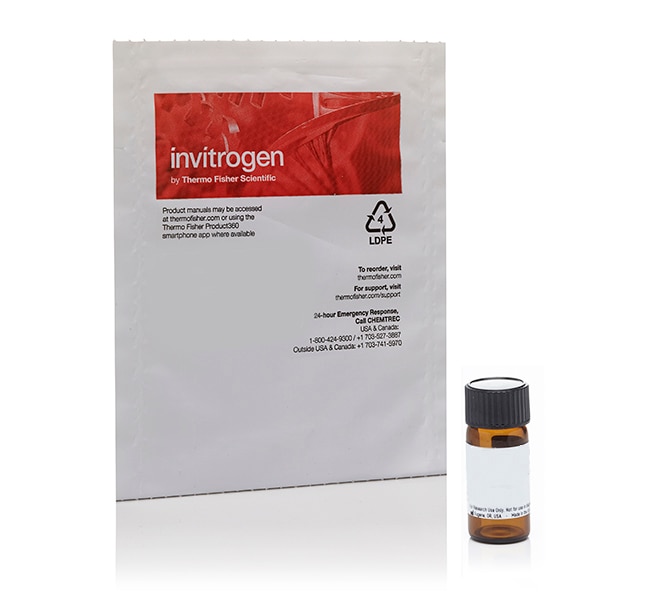
Transferrin From Human Serum, Alexa Fluor™ Conjugate
Transferrin is a monomeric serum glycoprotein that binds to a specific receptor on the surface of vertebrate cells and delivers up to two Fe3+ atoms via receptor-mediated endocytosis—our labeled LDL complexes are useful tools for studying this phenomenon.
Have Questions?
Change view

| Catalog Number | Dye Type | Quantity |
|---|---|---|
| T23365 | Alexa Fluor Dyes | 5 mg |
| T13342 | Alexa Fluor Dyes | 5 mg |
| T2871 | Classic Dyes | 5 mg |
| T23364 | Alexa Fluor Dyes | 5 mg |
| T35352 | Alexa Fluor Dyes | 5 mg |
| T13343 | Alexa Fluor Dyes | 5 mg |
| T23362 | Alexa Fluor Dyes | 5 mg |
| T23366 | Alexa Fluor Dyes | 5 mg |
Catalog number T23365
Price (CNY)
6,545.00
Online exclusive
Ends: 31-Dec-2026
9,089.00Save 2,544.00 (28%)
5 mg
Dye Type:
Alexa Fluor Dyes
Quantity:
5 mg
Price (CNY)
6,545.00
Online exclusive
Ends: 31-Dec-2026
9,089.00Save 2,544.00 (28%)
5 mg
Fluorescent transferrin for receptor-mediated endocytosis and recycling
Fluorescent transferrin conjugates are widely used to study transferrin receptor-mediated endocytosis, endosomal trafficking, and recycling using live-cell imaging or fixed-cell endpoint analysis. Transferrin binds transferrin receptor 1 (TfR1) at the cell surface and is internalized through clathrin-mediated endocytosis. Following endosomal acidification and iron release, apo-transferrin remains bound to TfR1 and the complex recycles to the plasma membrane, where apo-transferrin dissociates.
Why use fluorescent transferrin for endocytosis studies?
- Track receptor-mediated endocytosis: Follow transferrin binding, TfR-mediated internalization, and intracellular trafficking.
- Monitor endocytic recycling: Use fluorescent transferrin as a well-established marker of the endosomal recycling pathway.
- Study trafficking kinetics: Follow uptake and recycling using live-cell imaging, pulse-chase experiments, or fixed-cell endpoint analysis.
- Assess endosomal trafficking: Investigate trafficking events associated with endosomal acidification, cargo sorting, and membrane transport.
- Compare trafficking pathways: Combine fluorescent transferrin with fluorescent LDL or other cargo markers to compare recycling and lysosomally directed pathways.
- Enable multiplex fluorescence imaging: Choose from fluorescein and Alexa Fluor™ 488, 546, 555, 568, 594, 633, and 647 conjugates for multicolor imaging workflows.
Fluorescent transferrin enables a direct fluorescence readout of a well-characterized endocytic pathway, making it a versatile probe for studying receptor internalization, endosomal trafficking, and recycling.
Choose a fluorescent transferrin conjugate for your imaging workflow
Select from fluorescein and Alexa Fluor™ 488, 546, 555, 568, 594, 633, and 647 transferrin conjugates, with fluorescence spanning green to far-red wavelengths.
Multiple fluorophore options
- Match your imaging system: Select a conjugate compatible with available excitation sources, emission filters, and detectors.
- Support multicolor imaging: Choose spectrally distinct labels for use with antibodies, organelle markers, and other fluorescent probes.
- Optimize experimental design: Select the excitation and emission profile that best fits your available fluorescence channels.
- Use one biological probe across workflows: Study transferrin receptor trafficking with fluorophore options suitable for a range of fluorescence microscopy applications.
Applications of fluorescent transferrin
Fluorescent transferrin is a well-established probe for studying transferrin receptor-mediated endocytosis and intracellular trafficking.
Use fluorescent transferrin to:
- Visualize receptor-mediated internalization and recycling using live-cell imaging or fixed-cell endpoint analysis
- Track endosomal trafficking using fluorescence and confocal microscopy
- Study trafficking events associated with endosomal acidification and changes in endosomal function
- Investigate transferrin receptor dynamics, including appropriately designed FRET-based studies
- Measure transferrin receptor binding in mammalian and parasite model systems
- Compare recycling and lysosomal trafficking using complementary fluorescent cargo markers
For Research Use Only. Not for use in diagnostic procedures.
Specifications
Detection MethodFluorescence
Dye TypeAlexa Fluor Dyes
Excitation/Emission578/603
FormSolid
Protein FamilyTransferrin
Quantity5 mg
Shipping ConditionRoom Temperature
Product LineAlexa Fluor
Product TypeTransferrin
pH7.2
Unit Size5 mg
Contents & Storage
Store in freezer (-5 to -30°C) and protect from light.
Frequently asked questions (FAQs)
Is Transferrin From Human Serum, Alexa Fluor 568 Conjugate (Cat. No. T23365) holotransferrin (saturated with iron)? How is the fluorophore conjugated to it?
Citations & References (22)
Citations & References
Abstract
Inactivation of NPC1L1 causes multiple lipid transport defects and protects against diet-induced hypercholesterolemia.
Journal:J Biol Chem
PubMed ID:15671032
'NPC1L1, a recently identified relative of Niemann-Pick C1, was characterized to determine its subcellular location and potential function(s). NPC1L1 was highly expressed in HepG2 cells and localized in a subcellular vesicular compartment rich in the small GTPase Rab5. mRNA expression profiling revealed significant differences between mouse and man with highest
Dynamics and function of phospholipase D and phosphatidic acid during phagocytosis.
Journal:Traffic
PubMed ID:16497229
'Phospholipase D (PLD) produces phosphatidic acid (PA), an established intracellular signalling lipid that has been also implicated in vesicular trafficking, and as such, PLD could play multiple roles during phagocytosis. Using an RNA interference strategy, we show that endogenous PLD1 and PLD2 are necessary for efficient phagocytosis in murine macrophages,
Rab11-family interacting proteins define spatially and temporally distinct regions within the dynamic Rab11a-dependent recycling system.
Journal:Mol Biol Cell
PubMed ID:23283983
'The Rab11-family interacting proteins (Rab11-FIPs) facilitate Rab11-dependent vesicle recycling. We hypothesized that Rab11-FIPs define discrete subdomains and carry out temporally distinct roles within the recycling system. We used live-cell deconvolution microscopy of HeLa cells expressing chimeric fluorescent Rab11-FIPs to examine Rab11-FIP localization, transferrin passage through Rab11-FIP-containing compartments, and overlap among
Site-specific protein labeling by Sfp phosphopantetheinyl transferase.
Journal:Nat Protoc
PubMed ID:17406245
'Sfp phosphopantetheinyl transferase covalently attaches small-molecule probes including biotin and various organic fluorophores to a specific serine residue in the peptidyl carrier protein (PCP) or a short 11-residue peptide tag ybbR through a phosphopantetheinyl linker. We describe here a protocol for site-specific protein labeling by Sfp-catalyzed protein post-translational modification that
Correlative light-electron microscopy (CLEM) combining live-cell imaging and immunolabeling of ultrathin cryosections.
Journal:Nat Methods
PubMed ID:18974735
'The visualization of fluorescent proteins in living cells is a powerful approach to study intracellular dynamics. A limitation of fluorescence imaging, however, is that it lacks fine structural information; a fluorescent spot could represent an entire organelle, an organellar subdomain or even aggregates of proteins or membranes. These limitations can